Sunrise vs Sunset at Monument Valley: Which Is Better?
Sunrise or sunset at Monument Valley, which wins, plus the daylight-saving clock trap that runs the valley an hour ahead of Phoenix and Page in summer. A Navajo guide's take.
 By Daniel Begay, Monument Valley tour guide & Navajo cultural specialist
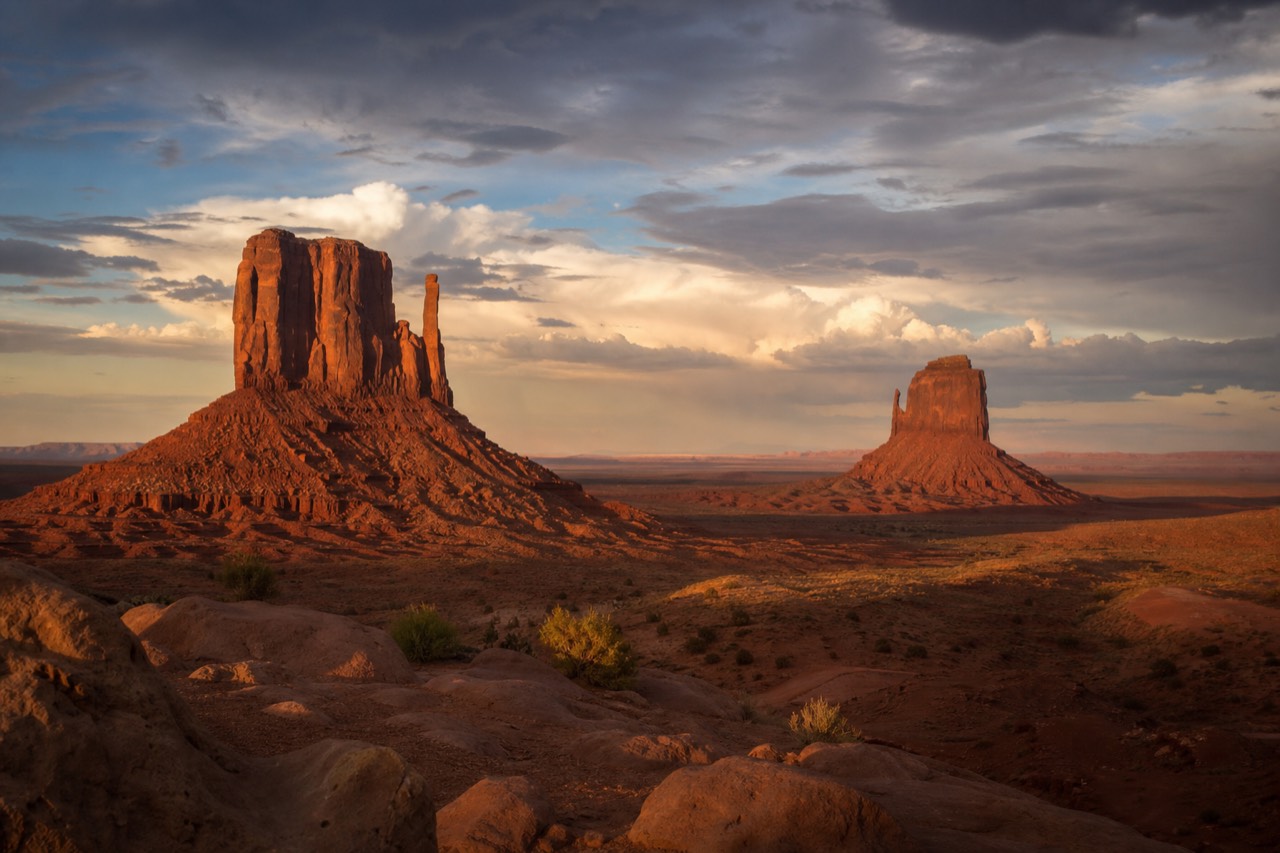
I have watched the East Mitten catch first light on maybe two hundred mornings, coffee going cold in my hand, and I still argue with myself about which is better. Sunrise gives you the color and an empty overlook. Sunset gives you the color and a warmer body. Since 2022 I have run both, and the honest answer changes with the season, the crowd you can stand, and one clock trick that catches nearly every visitor off guard.
Booking choice: Visit the Totem Pole, Sun’s Eye and John Ford Point in the day’s changing light. Explore Sunrise or sunset photography tour
At a glance: 3 hours, English guide, water and native music. Select sunrise OR sunset for your month on Viator. Park entry extra. Uneven surfaces; unsuitable for back conditions. Children need two paying adults.
Is sunrise or sunset better at Monument Valley?
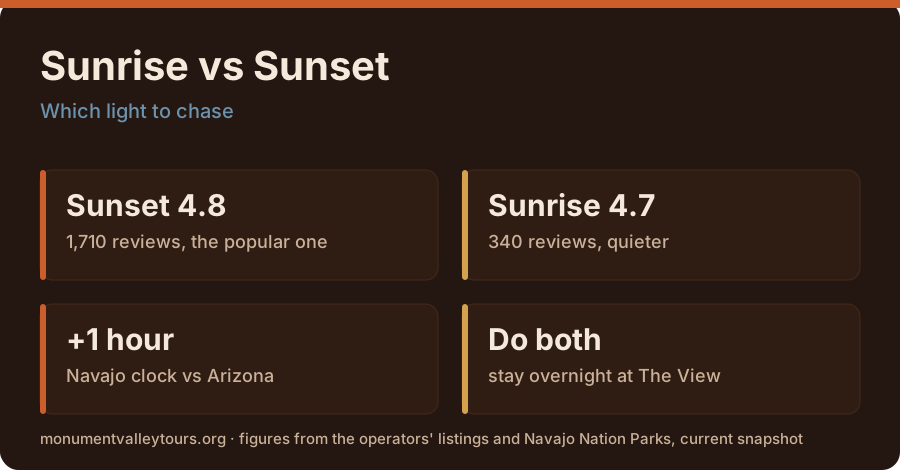
Both light the buttes red, so the real choice is about crowds, temperature, and your body clock. Sunrise is colder, quieter, and frames the Mittens straight-on with almost nobody there. Sunset is warmer, busier, and better if you are not a morning person. For photography, sunrise usually wins on emptiness; sunset wins on comfort.
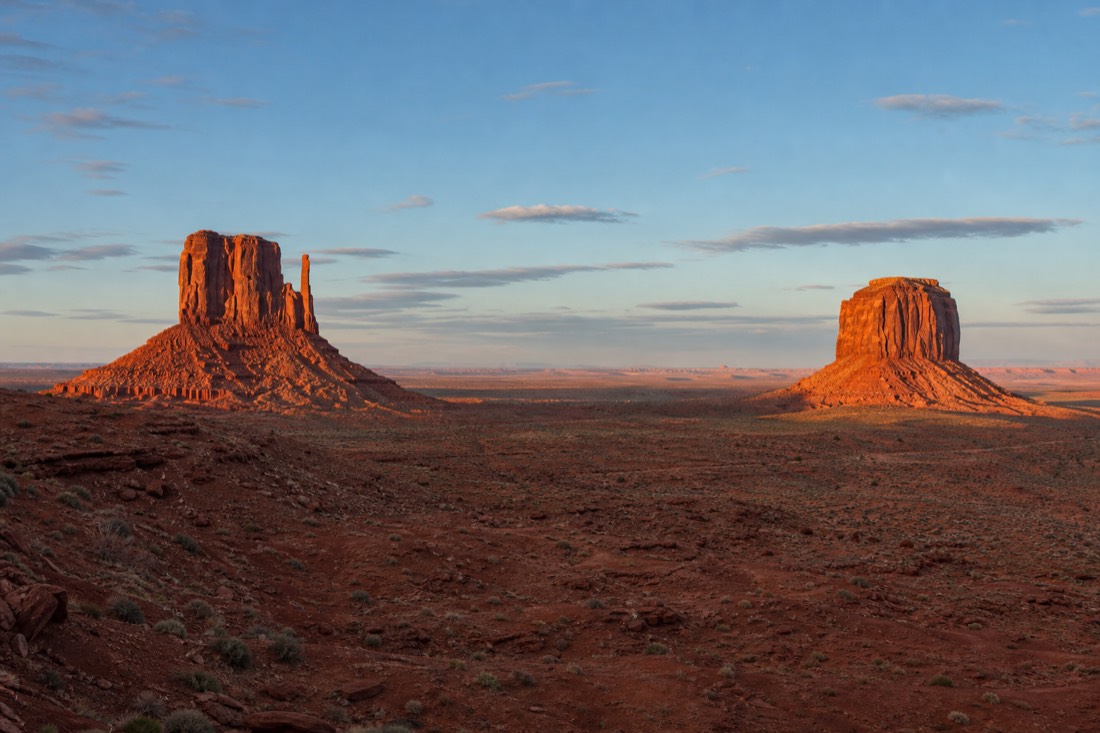
The rock does not care which end of the day it is. The same iron-rich Navajo sandstone that forms the buttes glows the same deep orange whether the low sun is coming up or going down. What differs is everything around the light. At sunrise the East and West Mittens sit lit from the front at the visitor center overlook, and you may have the rail to yourself. By sunset a crowd has gathered, but the air is warm and you are not fighting a 5am alarm after a long drive.
| Factor | Sunrise | Sunset |
|---|---|---|
| Light on the Mittens | Front-lit, classic frame | Side and back light, dramatic |
| Crowds | Sparse, often near-empty | Busier at the overlook |
| Temperature | Cold, especially winter | Warm, more comfortable |
| Best for | Photographers, quiet | Late risers, relaxed pace |
| Which tour | Sunrise tour, 3 hours | Sunset tour, 3 hours |
If you only get one, I tell most first-timers to take sunset for the comfort and book a sunrise only if photography is the point of the trip. If that is you, the dawn departure runs as its own Navajo-guided tour you reserve separately from the sunset run.
When do the sun and the crowds actually shift by season?
Monument Valley's sunrise and sunset times swing widely across the year. In midsummer the sun is up before 6am and sets close to 8:40pm local time, while in midwinter it rises around 7:30am and sets near 5:15pm. Park hours track this: roughly 8am to 7pm in summer, 8am to 5pm in winter.
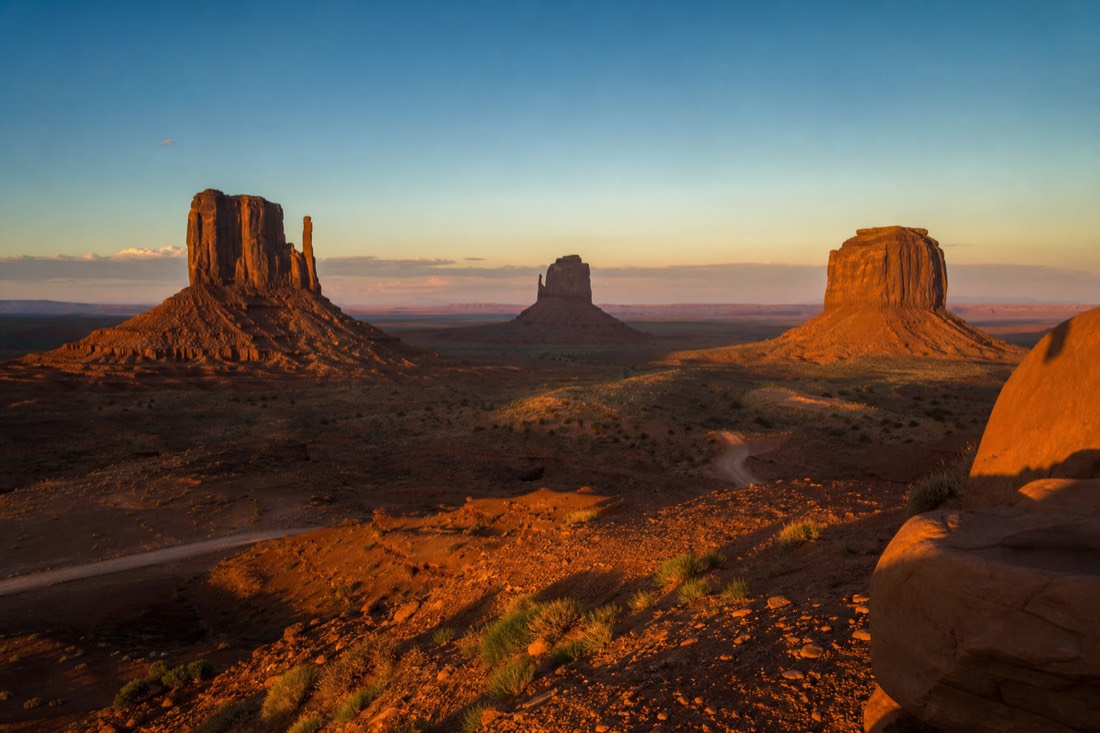
These are approximate local clock times, and they move week to week, so treat them as a planning range rather than a schedule. What is reliable is the shape of it: long, hot summer days with very late sunsets, and short, cold winter days where sunset comes before dinner. The official Navajo Nation Parks hours confirm the park itself opens around 8am year round, with last entry near 4:30pm in summer and 2:30pm in winter, which is why a late sunset needs a permitted operator to stay past closing.
| Season | Approx sunrise | Approx sunset | Park hours |
|---|---|---|---|
| Midsummer (Jun to Jul) | ~6:00am | ~8:40pm | ~8am to 7pm |
| Late summer (Aug to Sep) | ~6:30am | ~7:40pm | ~8am to 7pm |
| Equinox (Apr, Sep to Oct) | ~6:45am | ~7:00pm | shoulder hours |
| Midwinter (Dec to Jan) | ~7:30am | ~5:15pm | ~8am to 5pm |
Because the park closes before summer sunset, a guided sunset tour is often the only way to actually be inside the valley for the best color. Our best time to visit Monument Valley guide breaks the seasons down further, including heat and monsoon timing.
What is the daylight-saving clock trap at Monument Valley?
Monument Valley runs on Navajo Nation time, which observes daylight saving. Most of Arizona does not. So in summer the valley is a full hour ahead of Phoenix and Page. If you set your plans by Arizona time, you will show up an hour late for a sunrise tour and miss it entirely. This single mistake ruins more mornings here than anything else.
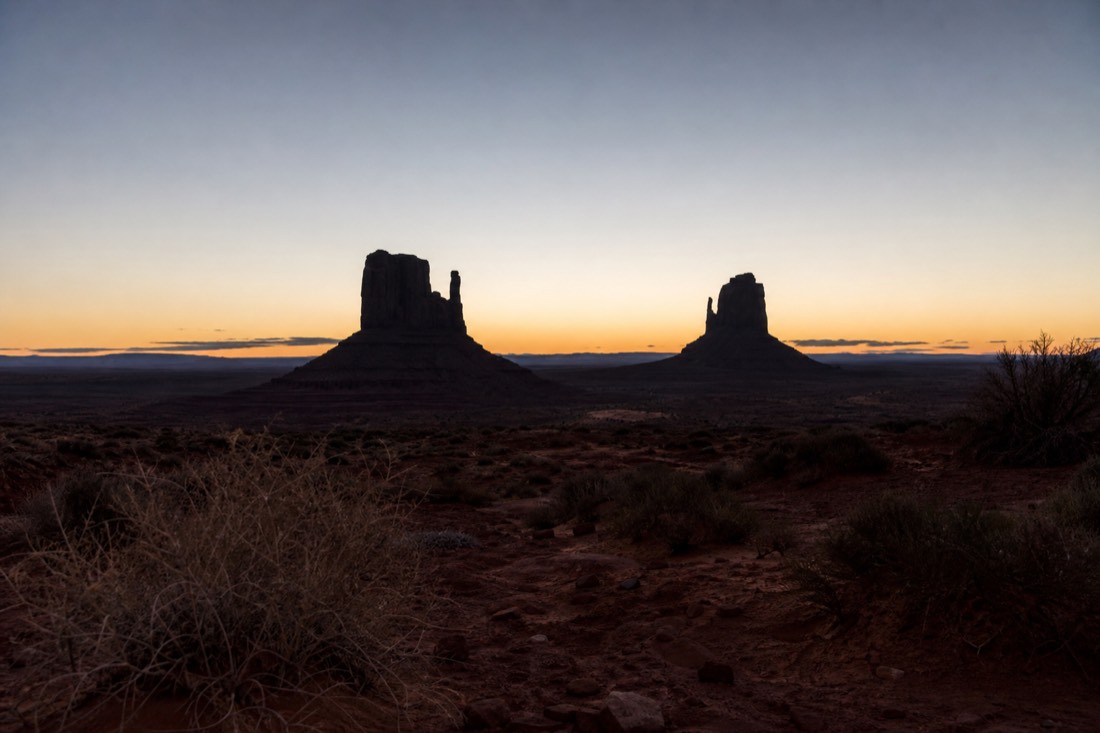
Here is the mechanism. The Navajo Nation observes Mountain Daylight Time in summer. The rest of Arizona stays on Mountain Standard Time and does not spring forward. Monument Valley sits inside the Navajo Nation, so from spring through fall its clocks read one hour later than Page, Flagstaff, or Phoenix, even though Page is barely two to three hours' drive away. Your phone may or may not catch the change depending on the tower it grabs, which is the real danger.
| Your location | Summer clock vs the valley |
|---|---|
| Monument Valley (Navajo Nation) | Observes DST, the reference time |
| Page, Arizona | 1 hour behind the valley |
| Flagstaff, Arizona | 1 hour behind the valley |
| Phoenix, Arizona | 1 hour behind the valley |
| Utah side (Mexican Hat, Bluff) | Same as the valley, observes DST |
The fix is simple: confirm your tour time in the valley's local time, not Arizona time, and do not fully trust your phone's clock near the border. When I confirm a sunrise pickup, I say it twice and name the time zone.
Which guided tour should you pick, sunrise or sunset?
Pick the sunset tour if you want comfort, warmth, and the easiest logistics, since the park closes before summer sunset and a guide keeps you inside for it. Pick the sunrise tour if you are a photographer chasing an empty overlook and front-lit Mittens. Both run about 3 hours with a Navajo guide.
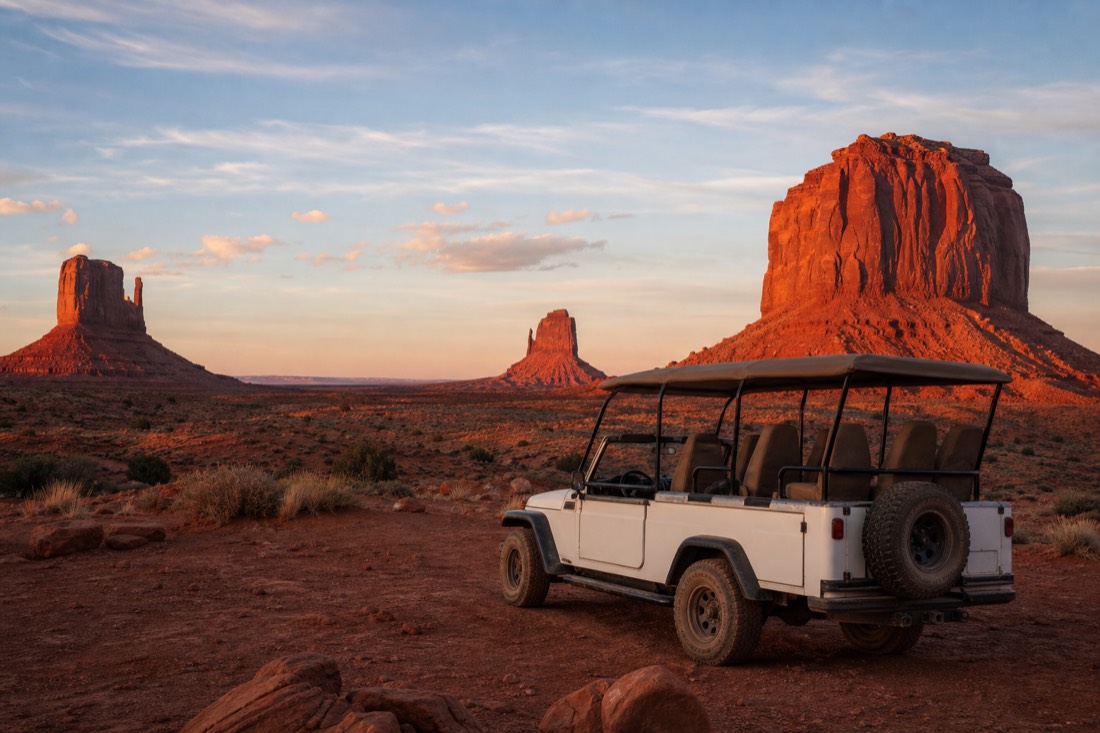
The tour choice mostly follows the sunrise-versus-sunset call you already made, with one added factor: access. On a long summer day the park gates close at 7pm but the sun does not set until well after 8pm, so without a permitted operator you are locked out for the best hour of light. A guided sunset run solves that, and it handles the rough dirt loop and the timing while you just watch the color come up the rock face.
Whichever end of the day you choose, the mistake to avoid is the clock, not the timing of the light. Get the time zone right, and both sunrise and sunset here are the kind of thing you drive a long way to see. For a longer night, our post on stargazing in Monument Valley picks up where sunset leaves off, and the photography spots guide maps where to stand for each. The rest is on the blog.
Make room in your itinerary
Sunrise or sunset photography tour
Have a travel date in mind? Check this option before arranging the rest of your trip. Visit the Totem Pole, Sun’s Eye and John Ford Point in the day’s changing light.
Editorial starting point; use the choices below to check the fit.
Compare options and tailor your choice
3 hours, English guide, water and native music. Select sunrise OR sunset for your month on Viator. Park entry extra. Uneven surfaces; unsuitable for back conditions. Children need two paying adults.
Meet at The View Hotel loading area, 50 yards west, 15 minutes early; return there. Confirm with the operator 24 hours ahead.
Ride to Big Hogan, Sun’s Eye and the Totem Pole with a Navajo guide. Shared 2.5-hour tour, English. Park entry and tips extra. Hogan visit and weaving excluded. Not recommended for pregnancy, back/spinal or serious heart conditions.
Look beyond the daytime landscape with Navajo star stories and a guided night outing. 2.5 hours, English guide and water. Park entry extra. Stargazing depends on weather. Telescope not promised on this Viator option. Not recommended for pregnancy, spinal or serious heart conditions.
Select a date to see the Viator departure schedule.
Schedule only. Final availability, options and price are confirmed on Viator.Affiliate links: we may earn a commission at no extra cost to you. Product facts checked September 15, 2026.