The History of Monument Valley: Geology, the Navajo, and Hollywood
The buttes took millions of years to carve, the Navajo have lived beside them far longer than any map, and Hollywood only arrived in 1938. Here is how those three stories fit together.
 Written with Daniel Begay, Monument Valley tour guide & Navajo cultural specialist
Short answer
Monument Valley's sandstone buttes eroded over millions of years on what is now Navajo Nation land along the Utah-Arizona border. The Navajo Tribal Park was established in 1958, and the film era began in 1938 when Harry Goulding brought director John Ford here.
The rocks are older than any story anyone can tell about them, and I remind visitors of that before we say a single word about movies. Long before a camera pointed at these buttes, families lived and herded sheep in their shadow, and the sandstone itself had already spent millions of years being carved down to the shapes we drive between today. Three timelines run through Monument Valley at once: the geologic one, the Navajo one, and the short, loud Hollywood chapter that most first-time visitors know first. This is how they line up.
Booking choice: A Navajo guide connects the Mittens, restricted arches and local stories. Explore Navajo Spirit scenic tour
At a glance: Shared tour, English guide, about 3 hours. Park entry and tips extra. Minimum two to operate; solo travelers must arrange pairing with the operator.
How were the buttes and mesas of Monument Valley formed?
The buttes and mesas are the eroded remains of a vast sandstone layer. Over millions of years, what was once a low basin filled with sediment, hardened into rock, then lifted with the Colorado Plateau. Wind and water stripped away the softer material, leaving the isolated red monoliths that stand up to a thousand feet above the valley floor.
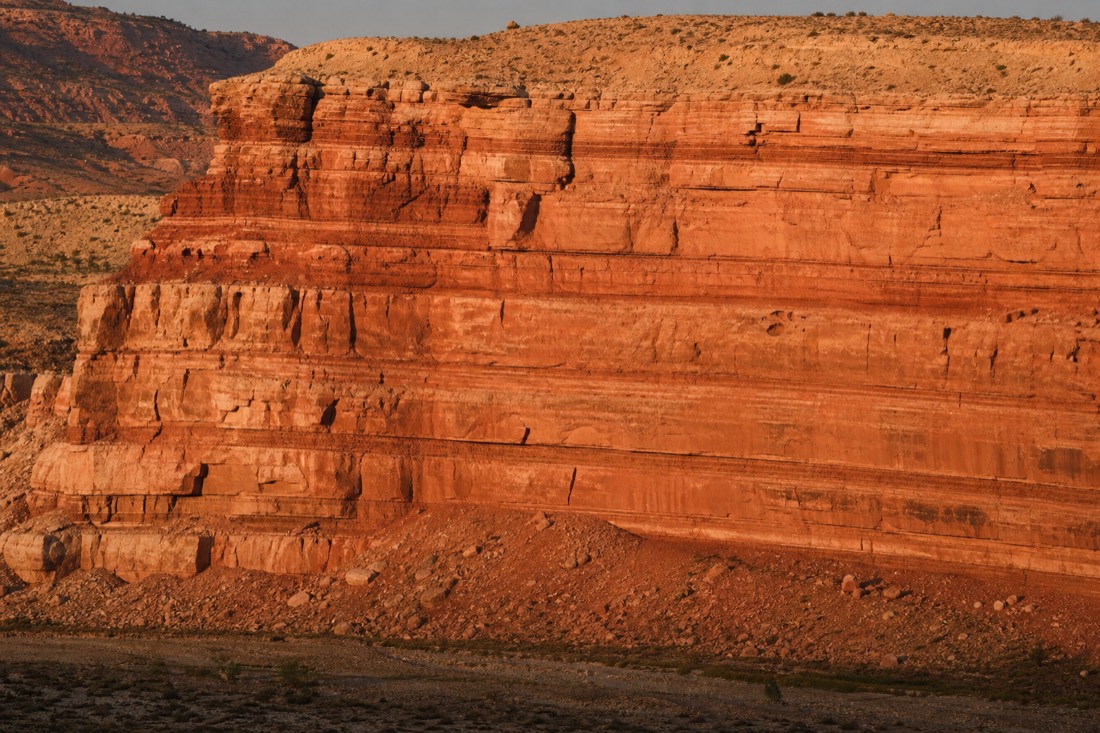
The short version I give on the road is that everything you see standing up used to be filled in. Picture the whole valley as a solid block of layered rock, then imagine millions of years of wind, rain, and freeze-thaw slowly carrying the weaker material away. The hard caprock on top protects the softer stone beneath it, which is why the buttes keep their tall, flat-topped shape while the ground around them keeps dropping. The iron in the sandstone is what gives the rock its deep rust color. For a broader encyclopedic overview of the geology and the plateau it sits on, the Monument Valley reference page is a solid starting point.
Here is the process at a glance, from bottom to top of the story.
| Stage | What happened | What it left behind |
|---|---|---|
| Deposition | Sediment filled a low basin over long ages | Thick layers of sand and mud |
| Lithification | Buried layers compressed and hardened | Solid sandstone and shale |
| Uplift | The Colorado Plateau rose | Rock lifted high and exposed to weather |
| Erosion | Wind and water stripped the softer stone | Isolated buttes, mesas, and spires |
| Coloring | Iron oxide weathered at the surface | The deep red of the standing rock |
Whose land is Monument Valley, and how big is the tribal park?
Monument Valley sits on Navajo Nation land straddling the Utah-Arizona border. The Monument Valley Navajo Tribal Park covers roughly 91,696 acres. It is not a US National Park, so there is no America the Beautiful pass here. The Navajo have lived across this region for generations, long before it drew filmmakers or tourists.
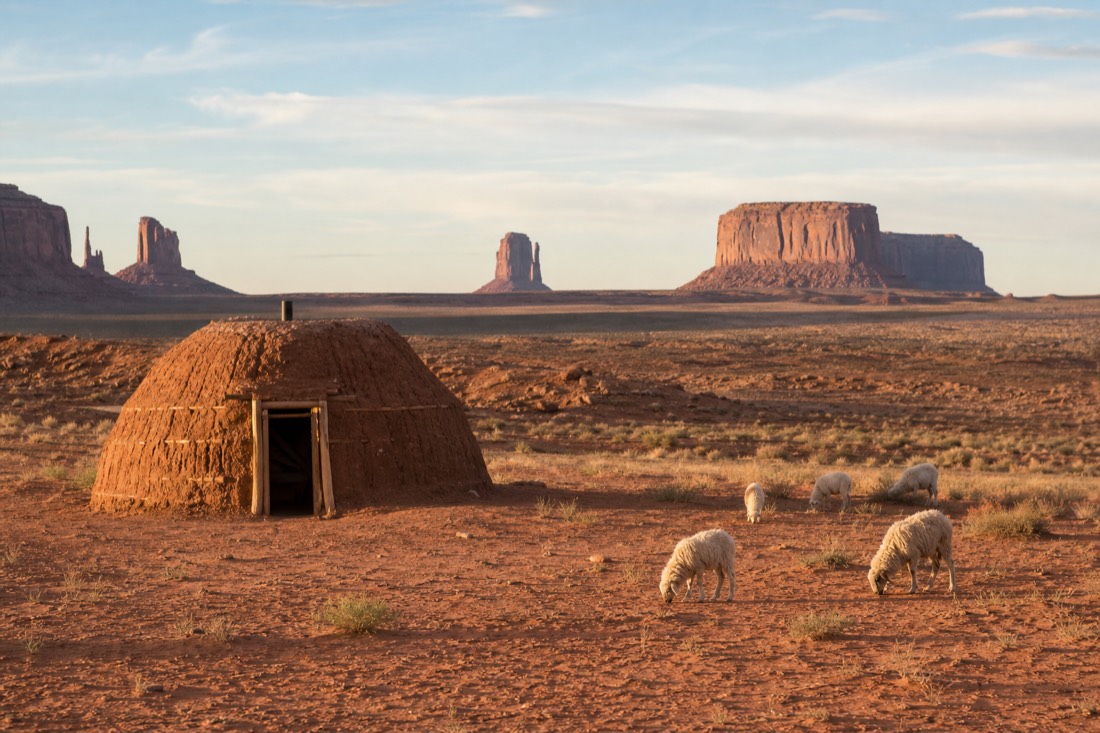
This is the point I most want visitors to carry home. The valley is a working homeland, not an empty scenic backdrop. Families still live within and around the park, run sheep, and hold ceremonies on this ground. Because it is sovereign Navajo land and not a federal park, the rules, the fees, and the access all come from the Navajo Nation Parks and Recreation department rather than the National Park Service. Entrance is paid at the gate, and the backcountry beyond the main loop can only be entered with a Navajo guide. If you want the fuller etiquette on visiting a living community, I wrote a companion piece on visiting the Navajo Nation respectfully that covers photography, permissions, and the small courtesies that matter.
How did Monument Valley become a Navajo Tribal Park?
The Monument Valley Navajo Tribal Park was established in 1958 by the Navajo Tribal Council, becoming the first tribal park in the Navajo park system. The designation gave the Nation formal control over how the land is managed, protected, and shared with visitors, and it set the framework that still governs guided access to the backcountry today.
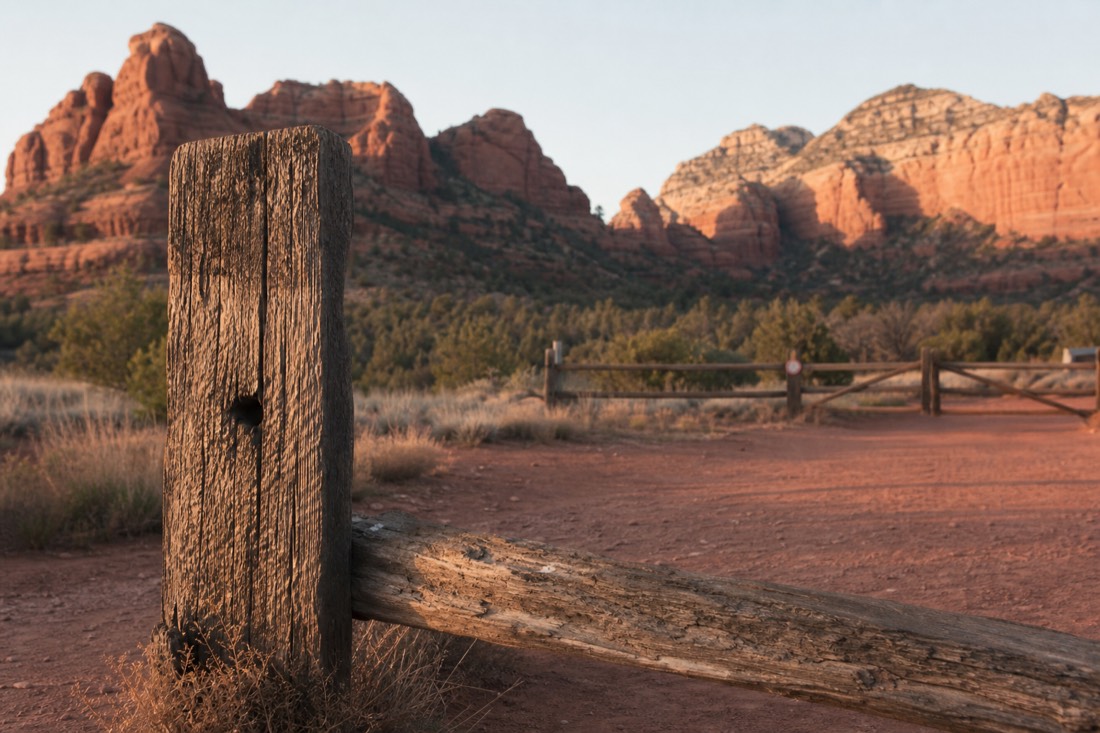
The 1958 date matters because it came two decades after Hollywood had already made these buttes famous. By then the world knew the skyline from the movie screen, and the tribal park designation put the Navajo Nation in charge of the place that had become shorthand for the American West. That order of events, fame first, formal protection second, still shapes the visitor experience. The main 17-mile Valley Drive is open to self-drivers who pay at the gate, while the deeper backcountry stays gated behind Navajo-guided tours.
How did Hollywood discover Monument Valley?
Hollywood found the valley in 1938, when Harry Goulding, who ran a trading post nearby, traveled to Los Angeles and persuaded director John Ford to scout the location. Ford filmed here soon after, and the money the productions brought helped sustain the local Navajo economy through the tail end of the Great Depression.
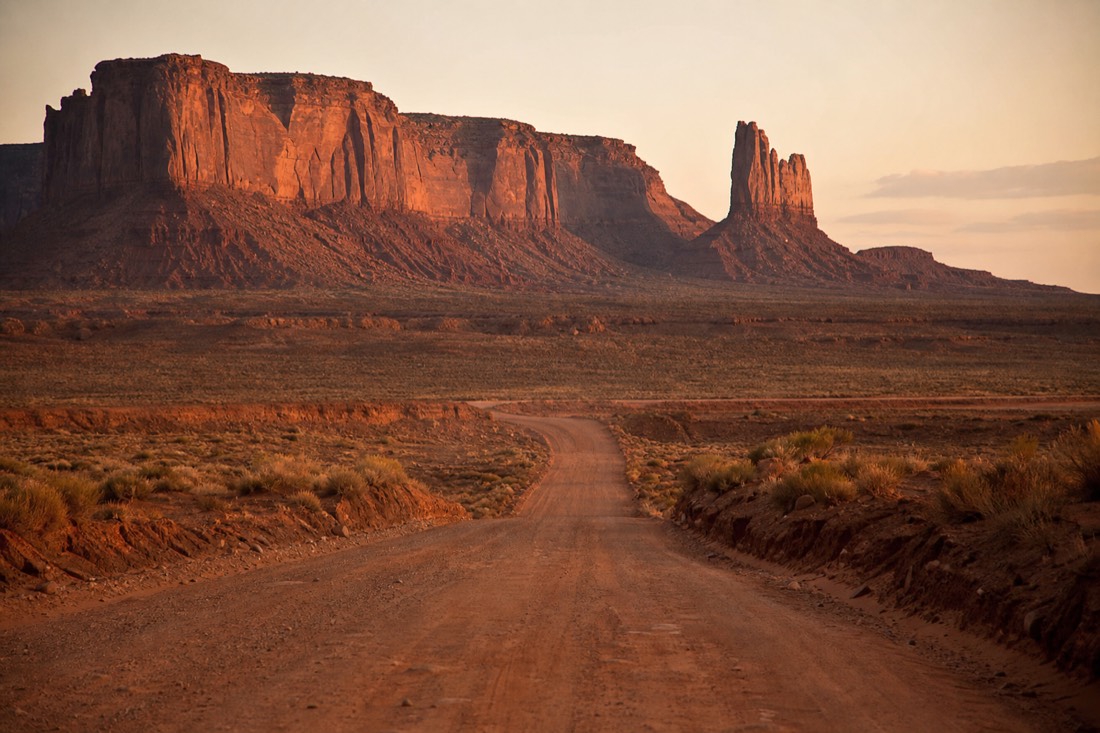
Goulding's pitch is one of the great origin stories of the American Western. He brought photographs of the valley to a Hollywood casting office at a time when his Navajo neighbors were struggling, gambling that a film crew would put money into the local community. It worked. Ford shot here, the productions hired Navajo people, and a remote corner of the Colorado Plateau became the most recognizable landscape in cinema. The lodge Goulding built still operates just outside the park boundary. For the full story of the director and the actor most associated with these films, my colleague's feature on John Wayne and John Ford in Monument Valley goes deep, and John Ford Point on the Valley Drive is named for the director himself.
Which films built Monument Valley's on-screen legend?
John Ford's Stagecoach, released in 1939, was the first major Western he shot here, and it turned the valley into the visual shorthand for the frontier. Ford returned through the 1940s and 1950s for My Darling Clementine, Fort Apache, She Wore a Yellow Ribbon, and The Searchers, cementing the skyline as the face of the movie West.
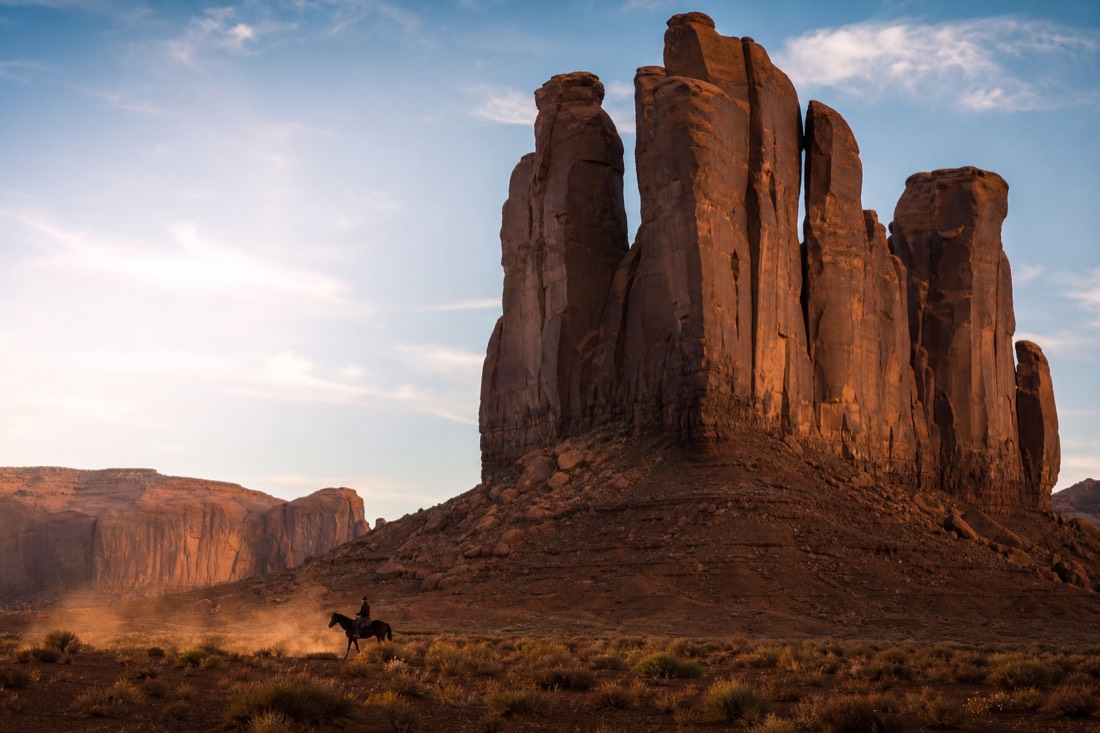
Once Stagecoach hit screens, the buttes did the work of a thousand set-dressers. Audiences saw that skyline and instantly understood they were watching a Western. Ford kept coming back, and John Wayne starred in the films that made both men legends. One caution I always add: the widely repeated line "So this is where God put the West" is often attributed to Wayne, but it is not reliably sourced, so treat it as apocryphal rather than a real quote. And the famous Forrest Gump running shot was filmed on US-163 north of the park, not inside the tribal park itself. For the complete rundown of titles and where each was shot, see the dedicated guide to what movies were filmed in Monument Valley.
| Year | Film | Why it mattered |
|---|---|---|
| 1939 | Stagecoach | First major Ford Western here; made the valley iconic |
| 1946 | My Darling Clementine | Ford's Wyatt Earp story set against the buttes |
| 1948 | Fort Apache | First of Ford's cavalry films shot in the valley |
| 1949 | She Wore a Yellow Ribbon | Color cavalry Western, painterly use of the skyline |
| 1956 | The Searchers | Widely called Ford's masterpiece, the valley as a character |
You can trace the film chronology alongside the deeper history using the full film record on the John Ford reference page and the entry for Stagecoach.
What role did Navajo people play in the film era?
Navajo people were essential to the film era, working as extras, crew, wranglers, and local guides across Ford's productions. The work arrived during the Great Depression and brought real income to families around Goulding's trading post. That relationship between the productions and the community is a defining, and often overlooked, part of the valley's history.
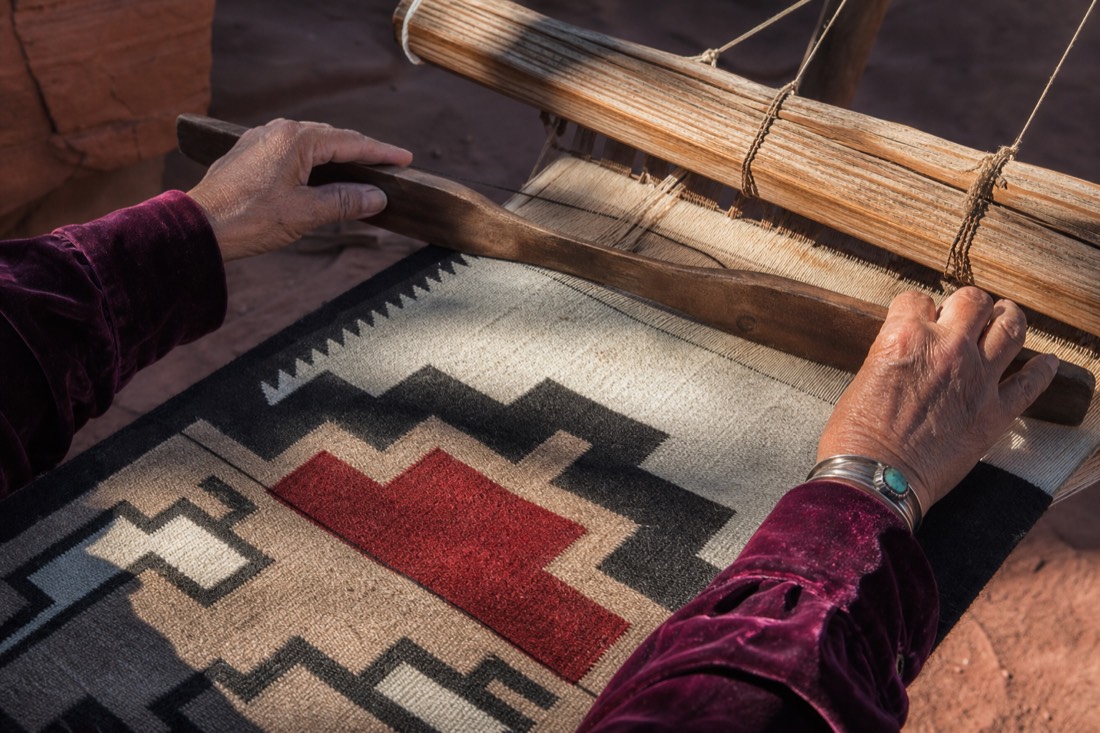
The movies did not just use the land, they employed the people who live on it, and that fact tends to get lost in the romance of the Western. Navajo families provided horses, labor, local knowledge, and screen presence, and the pay mattered at a moment when the wider economy had collapsed. Today that legacy runs straight into the guided-tour tradition: the same community that helped build the valley's screen fame now shares it directly with visitors on Navajo-owned tours. To pull the whole story together, here is the combined timeline of the three histories that meet in this one valley.
| Date | Event |
|---|---|
| Millions of years ago | Sediment deposited, hardened, then eroded into buttes and mesas |
| Long before contact | Navajo (Diné) families living across the region |
| 1938 | Harry Goulding brings John Ford to scout the valley |
| 1939 | Stagecoach released, making the skyline world-famous |
| 1946 to 1956 | Ford returns for Clementine, Fort Apache, Yellow Ribbon, The Searchers |
| 1958 | Monument Valley Navajo Tribal Park established by the Navajo Tribal Council |
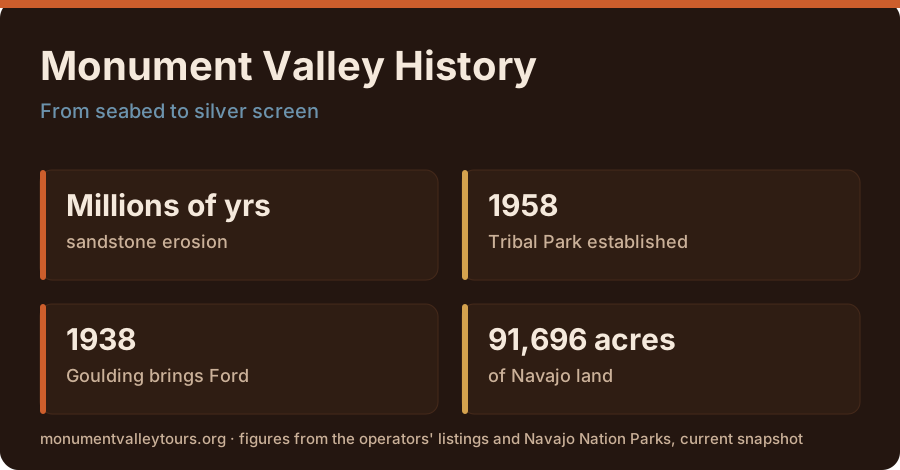
Understanding how the valley formed and how it became a park changes how it feels to stand there. When you are ready to see it in person, start with the wider planning notes on the Monument Valley guides hub, then pick the trip that matches the history you most want to touch.
Make room in your itinerary
Navajo Spirit scenic tour
Have a travel date in mind? Check this option before arranging the rest of your trip. A Navajo guide connects the Mittens, restricted arches and local stories.
Editorial starting point; use the choices below to check the fit.
Compare options and tailor your choice
Shared tour, English guide, about 3 hours. Park entry and tips extra. Minimum two to operate; solo travelers must arrange pairing with the operator.
Meet at the round, green-roof Navajo Welcome Center off US-163; return there. No hotel pickup.
The extended route adds a hogan visit and a live Navajo rug-weaving demonstration. Shared 3.5-hour tour, English guide, open 4x4. Park entry extra. Children accompanied; unsuitable for back/spinal or serious heart conditions and pregnancy beyond five months.
Ride to Big Hogan, Sun’s Eye and the Totem Pole with a Navajo guide. Shared 2.5-hour tour, English. Park entry and tips extra. Hogan visit and weaving excluded. Not recommended for pregnancy, back/spinal or serious heart conditions.
GPS-triggered stories accompany your own drive, with offline audio downloaded in advance. Allow 2–3 hours. English/French audio; one purchase per car. No live guide, vehicle or park admission. Road access depends on conditions and your vehicle.
Select a date to see the Viator departure schedule.
Schedule only. Final availability, options and price are confirmed on Viator.Affiliate links: we may earn a commission at no extra cost to you. Product facts checked September 15, 2026.