Monument Valley in Winter: Snow on the Red Rock, Empty Roads
A Navajo guide on Monument Valley in winter: shorter park hours, rare snow on the red rock, empty roads, cold nights, the muddy dirt loop, and tours that still run.
 By Daniel Begay, Monument Valley tour guide & Navajo cultural specialist
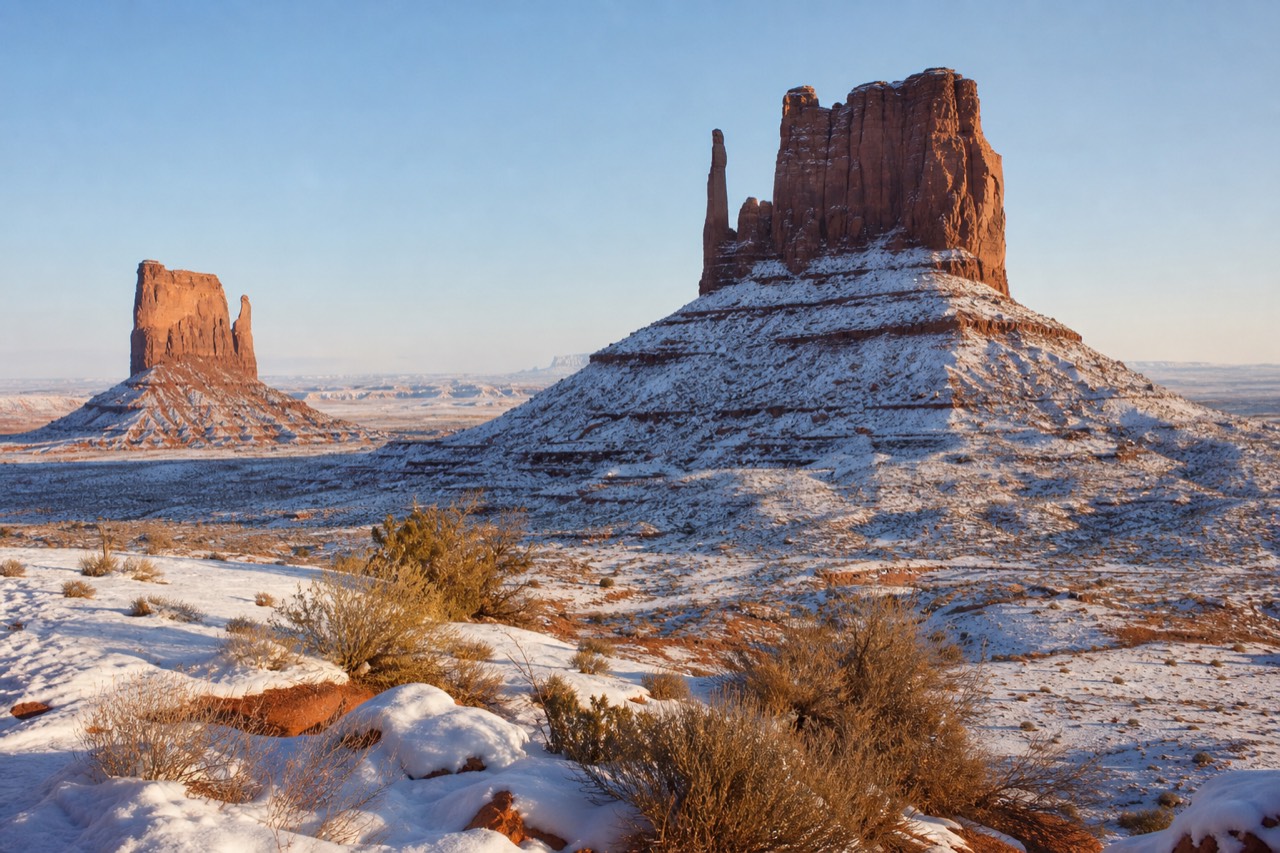
The first time I saw snow settle on the East Mitten, I pulled over and just watched. Red rock under a dusting of white does not look like anywhere else on earth, and it happens rarely enough that even guides who work here every week stop to take it in. Winter is the season most visitors skip, and I understand why: the days are short and the nights are cold. But the people who come anyway get a valley that is quieter, clearer, and sometimes more beautiful than any summer afternoon. Here is what a winter trip actually looks like from the driver's seat.
Booking choice: A Navajo guide connects the Mittens, restricted arches and local stories. Explore Navajo Spirit scenic tour
At a glance: Shared tour, English guide, about 3 hours. Park entry and tips extra. Minimum two to operate; solo travelers must arrange pairing with the operator.
What is Monument Valley like in winter?
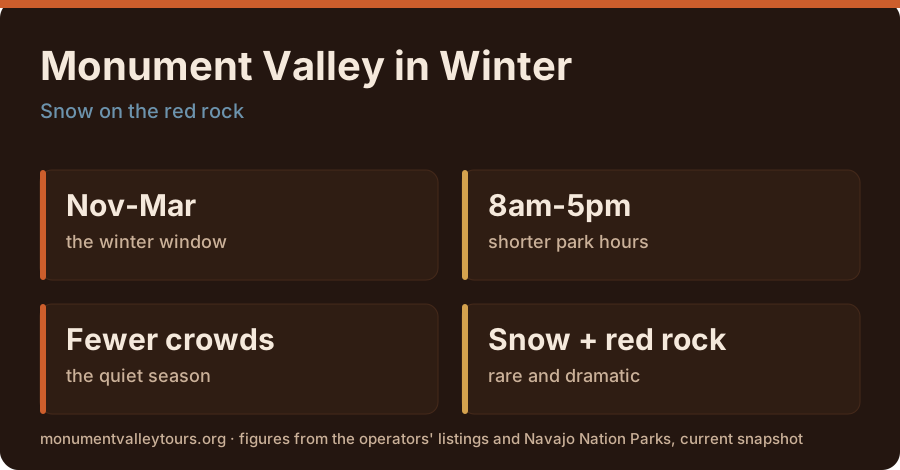
Winter in Monument Valley runs roughly from November through March. Expect short daylight, cold nights, and far thinner crowds than the summer peak. The high-desert air is at its clearest, the low sun throws long shadows across the buttes, and on rare days snow dusts the red rock for a sight most visitors never get to see.
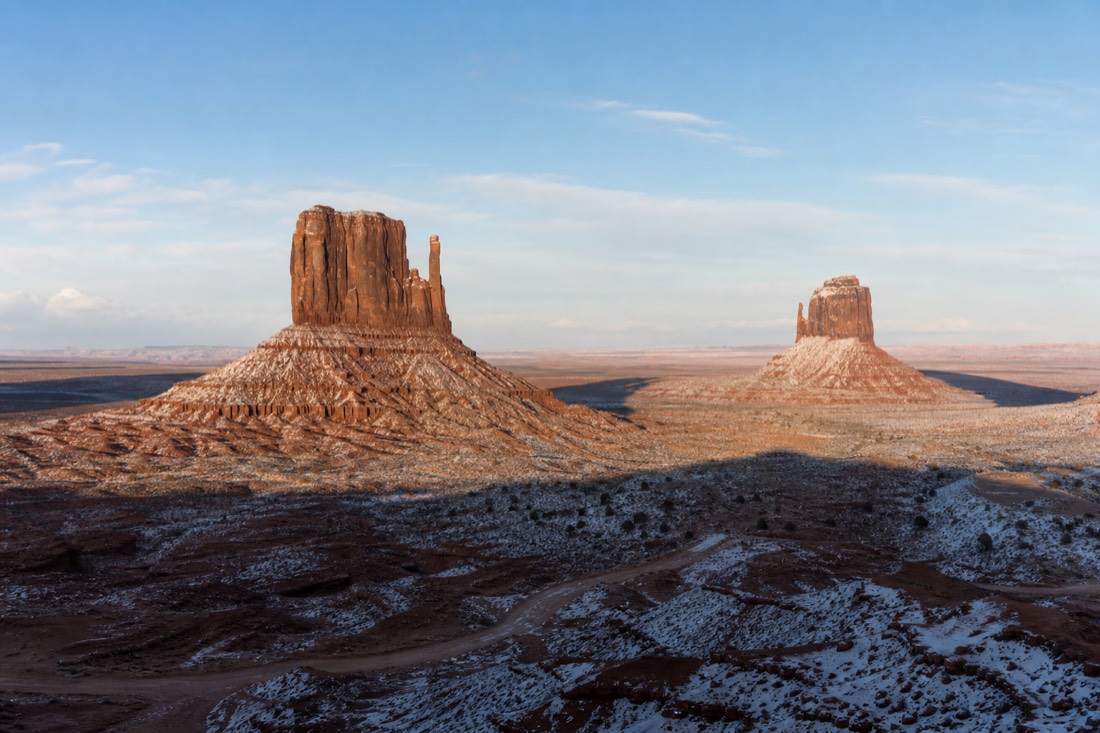
The trade in winter is simple: you give up long, warm days and you get solitude and clarity in return. Where a July afternoon can feel crowded at the overlooks, a January morning often has the road almost to yourself. The cold is real, especially before the sun clears the buttes and again after it drops, so I dress guests in layers they can shed by midday. If you are still weighing which season fits your trip, my full breakdown of the best time to visit Monument Valley puts winter next to the other months so you can see the trade clearly.
| Month | Conditions | What stands out |
|---|---|---|
| November | Cool days, cold nights, short hours return | Quiet gates, clear air, fall light lingering |
| December | Cold, chance of snow, closed on Christmas | Rare snow on red rock, deep winter silence |
| January | Coldest, often below freezing at dawn | Sharpest skies, fewest visitors all year |
| February | Cold, thawing by midday | Dramatic long shadows, crisp clear light |
| March | Cool, breezy, warming | Wind and dust return, shoulder-season quiet |
What are the park hours in winter?
Winter park hours run about 8am to 5pm from October through March, with last entry near 2:30pm. That is a much tighter window than summer, so an early start matters. The Navajo Nation also observes daylight saving time while most of Arizona does not, which can shift the local clock against your phone.
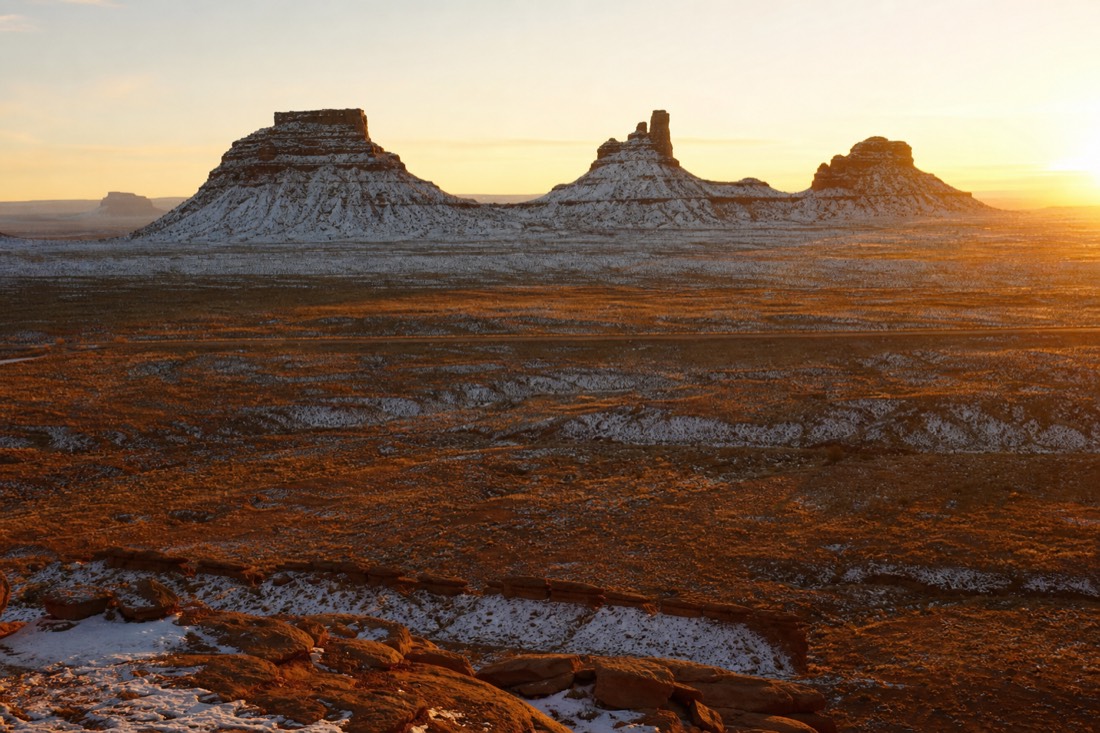
The short hours are the single biggest thing to plan around in winter. With last entry in the early afternoon and the gate closing at five, you have far fewer usable hours than in summer, and the good low light comes and goes fast. Arrive when the gate opens if you can. The park also closes on Thanksgiving, Christmas, and New Year's Day, so check the calendar before a holiday trip. The official hours and closures come from Navajo Nation Parks and Recreation, and I would confirm them the week you travel. The time-zone quirk catches people out too: the Navajo Nation keeps daylight saving, the rest of Arizona does not, so a pickup time can be an hour off what your body expects if your phone has not updated.
Does it snow in Monument Valley?
Yes, but not often. Snow in Monument Valley is occasional and usually light, arriving on a handful of cold spells between roughly December and February. When it does land, a dusting of white on the deep red buttes is one of the most striking sights in the Southwest, and it typically melts within a day or two under the desert sun.
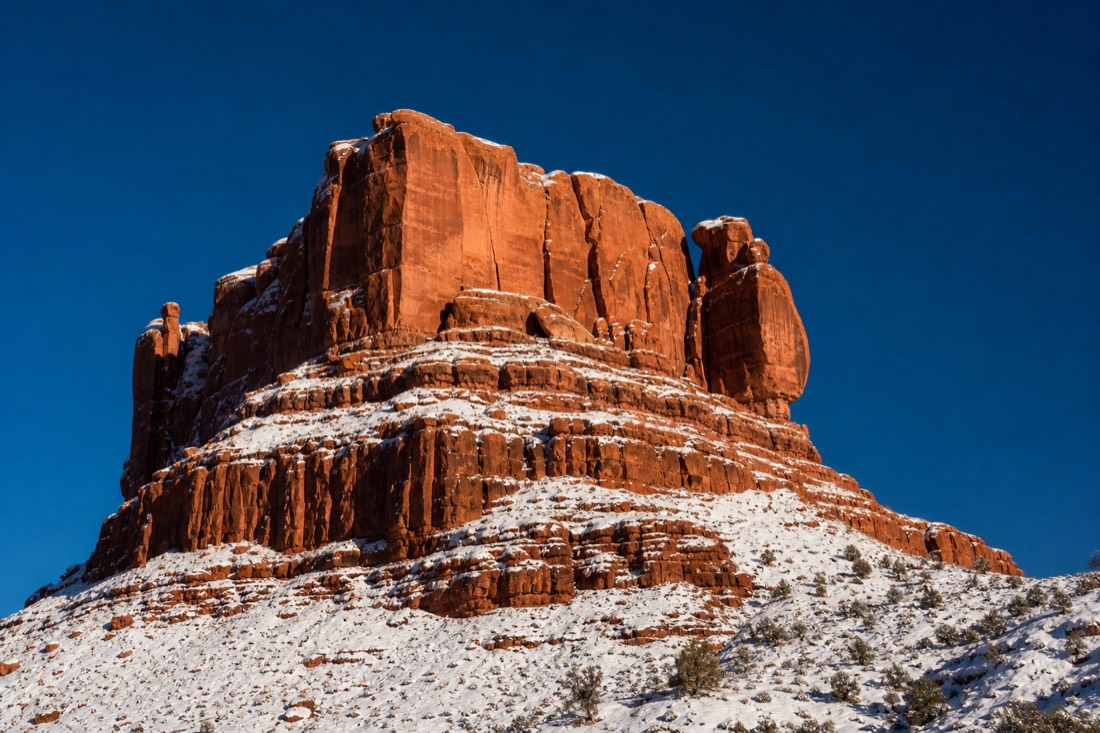
Snow here is a lucky break, not a booking you can plan around. Some winters bring several dustings, others almost none, and when it does fall it rarely sticks for long. What makes it worth the gamble is the contrast: the rust-red rock and the white snow together look almost unreal, and photographers travel a long way hoping to catch it. The dry, clear air that follows a storm is a gift in its own right, the same clarity that makes winter one of the best seasons for the night sky. If dark skies are part of the draw, I wrote a full piece on stargazing in Monument Valley, and the crisp winter nights are the sharpest of the year. For the wider landscape context, the Monument Valley overview covers the high-desert setting that makes the cold snaps so clear.
Can you still take a tour in winter?
Yes. Navajo-guided tours run year-round, including winter, though the format can change with the cold. Open-air vehicles are often swapped for enclosed, heated ones, and some operators adjust departure times to the shorter daylight. Booking a guide in winter is smart, because the dirt loop can turn icy or muddy after snow.
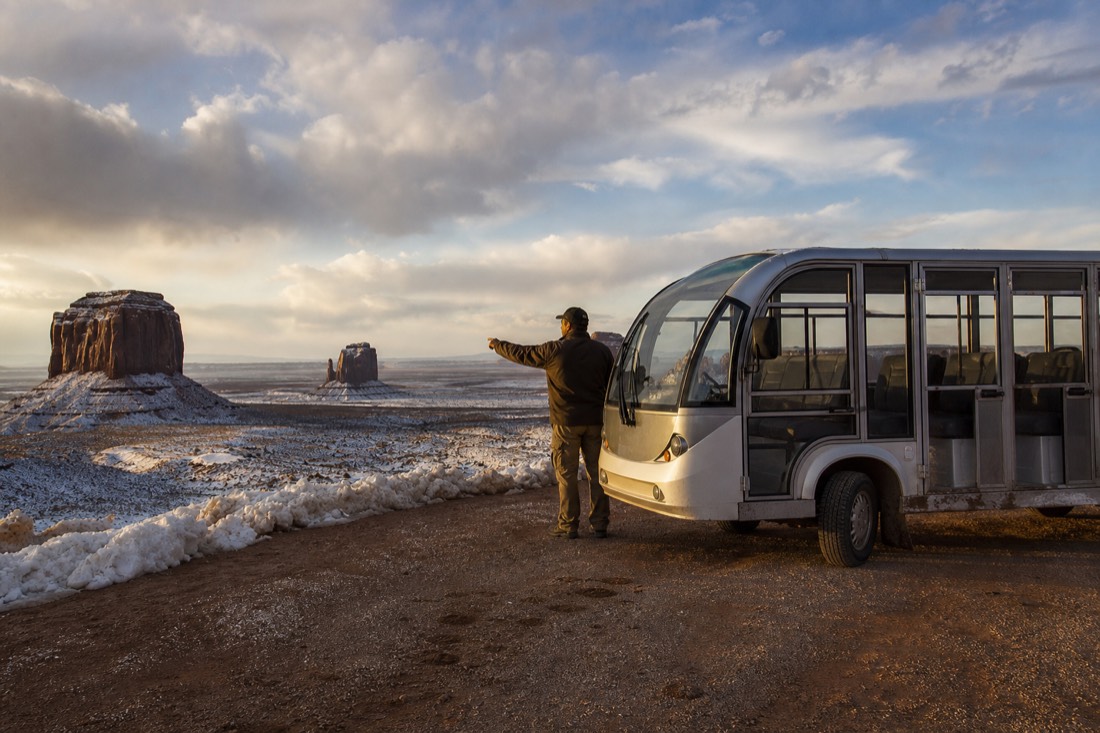
This is the part that surprises people: the valley does not shut down for winter. The guided runs keep going, and honestly the cold months are when a Navajo guide earns their keep most. After snow or a hard freeze, the 17-mile dirt loop turns to mud and ice in the low spots, and a guide knows which sections drain and which to avoid. The scenic and backcountry trips still reach the overlooks a self-driver cannot, so the easiest winter plan is to let someone else read the road.
| What runs in winter | Status | Note |
|---|---|---|
| Navajo-guided scenic tours | Running | May use enclosed, heated vehicles |
| Backcountry jeep tours | Running | Guide reads icy or muddy sections |
| Sunrise and sunset tours | Running | Timed to the shorter winter daylight |
| Self-drive 17-mile loop | Open, weather permitting | Can turn muddy or icy after snow |
| Hogan overnight | Running | Cold nights, clearest winter skies |
What should you pack for a winter visit?
Pack for real cold, especially at dawn and after sunset, when temperatures can drop below freezing. Bring insulated layers, a warm hat and gloves, and sturdy waterproof footwear for the muddy or icy dirt road. Add sun protection, because the high-desert winter sun is still strong, and plenty of water despite the cold.
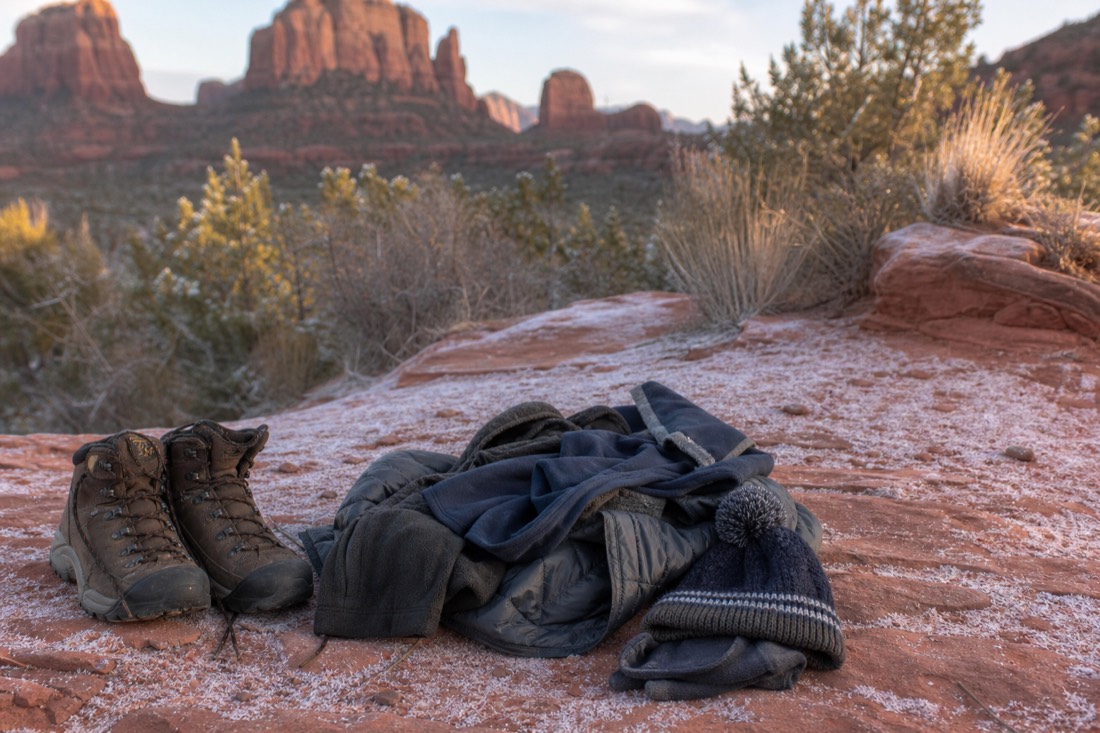
The mistake I see most is people underdressing because they picture the desert as warm. At this elevation the winter mornings bite, and the open-air overlooks have no shelter from the wind. Layers are the answer: something warm you can peel off once the sun is up and the temperature climbs. Waterproof boots matter more than usual too, because a thawing dirt loop gets messy fast. Do not skip sun protection or water either, since the dry winter air dehydrates you even when you do not feel hot.
| Item | Why you need it |
|---|---|
| Insulated layers | Freezing dawns, warmer midday, big daily swing |
| Warm hat and gloves | Wind at exposed overlooks, cold early starts |
| Waterproof boots | Muddy, icy dirt road after snow or thaw |
| Sun protection | High-desert sun is strong even in winter |
| Water | Dry air dehydrates you despite the cold |
Is winter a good time to visit Monument Valley?
Winter is a rewarding time to visit if you trade expectations. You get thin crowds, the clearest air of the year, dramatic low light, and a real chance at snow on the red rock. In return you accept short hours, cold nights, and a dirt loop that can be muddy or icy. For many travelers that trade is well worth it.
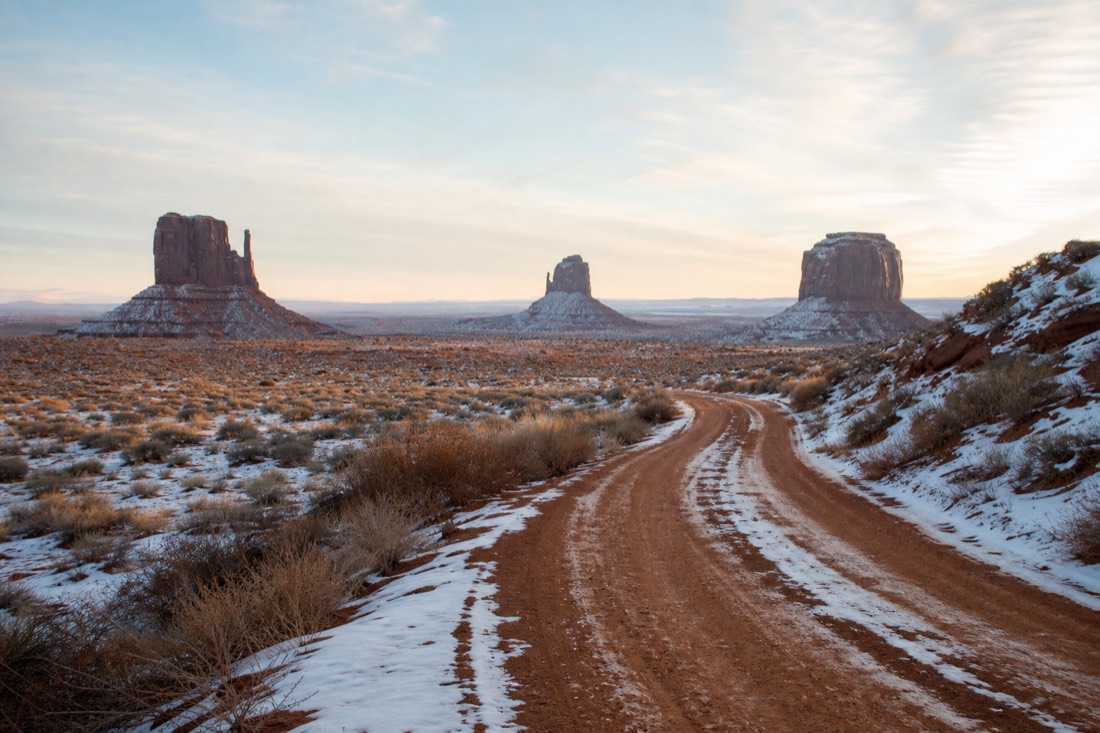
I send people to winter when they care more about atmosphere than about long days. The valley in the cold months feels vast and quiet in a way the summer crowds never allow, and standing at an empty overlook with fresh snow on the buttes is a memory that outlasts the chill. If you want to drive the loop yourself, read my notes on the Monument Valley scenic drive first, because the surface is the whole story in winter. And if the short hours and the icy road make you want a guide, letting a Navajo driver handle the cold-weather logistics turns a hard day into an easy one. The season is not for everyone, but for the right traveler it is the best-kept secret in the Southwest.
Make room in your itinerary
Navajo Spirit scenic tour
Have a travel date in mind? Check this option before arranging the rest of your trip. A Navajo guide connects the Mittens, restricted arches and local stories.
Editorial starting point; use the choices below to check the fit.
Compare options and tailor your choice
Shared tour, English guide, about 3 hours. Park entry and tips extra. Minimum two to operate; solo travelers must arrange pairing with the operator.
Meet at the round, green-roof Navajo Welcome Center off US-163; return there. No hotel pickup.
Visit the Totem Pole, Sun’s Eye and John Ford Point in the day’s changing light. 3 hours, English guide, water and native music. Select sunrise OR sunset for your month on Viator. Park entry extra. Uneven surfaces; unsuitable for back conditions. Children need two paying adults.
Ride to Big Hogan, Sun’s Eye and the Totem Pole with a Navajo guide. Shared 2.5-hour tour, English. Park entry and tips extra. Hogan visit and weaving excluded. Not recommended for pregnancy, back/spinal or serious heart conditions.
GPS-triggered stories accompany your own drive, with offline audio downloaded in advance. Allow 2–3 hours. English/French audio; one purchase per car. No live guide, vehicle or park admission. Road access depends on conditions and your vehicle.
Select a date to see the Viator departure schedule.
Schedule only. Final availability, options and price are confirmed on Viator.Affiliate links: we may earn a commission at no extra cost to you. Product facts checked September 15, 2026.