The Monument Valley Scenic Drive: Driving the 17-Mile Loop Yourself
You can drive the famous loop in your own car without a guide. Here is what the dirt road is really like, which overlooks you reach, and where the self-drive stops short.
 Written with Daniel Begay, Monument Valley tour guide & Navajo cultural specialist
Short answer
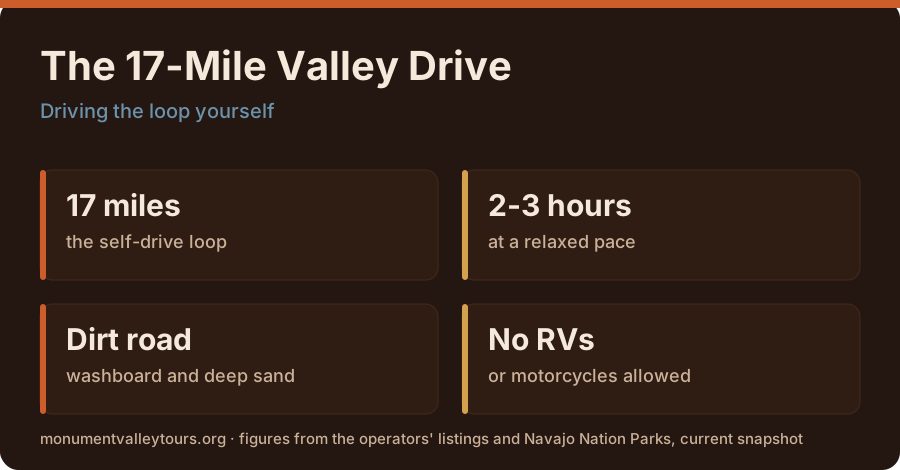
Yes, you can drive the 17-mile Valley Drive loop in your own vehicle without a guide. It is a rough dirt road that takes about two to three hours past the famous overlooks. The backcountry (arches, hogans, and the deeper formations) stays closed to self-drivers and needs a Navajo guide.
The first cattle guard past the visitor center is where the pavement ends and the real drive begins. From there it is red dirt, washboard ripples, and a few sandy dips that make a rental sedan groan. I have watched plenty of drivers stop at the top of that first descent, look at the switchback dropping toward the West Mitten, and decide right there whether they trust their car. Most do fine. A few should have rented something taller.
Booking choice: GPS-triggered stories accompany your own drive, with offline audio downloaded in advance. Explore Monument Valley audio drive
At a glance: Allow 2–3 hours. English/French audio; one purchase per car. No live guide, vehicle or park admission. Road access depends on conditions and your vehicle.
Can you drive Monument Valley yourself without a guide?
Yes. The 17-mile Valley Drive is open to private vehicles for a per-vehicle fee, no guide required. You follow a one-way dirt loop past most of the iconic overlooks at your own pace. What you cannot reach on your own is the backcountry: the arches, the hogans, and the deeper formations that sit on Navajo land and need a licensed Navajo guide.
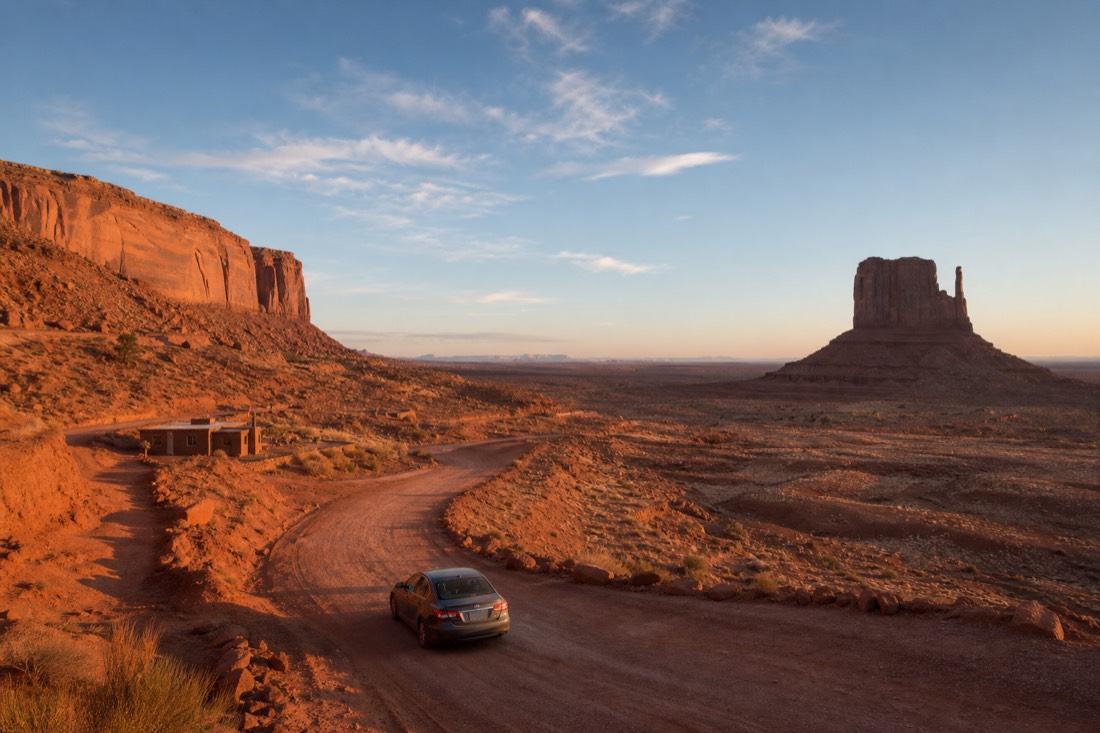
The self-drive loop is the classic Monument Valley experience for a reason. You control the timing, you stop where you like, and you can spend an hour at a single overlook if the light is doing something worth watching. The road starts near the visitor center by The View Hotel, the only hotel inside the park, and winds down into the valley floor before climbing back. Plan two to three hours if you stop at the pullouts, longer if you are shooting seriously. For the deeper question of whether a guide is worth it at all, read do you need a guide for Monument Valley.
What overlooks do you reach on the Valley Drive?
The self-drive loop passes most of the postcard formations: the Mittens and Merrick Butte at the first overlook, Elephant Butte, the Three Sisters, John Ford Point, Camel Butte, Artist's Point, and the North Window, with a distant view of the Totem Pole. The close-up backcountry formations are not on this road.
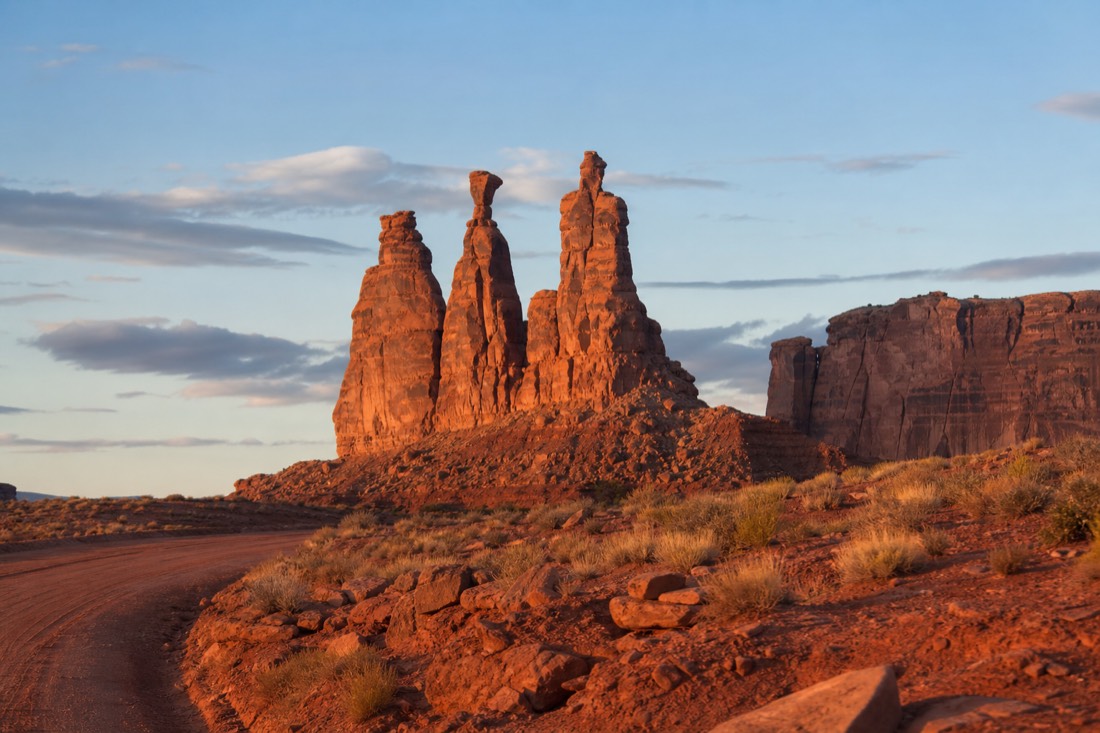
John Ford Point is the one people recognize without knowing the name, the flat promontory where the director framed so many of his Westerns. The encyclopedic list of the valley's buttes covers the geology, but on the ground the loop reads as a sequence of pullouts, each with its own angle on the buttes. Here is what you actually reach, and what stays out of reach.
| Overlook on the loop | What you see | On the self-drive road? |
|---|---|---|
| The Mittens & Merrick Butte | The signature first view from near the visitor center | Yes |
| Elephant Butte | Broad butte early on the loop | Yes |
| John Ford Point | The famous film promontory | Yes |
| Three Sisters | Slender rock spires | Yes |
| Camel Butte | Mid-loop formation | Yes |
| Artist's Point & North Window | Wide valley panoramas | Yes |
| Totem Pole | Distant view only from the loop | Partial |
| Ear of the Wind, Moccasin Arch, Big Hogan, Sun's Eye | Arches and hogans | No, guide only |
What is the road actually like, and which vehicles can handle it?
The Valley Drive is unpaved dirt: washboard ripples, loose gravel, and stretches of deep sand, with no services once you are on it. High-clearance SUVs and crossovers handle it comfortably. Low sedans and sports cars struggle in the sand and over the ruts. Motorcycles and RVs are prohibited outright.
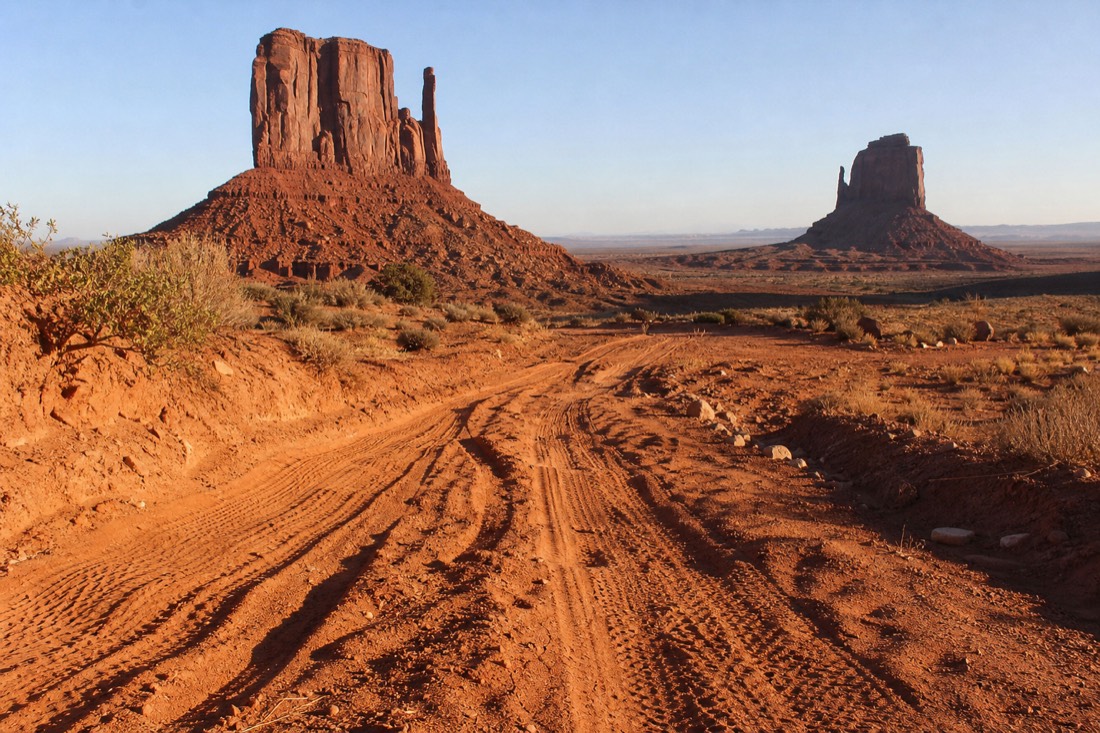
The surface is the single biggest surprise for first-timers. It is not maintained like a park road, and after the summer monsoon rains it gets worse, with mud and deeper ruts in the low spots. Nothing here needs four-wheel drive in dry weather, but ground clearance matters, and a nervous driver in a low rental will spend the whole loop watching the road instead of the buttes. If your dates fall in the wet months, cross-check the best time to visit for how the monsoon reshapes the surface.
| Vehicle | Valley Drive? | Notes |
|---|---|---|
| High-clearance SUV or crossover | Best choice | Handles washboard and sand with ease |
| 4x4 or truck | Ideal | Overkill in dry weather, welcome after rain |
| Standard sedan | Doable with care | Slow over ruts, watch the deep sand |
| Low sports car | Struggles | Real risk of scraping or bogging down |
| Motorhome / RV | Prohibited | Not permitted on the loop |
| Motorcycle | Prohibited | Not permitted on the loop |
Is there a self-drive audio tour, or should you take a guided jeep?
There is a GPS-triggered audio option: a phone app that narrates the loop as you drive it yourself, with no guide in the vehicle. It suits independent drivers who still want context. If you want the arches, the hogans, and Navajo commentary, a guided backcountry jeep is the better spend, because it reaches ground the loop road cannot.
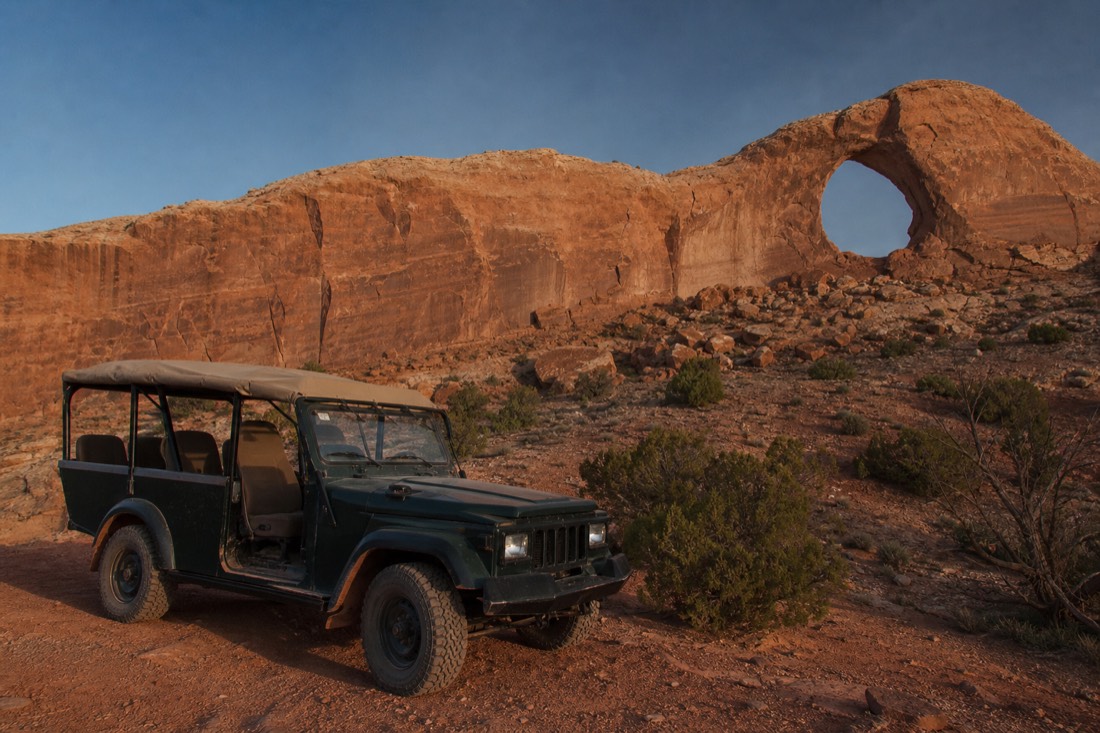
The audio self-drive fills a real gap. You keep the freedom of your own car and your own schedule, but you get the stories and the names as you go, which the bare loop does not give you. If that mix of independence and narration is what you want, you can see the self-guided audio tour here. It runs the loop only, though, so it shares the same ceiling as any self-drive: the backcountry stays off-limits without a licensed guide. That is where the decision usually lands.
Side by side, the trade-off between driving it yourself and taking a guided jeep looks like this:
| Self-drive loop | Guided jeep tour | |
|---|---|---|
| Reaches the backcountry | No | Yes |
| Navajo guide and stories | No | Yes |
| Who handles the rough road | You do | The driver |
| Time | 2 to 3 hours | About 2.5 hours |
| Cost | Entrance only (~$10pp) | Entrance plus the tour price |
What does a stop-by-stop drive of the loop look like?
The one-way loop runs as a sequence of pullouts. From the visitor center you drop to the Mittens and Merrick Butte overlook, roll past Elephant Butte, reach John Ford Point near the midpoint, then curve through Camel Butte, the Three Sisters, Artist's Point, and the North Window before the climb back out. Budget two to three hours.
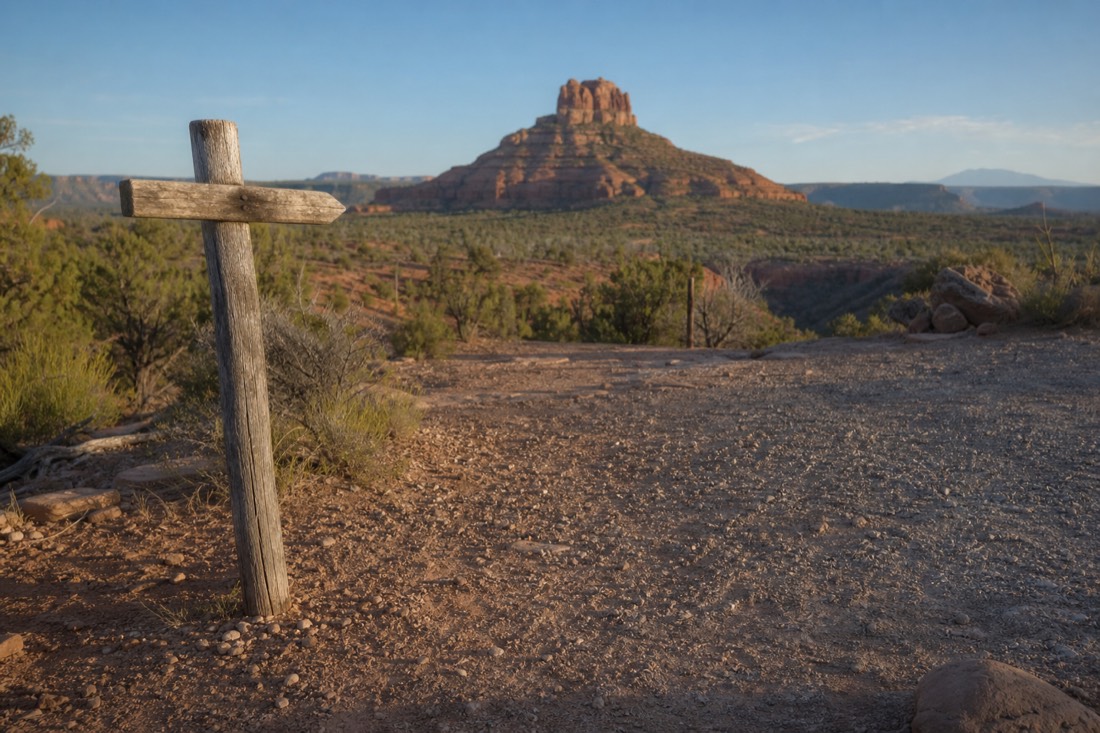
Once the pavement ends, the loop reads like a set list. Each pullout has its own angle, and the trick most people miss is that the drive is not evenly paced: the first mile past the gate holds the two views everyone came for, then the road spreads the rest out over the next fifteen miles. I have run this loop in every season since I started guiding here in 2022, and the timings below are my own working estimates, not a posted schedule. Traffic, light, and how long you linger all move them.
The first stop is the rim by the visitor center, where the Mittens and Merrick Butte line up for the classic frame. Give it fifteen or twenty minutes before you even start down. The switchback descent toward the West Mitten is worth a short pause of its own, then Elephant Butte comes up with good side light early in the day. John Ford Point sits near the midpoint and earns the longest stop, twenty to thirty minutes if the light is working, because it is the promontory the director framed in film after film. From there the road curves past Camel Butte and the Three Sisters spires, opens at Artist's Point for the widest panorama on the loop, and reaches the North Window, where the distant Totem Pole lines up between two buttes. The climb back to the gate closes the circuit.
None of this is a race. The 17 miles are slow dirt, and the pauses stack up faster than you expect. Here is how a typical run breaks down on my watch.
| Stop on the loop | Rough time from the gate | Why you stop | Typical pause |
|---|---|---|---|
| Visitor center rim | 0 min | The Mittens and Merrick Butte, the classic first frame | 15 to 20 min |
| First descent switchback | 5 to 10 min | The road dropping toward the West Mitten | 5 min |
| Elephant Butte | 20 min | Broad butte with good early side light | 5 to 10 min |
| John Ford Point | 40 to 50 min | The film promontory, the loop's signature stop | 20 to 30 min |
| Camel Butte and Three Sisters | 60 to 70 min | Slender spires at the mid-loop | 10 min |
| Artist's Point | 80 to 90 min | The widest panorama on the drive | 10 to 15 min |
| North Window | 100 to 110 min | Framed view toward the distant Totem Pole | 10 to 15 min |
What mistakes do drivers make on the Valley Drive?
The common errors are all avoidable: arriving too late for the last entry, bringing a low rental into deep sand, driving the washboard too fast, skipping water and a full tank, and wandering off the marked road onto tribal land. None of them ruin the day, but each one costs you time, comfort, or a scraped bumper.
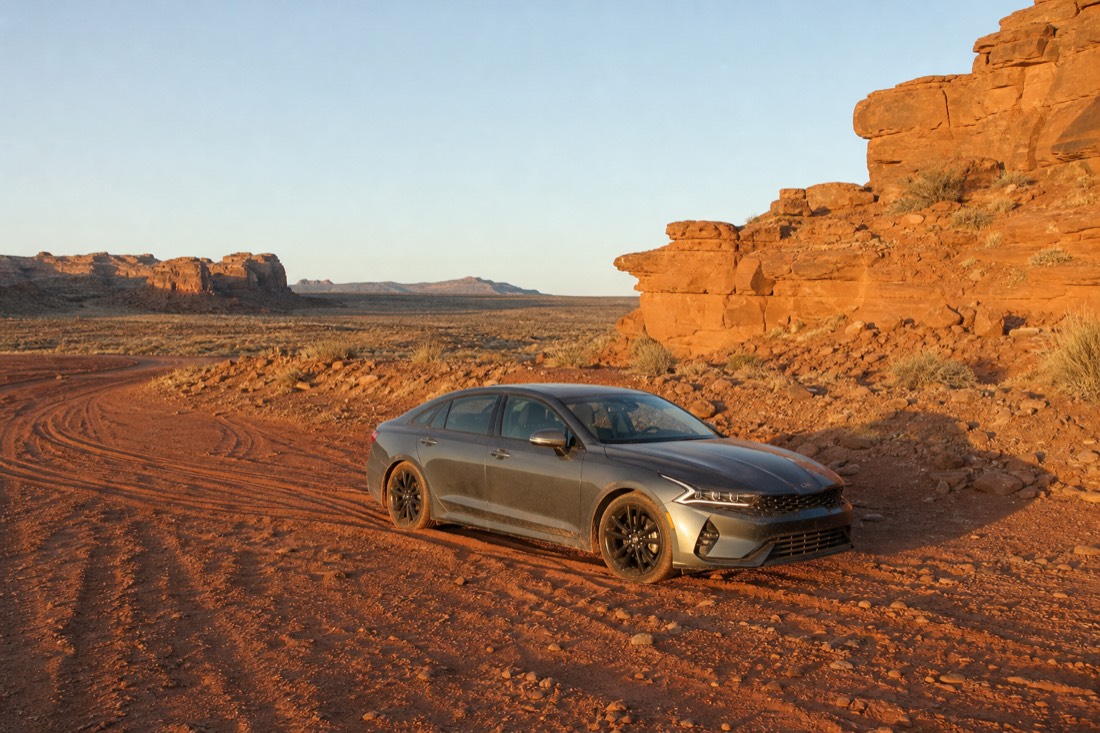
After a few years of watching cars come off this loop, the same handful of mistakes repeat. The biggest is timing. Last entry is around 4:30pm in summer and about 2:30pm in winter, and I regularly see people roll up an hour before closing expecting to do the full drive at a photographer's pace. It does not fit. The gate closes behind you, and a rushed loop in flat evening light is the worst version of this place.
The second is the vehicle. A low sports car or a bargain sedan can technically make it, but the deep sand in the dips is where they bog or scrape, and a driver worried about the underside spends the whole loop staring at the road instead of the buttes. Slow is the answer either way. Washboard punishes speed, and the ripples that feel smoother at 30 miles an hour are shaking your car apart underneath. I tell every visitor the same thing: treat it as a crawl, not a drive.
The rest are smaller but real. There are no services once you pass the visitor center, so carry water and start with a full tank. Stay on the one-way marked road, because the land on either side is tribal and the backcountry is closed to unguided visitors by Navajo Nation rule. And ask before you photograph any Navajo resident you meet, since drones are banned outright and people are not scenery. For the deeper etiquette side, the guide on what to know before visiting Monument Valley covers it in full.
| Do | Don't |
|---|---|
| Enter early, well before the last entry cutoff | Arrive an hour before closing and expect the full loop |
| Drive a higher-clearance vehicle, or a sedan slowly | Push a low sports car through the sandy dips |
| Carry water and start with a full tank | Count on any fuel or services past the visitor center |
| Keep to the one-way marked road | Cut onto tribal land or the closed backcountry |
| Ask before photographing Navajo residents | Fly a drone or shoot people without permission |
Is the loop OK with kids or a nervous driver?
Mostly yes. The loop has no cliff-edge drop-offs and moves at low speed, so kids ride it fine and a careful driver can too. The real stress is the surface, not exposure: washboard and sand demand slow, steady hands. A nervous driver in a taller vehicle, taking it slowly, usually finishes relaxed.
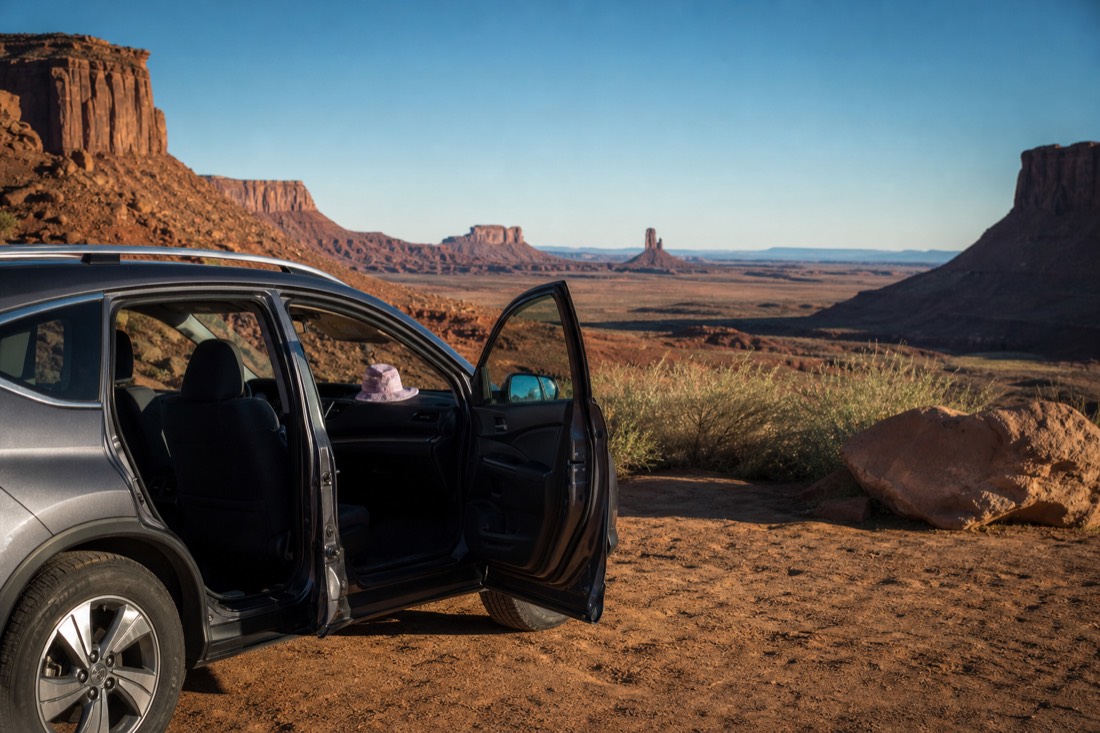
Parents ask me this at the gate all the time, usually with a worried glance at the dirt dropping away below. The honest answer is that the Valley Drive is far gentler than it looks. There are no guardrail-free cliff edges where a wrong turn sends you over. The road stays on the valley floor and the descents are short and low-angle. Kids tend to love it, because the constant stops and the sheer scale of the buttes hold their attention better than a paved viewpoint ever could. Frequent pullouts mean nobody is stuck in a seat for long.
For a nervous driver, the fear is almost always the surface rather than the height. Washboard and loose sand feel alarming the first time, but they punish speed, not caution. Go slow, keep both hands on the wheel through the sandy dips, and the loop turns into a patient crawl rather than a white-knuckle drive. A higher-clearance rental removes most of the worry on its own. I have talked plenty of first-timers down from turning around at the top of that first descent, and I have yet to meet one who regretted continuing.
Seniors and anyone with limited mobility do well here too, because the overlooks are drive-up. You can take in the Mittens, John Ford Point, and Artist's Point without leaving the car if walking is hard. That drive-up access is one reason I point mixed-age groups toward the self-drive over a bouncier open-air jeep. For families and older travelers planning the wider trip, the guide on Monument Valley for families and seniors goes deeper on pacing and comfort.
| Traveler type | Loop suitability | What to plan for |
|---|---|---|
| Families with young kids | Good | No cliff edges, low speed, drive-up overlooks, frequent stops |
| Nervous or first-time dirt-road driver | Fine with care | Slow pace, a higher-clearance vehicle, washboard and sand |
| Seniors or limited mobility | Good as passengers | Overlooks are drive-up with little or no walking |
| Confident driver in a low rental | Doable | Deep sand is the main hazard, take the ruts slowly |
| Motorcycle or RV traveler | Not an option | Both are barred from the loop; park at the visitor center |
How long does the 17-mile loop take, and how do you plan the day?
Budget two to three hours for the loop with stops, longer for photography. Pair it with park hours: last entry is around 4:30pm in summer and about 2:30pm in winter, so a late-day loop is not always possible. Arrive with water, a full tank, and no expectation of services once you leave the visitor center.
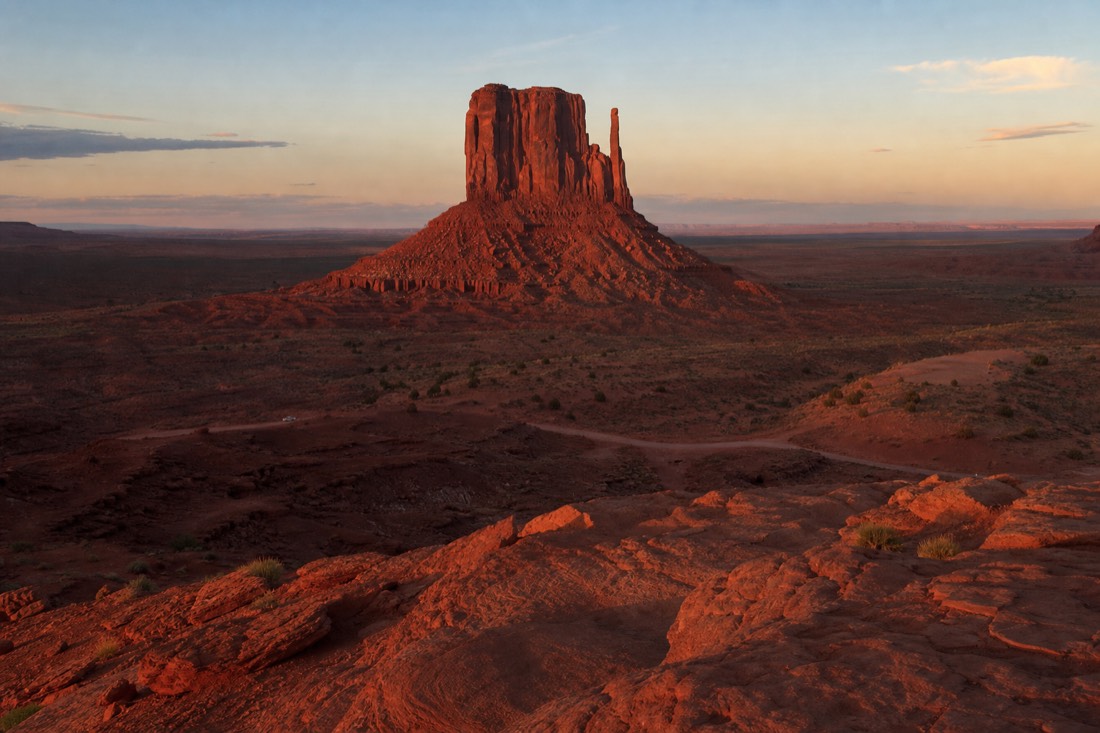
The 17 miles are slow miles. Between the surface, the one-way flow, and the fact that you will stop far more than you plan to, the loop eats time in the best way. My standard advice: enter early, drive the loop before the midday glare flattens everything, and save the low golden light for the overlooks near the visitor center. Fees and current hours are posted by Navajo Nation Parks and Recreation. If you are weighing the self-drive against a full guided experience, the Monument Valley tour prices guide lays out what each option includes.
Whichever way you drive it, give yourself more time than the mileage suggests, and browse the full set of planning pieces on the guides hub before your visit.
Make room in your itinerary
Monument Valley audio drive
Have a travel date in mind? Check this option before arranging the rest of your trip. GPS-triggered stories accompany your own drive, with offline audio downloaded in advance.
Editorial starting point; use the choices below to check the fit.
Compare options and tailor your choice
Allow 2–3 hours. English/French audio; one purchase per car. No live guide, vehicle or park admission. Road access depends on conditions and your vehicle.
Use your own vehicle; start at the Monument Valley Post Office / Welcome Center as directed in the app.
Ride to Big Hogan, Sun’s Eye and the Totem Pole with a Navajo guide. Shared 2.5-hour tour, English. Park entry and tips extra. Hogan visit and weaving excluded. Not recommended for pregnancy, back/spinal or serious heart conditions.
A Navajo guide connects the Mittens, restricted arches and local stories. Shared tour, English guide, about 3 hours. Park entry and tips extra. Minimum two to operate; solo travelers must arrange pairing with the operator.
Select a date to see the Viator departure schedule.
Schedule only. Final availability, options and price are confirmed on Viator.Affiliate links: we may earn a commission at no extra cost to you. Product facts checked September 15, 2026.