Navajo Rug Weaving: The Living Craft of Monument Valley
Navajo rug weaving explained: Churro wool, regional styles like Two Grey Hills and Ganado Red, buying authentic, and where to watch it near Monument Valley.
 By Daniel Begay, Monument Valley tour guide & Navajo cultural specialist
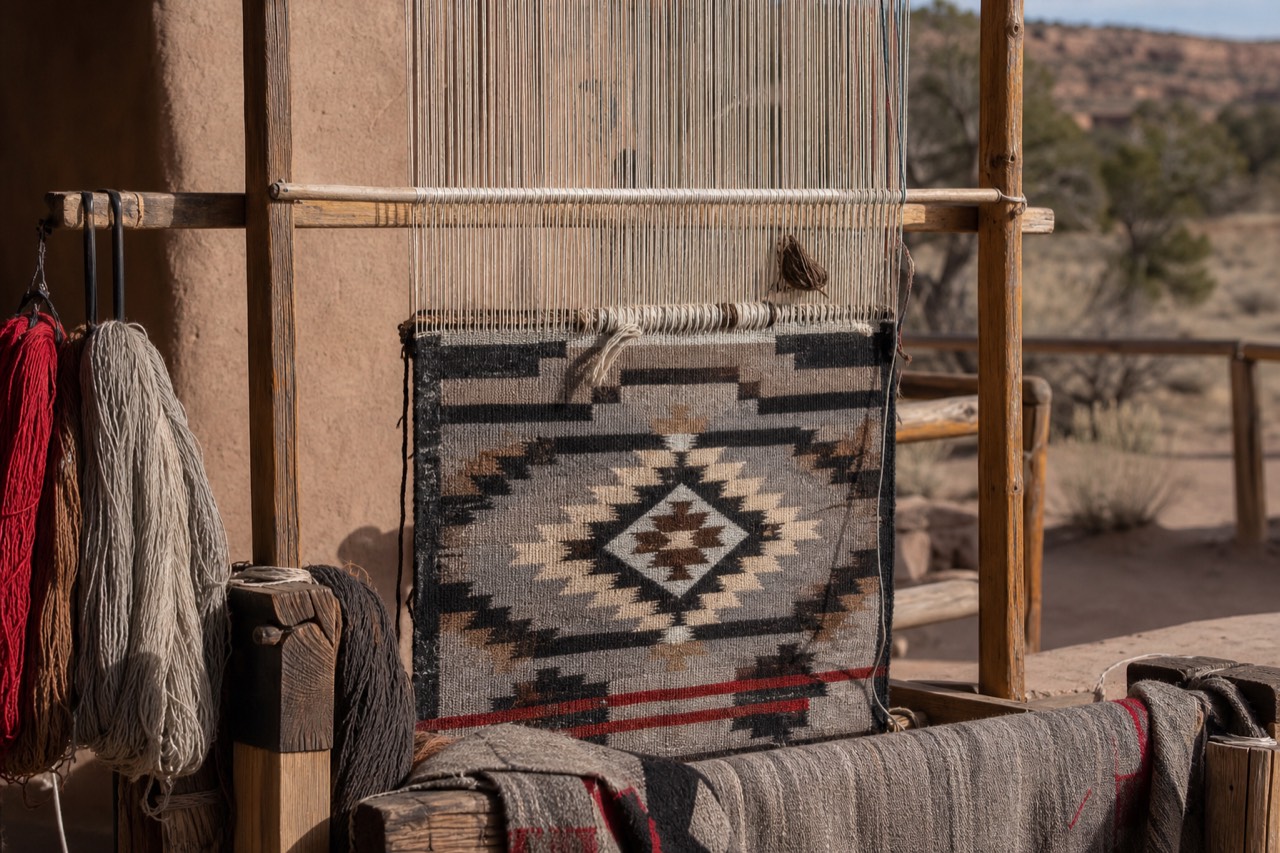
A loom leans against the red wall of a trading post near Goulding's with half a rug still growing on it, and I have watched visitors stand there for twenty minutes without a word. My aunt weaves. I have hauled wool for her, and I have seen how one rug eats months of her evenings, so when a guest calls a Navajo rug "just a blanket," I usually walk them over to a loom and let the thing speak for itself. Once you see the work in it, the price stops looking like a price.
Booking choice: The extended route adds a hogan visit and a live Navajo rug-weaving demonstration. Explore Extended tour with Navajo weaving
At a glance: Shared 3.5-hour tour, English guide, open 4x4. Park entry extra. Children accompanied; unsuitable for back/spinal or serious heart conditions and pregnancy beyond five months.
What is Navajo rug weaving?
Navajo rug weaving is the Diné tradition of hand-weaving wool on an upright loom into blankets and rugs. The wool traditionally comes from Churro sheep, and the craft has been carried by Navajo women for generations. Each rug is woven by hand, one weft at a time, and no two ever come out exactly alike.
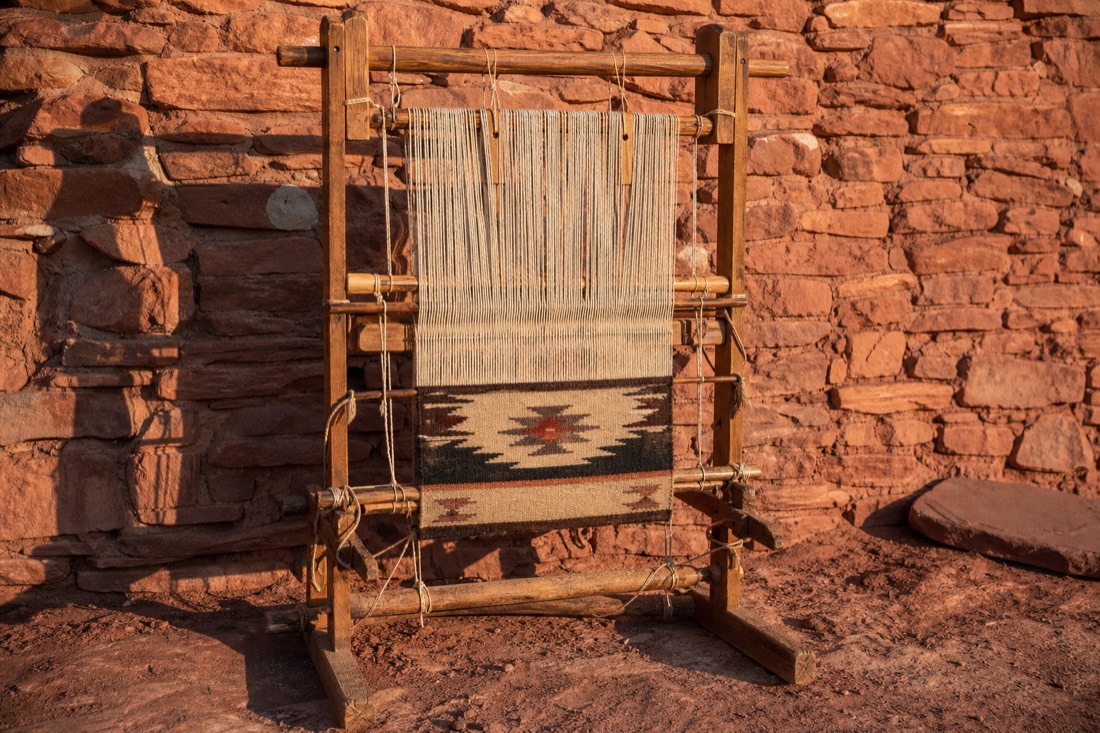
This is not craft-fair hobby work. Weaving here is old, skilled, and tied to identity, and the encyclopedic record of Navajo weaving tracks how it grew from wearing blankets into the rugs collectors chase today. What stays constant is the method: an upright loom, handspun wool, and a weaver working from the bottom up with the whole pattern held in her head. A rug is a record of hundreds of hours by one person's hands, which is exactly why it carries the weight it does in a Navajo home.
What are the main regional styles of Navajo rug?
Navajo rugs are known by regional styles tied to the communities that developed them. Two Grey Hills uses natural undyed wool in blacks, greys, browns, and whites. Ganado Red centers on a deep red with black and grey. Teec Nos Pos is the most intricate, with bold colors and detailed bordered patterns.
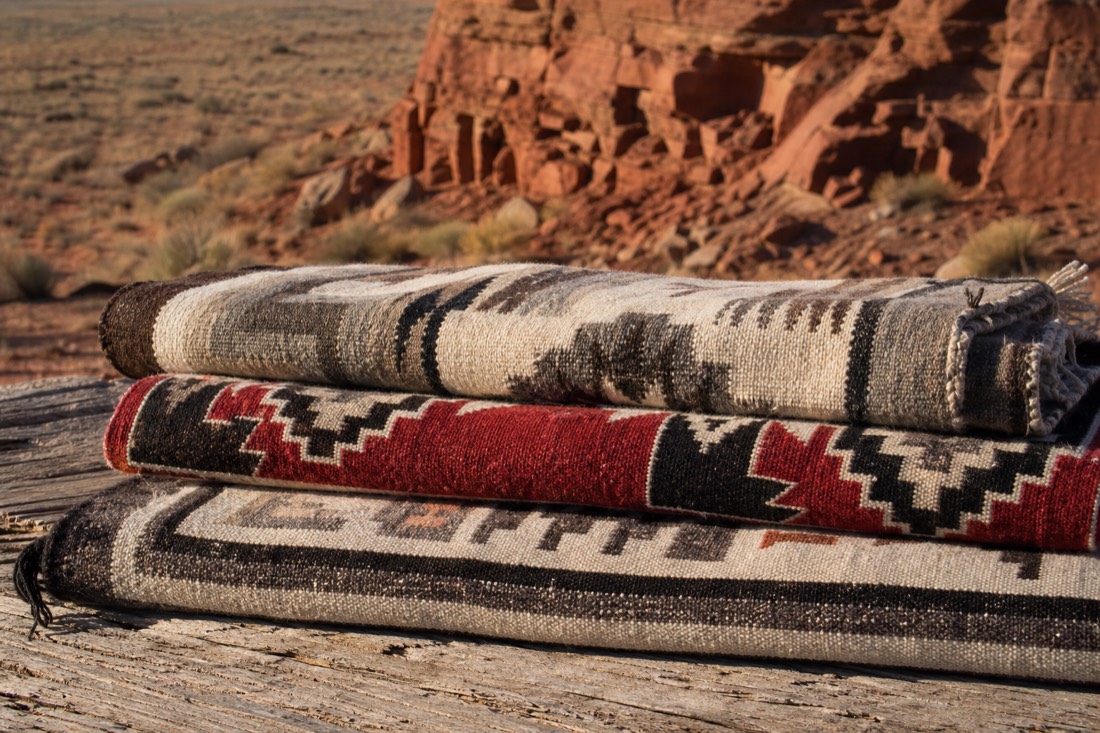
Buyers learn these names fast, because a style tells you where a rug's design tradition comes from. Two Grey Hills is prized for its fine, natural-wool geometry with no dye at all. Ganado Red is the one most people picture when they think "Navajo rug," built around that deep central red. Teec Nos Pos goes the other way, packed with color and framed by a busy border. The style names in the record of Navajo weaving match what you will hear a trader use across the counter.
| Style | Signature look | Palette |
|---|---|---|
| Two Grey Hills | Fine geometric, natural wool | Undyed black, grey, brown, white |
| Ganado Red | Bold central motif | Deep red with black, grey, white |
| Teec Nos Pos | Intricate bordered pattern | Many colors, heavily detailed |
Where does the Spider Woman weaving tradition come from?
In Navajo tradition, weaving was taught to the Diné by Spider Woman, a holy figure who wove the first loom from elements of the sky and the earth. The story frames weaving as a sacred gift rather than a mere craft. Many weavers still speak of it with that respect, passing skills from mother to daughter.
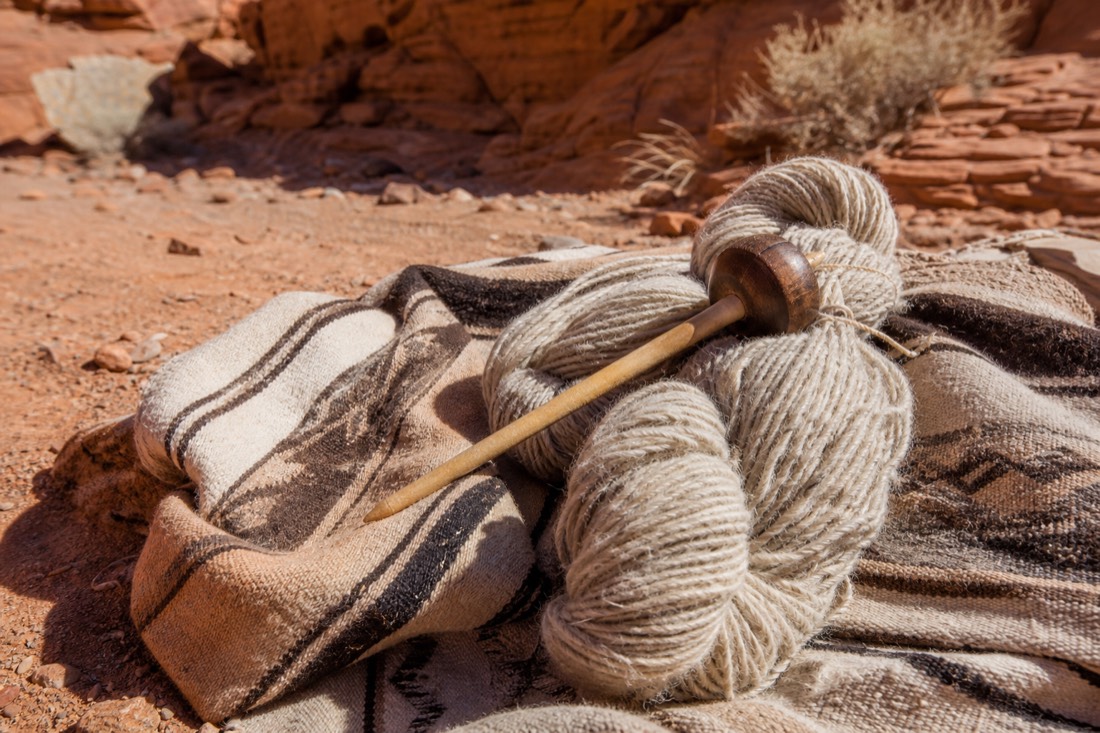
Ask an older weaver where the craft comes from and you may hear Spider Woman before you hear anything about markets or collectors. In the tradition, she taught the people to weave, and Spider Man built the loom. That is why weaving is not treated as a side hustle. It is a gift with rules and respect attached, and the knowledge moves down through families rather than through schools. Understanding that changes how you look at a finished rug, and it sits alongside the wider etiquette in our post on visiting Navajo Nation land respectfully.
How long does it take to weave a Navajo rug, and what is Churro wool?
A fine Navajo rug can take months of work, from shearing and cleaning the wool through carding, spinning, dyeing, and the slow weaving itself. The wool traditionally comes from the Navajo-Churro sheep, a hardy breed with long, low-grease fleece that spins well and holds natural colors beautifully. None of it is fast.
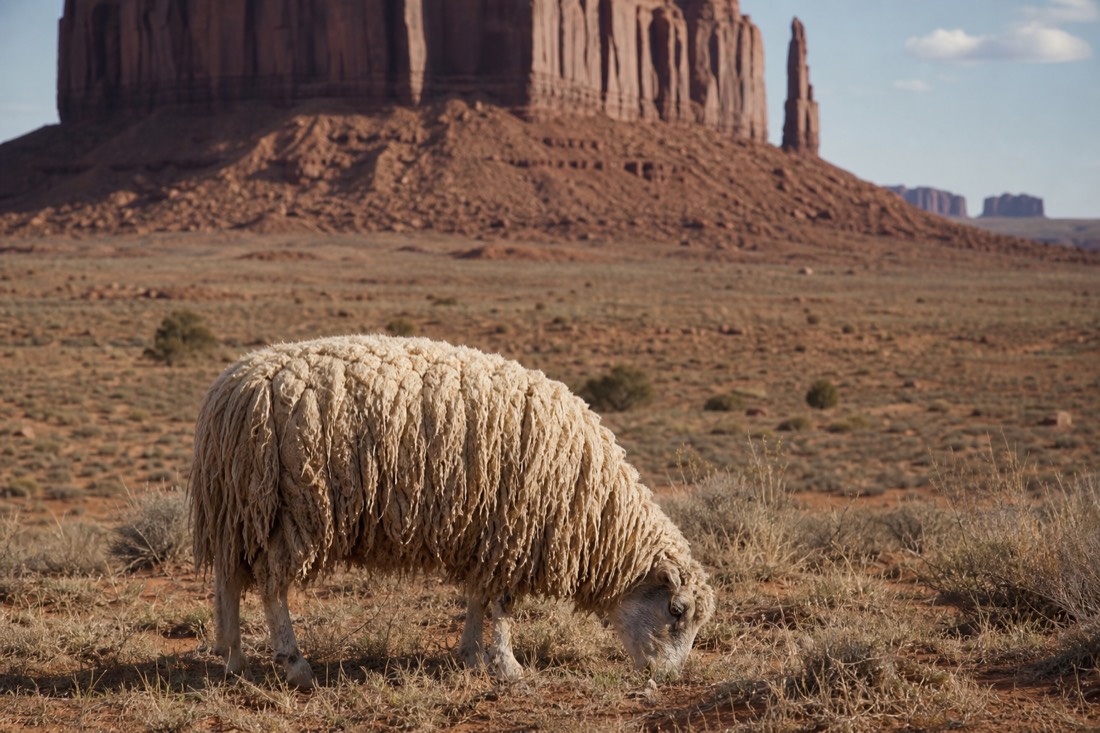
People always want a number, so here it is honestly: months, not days, for a rug of any size and detail. Before a single row is woven, the wool has to be sheared, washed, carded straight, spun into yarn, and often dyed. Churro sheep make that whole chain easier, because their fleece is long, low in grease, and takes natural dye cleanly, which is why the breed and the craft grew up together on this land. A big Teec Nos Pos with a full border can run a weaver most of a year. When you hold one, you are holding that year.
How do you buy an authentic Navajo rug and avoid fakes?
Buy from a reputable trading post or directly from the weaver, and ask for the weaver's name and community. A genuine Navajo rug is handwoven wool with small natural irregularities, sold with provenance. Mass-produced imports, often labeled "Navajo-style," are machine-made, suspiciously cheap, and carry no weaver's name. Price reflects the months of work.
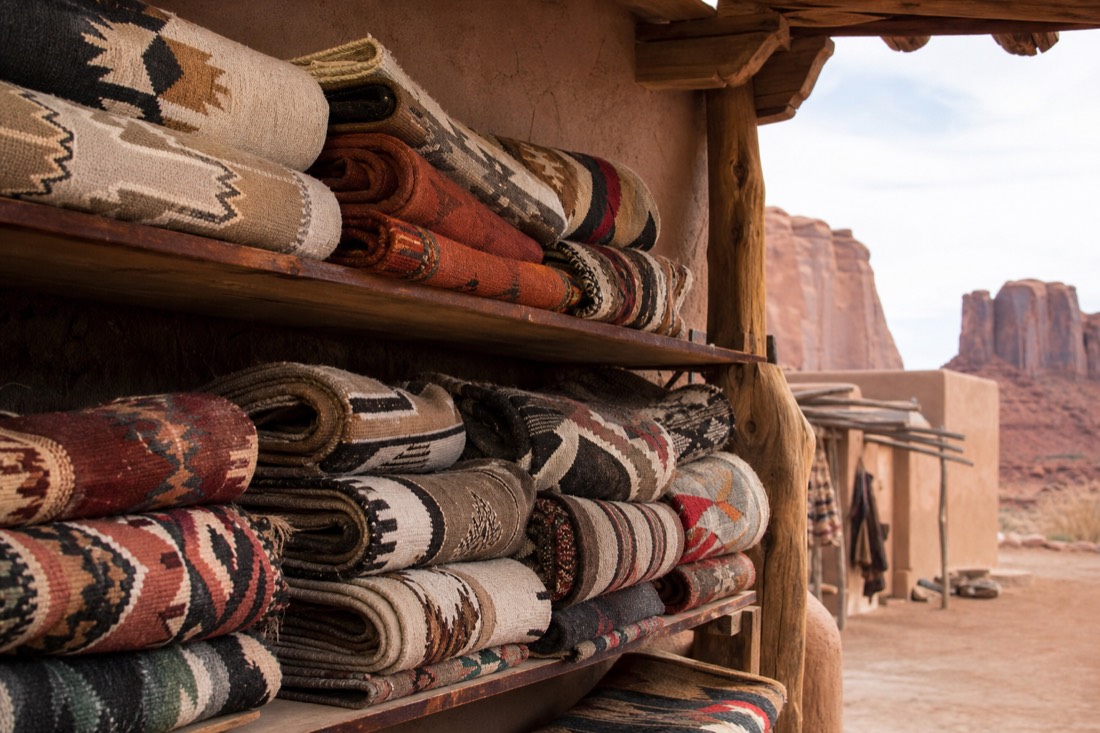
The gap between real and fake is wide, and once you know the tells it is not hard to spot. A genuine rug has a name behind it, a weaver and a community you can ask about, and small hand-made irregularities that a machine never leaves. The word "Navajo-style" on a tag is the giveaway that it is an imitation, and so is a price that seems too good for the hours involved. Goulding's Trading Post just outside the park and the historic Hubbell Trading Post National Historic Site farther out are two places built exactly for buying with confidence.
| Sign | Authentic Navajo rug | Imitation |
|---|---|---|
| Maker | Named weaver, known community | No name, factory-made |
| Material | Handspun wool | Synthetic or machine-milled yarn |
| Price | Reflects months of work | Suspiciously cheap |
| Where sold | Trading post or direct from weaver | Souvenir bins, vague "Navajo-style" tags |
Where can you see Navajo weaving near Monument Valley?
You can watch Navajo weaving at Goulding's Trading Post and, farther out, at Hubbell Trading Post National Historic Site. Some Monument Valley backcountry and tribal tours include a live weaving demonstration on the route, which is the closest most visitors get to seeing a loom worked by hand out on the land.
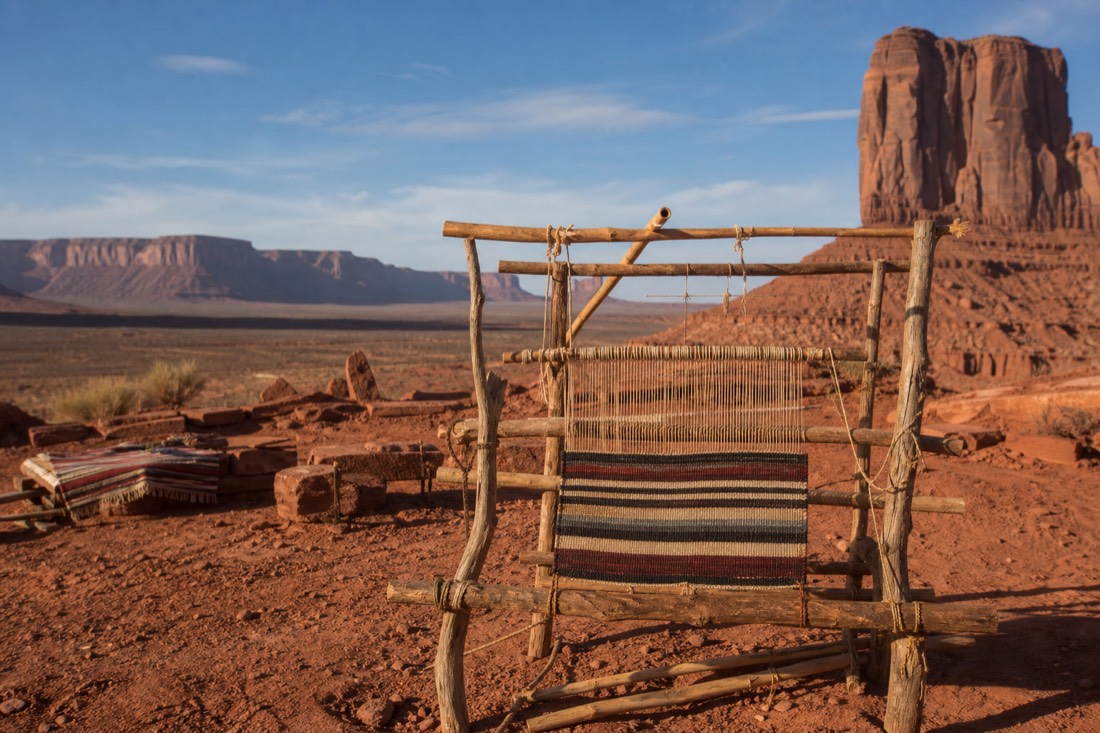
Watching it happen beats reading about it. The trading posts are the reliable option, and on the guided runs the demonstration comes to you out on the land. Because the backcountry beyond the scenic loop is closed to unguided visitors, those demonstrations only happen with a Navajo guide, a rule the Navajo Nation Parks and Recreation office keeps for good reason.
| Place | What you see | Notes |
|---|---|---|
| Goulding's Trading Post | Rugs for sale, sometimes a loom | Just outside the park |
| Hubbell Trading Post NHS | Historic post, weaving on site | Farther out, near Ganado |
| Backcountry tour demo | Live weaving demonstration | On the Viator backcountry route |
| Tribal or extended tour | Hogan and craft stops | Navajo-guided, out on the land |
A rug carries the same idea a hogan does, that Navajo life out here is still being made by hand, not preserved behind glass. If that pulls at you, our post on what a hogan is tells the other half of the story, and the wider blog covers the rest of the valley. See a weaver work once, watch the pattern come out of her head and into the wool, and you will never call it just a blanket again.
Make room in your itinerary
Extended tour with Navajo weaving
Have a travel date in mind? Check this option before arranging the rest of your trip. The extended route adds a hogan visit and a live Navajo rug-weaving demonstration.
Editorial starting point; use the choices below to check the fit.
Compare options and tailor your choice
Shared 3.5-hour tour, English guide, open 4x4. Park entry extra. Children accompanied; unsuitable for back/spinal or serious heart conditions and pregnancy beyond five months.
Meet in The View Hotel’s outdoor loading area 15 minutes early; return there. KOA pickup by arrangement for overnight guests only.
Combine a hogan night, dinner and breakfast with evening and sunrise touring. Overnight package; the listing’s duration fields conflict, so exact start/end must be confirmed. Minimum two; children accompanied. Park entry and tips extra. Sleeping mat/bag and lantern listed; no hotel room implied.
Ride to Big Hogan, Sun’s Eye and the Totem Pole with a Navajo guide. Shared 2.5-hour tour, English. Park entry and tips extra. Hogan visit and weaving excluded. Not recommended for pregnancy, back/spinal or serious heart conditions.
Select a date to see the Viator departure schedule.
Schedule only. Final availability, options and price are confirmed on Viator.Affiliate links: we may earn a commission at no extra cost to you. Product facts checked September 15, 2026.