What Is a Hogan? The Navajo Home You Can Visit in Monument Valley
What a hogan is: the east-facing traditional Navajo home, its male and female types, why it stays sacred, and where you can stay in one near Monument Valley.
 By Daniel Begay, Monument Valley tour guide & Navajo cultural specialist
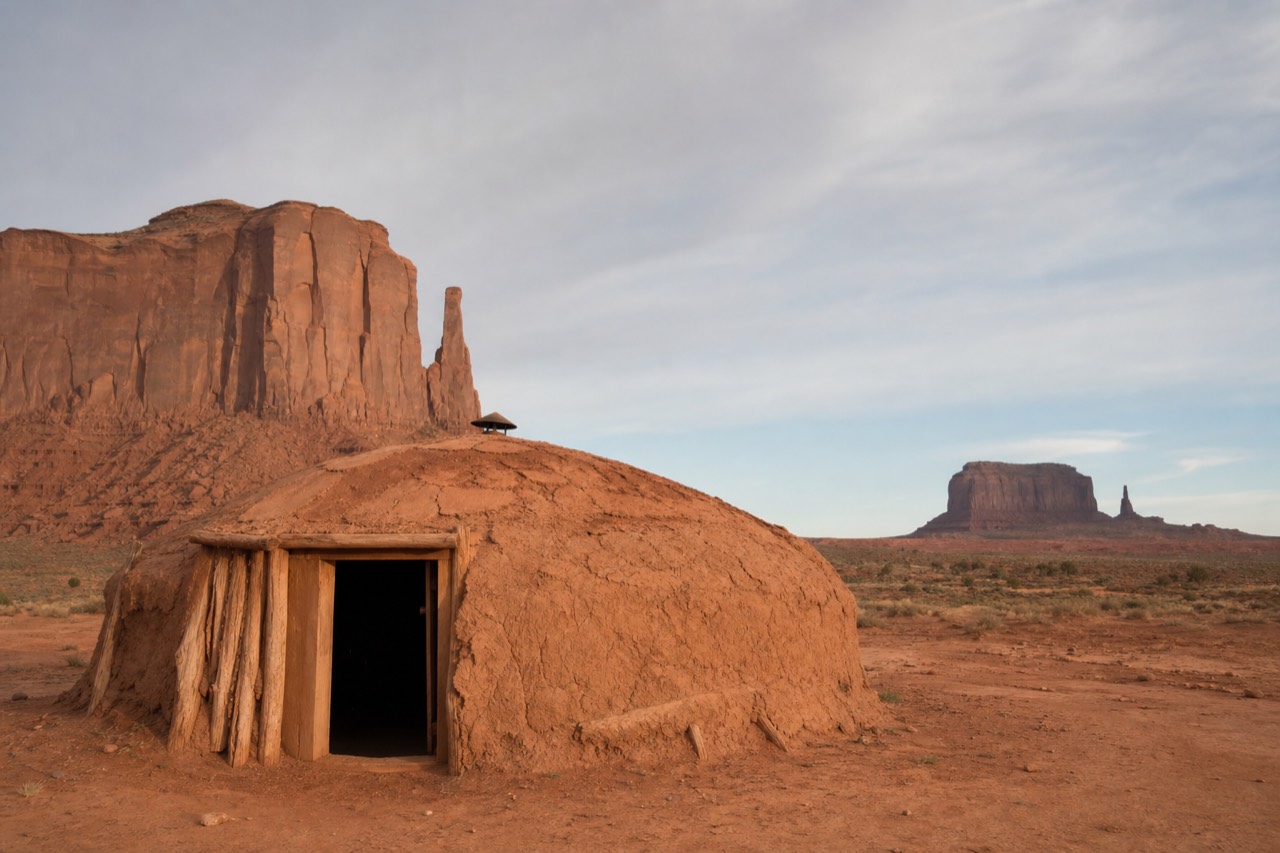
The first time a guest steps inside a hogan on one of my tours, they usually go quiet. Low light comes through the east-facing door, the earth-and-timber walls hold the day's heat, and the whole room smells of cedar and dust. I grew up around these homes. My grandmother cooked in one, and I have carried more than a few loads of firewood through that low doorway, so when people ask me what a hogan actually is, I do not start with a dictionary. I start with the smell of the fire.
Booking choice: The extended route adds a hogan visit and a live Navajo rug-weaving demonstration. Explore Extended tour with Navajo weaving
At a glance: Shared 3.5-hour tour, English guide, open 4x4. Park entry extra. Children accompanied; unsuitable for back/spinal or serious heart conditions and pregnancy beyond five months.
What is a hogan?
A hogan is the traditional home of the Navajo, or Diné, people: a round, cone-shaped, or many-sided dwelling built from timber, earth, and stone, with its single door facing east to meet the rising sun. It is both an everyday house and a sacred space at the center of Navajo life.
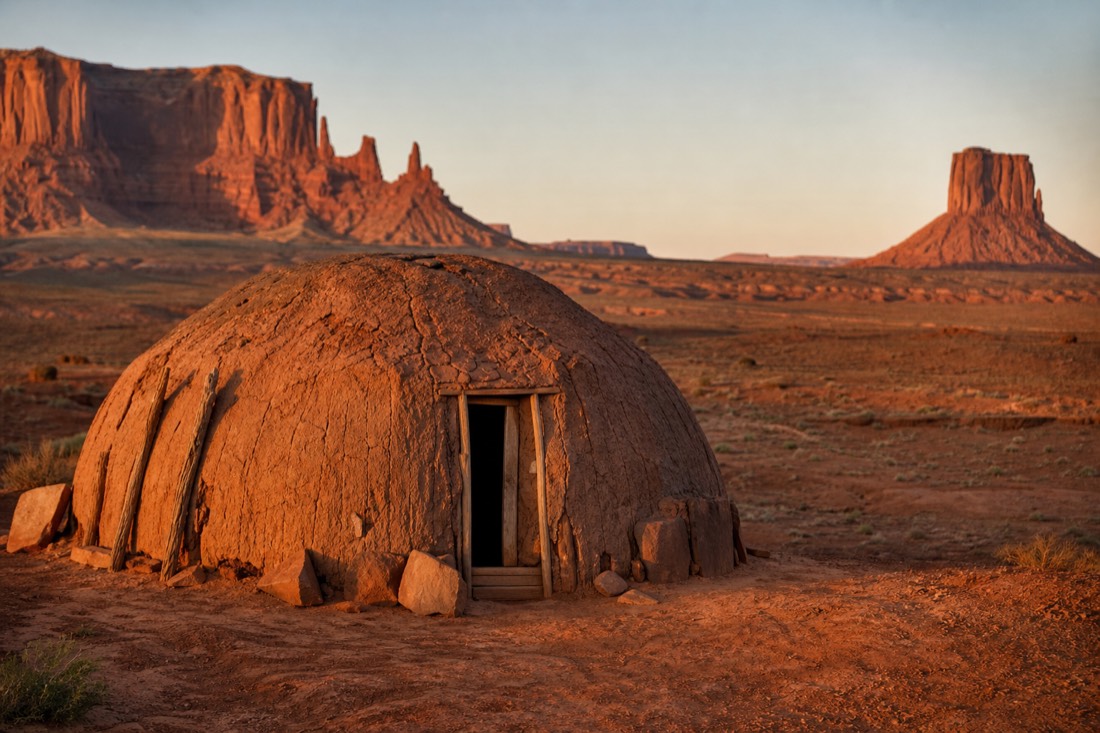
The word carries more weight than "house" does in English. A hogan is where a family lives, where children are named, where ceremonies happen, and where the connection between the people and the land is kept. The encyclopedic overview of the hogan lines up with what elders here still teach: the form, the materials, and the eastward door are not decoration, they are part of how the home works. When you visit Monument Valley, you are in a place where these are still real, lived-in structures, not relics behind glass. Our blog post on visiting Navajo Nation land respectfully covers why that distinction matters the moment you arrive.
What are the different types of hogan?
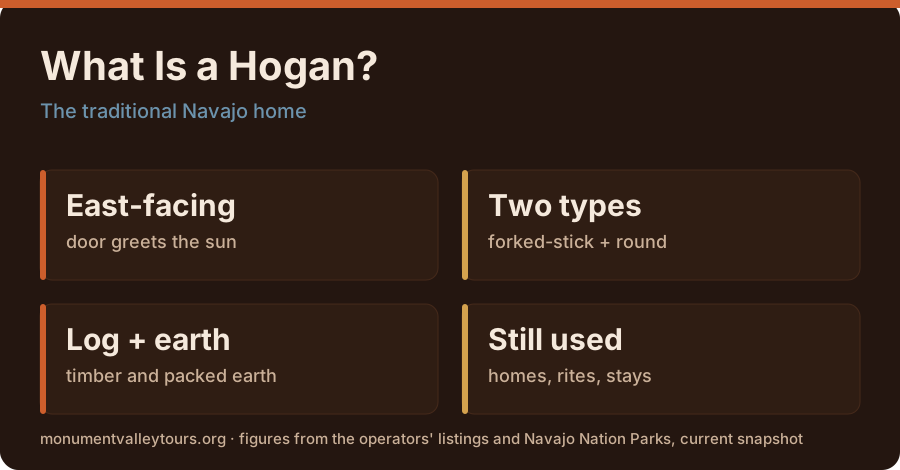
There are two main types. The male, or forked-stick, hogan is the older, smaller, cone-shaped form used mostly for ceremonies. The female hogan is the larger round or many-sided version, and it is the common family dwelling. Both keep the east-facing door, and both are still built today.
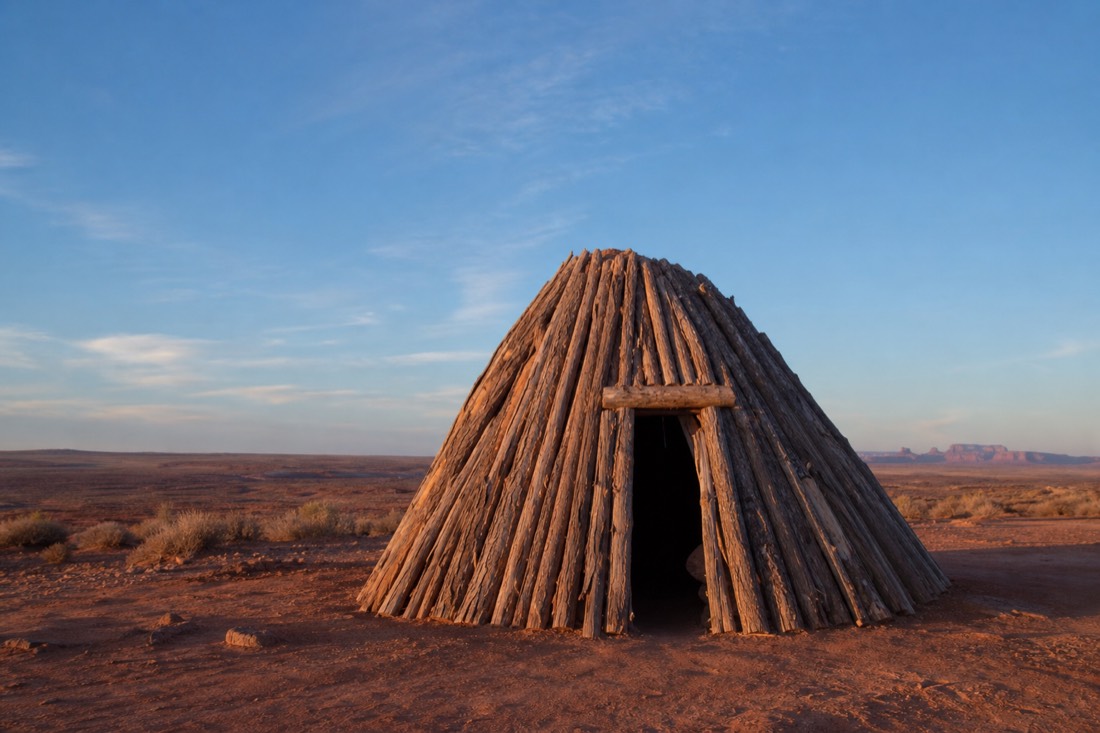
The names throw people off, so I explain them plainly. The male hogan is the earlier design, a cone raised on forked poles, and it is used more for ceremony than for daily living. The female hogan is roomier, round or polygonal, and it is the one families actually live in. Neither is ranked above the other. They serve different jobs, the way a kitchen and a chapel serve different jobs.
| Feature | Male (forked-stick) hogan | Female (round) hogan |
|---|---|---|
| Shape | Cone on a forked-pole frame | Round or many-sided |
| Age | Older, earlier form | Later, larger form |
| Main use | Mainly ceremonial | Everyday family dwelling |
| Door | Faces east | Faces east |
What is a hogan made of, and why does the door face east?
A hogan is built from local materials: logs and timber for the frame, packed earth or mud for the walls and roof, and stone. The door always faces east, toward the sunrise, so the family greets each new day and draws in its blessing. Nothing about that orientation is accidental.
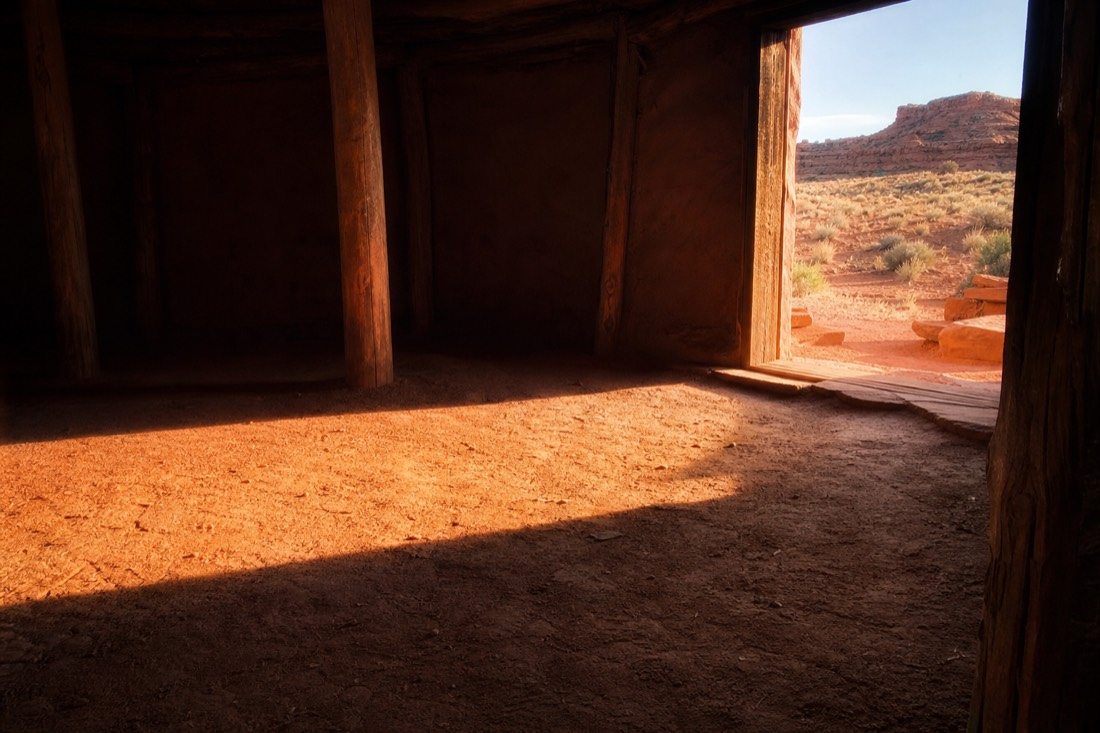
Everything about the build comes from the land it sits on. Timber for the frame, earth and mud packed over it for walls and roof, stone where it is needed. That is part of why an old hogan seems to grow out of the ground rather than sit on top of it. The eastward door is the piece guests remember most. Every morning the first light falls straight through it, and the day begins facing the sun. Prayers and blessings follow that same direction.
| Element | Material | Meaning |
|---|---|---|
| Frame | Timber, logs, forked poles | Structure and shelter |
| Walls and roof | Packed earth, mud, stone | Warmth, part of the land itself |
| Doorway | Open to the east | Greets the sunrise, welcomes blessing |
| Interior | Single open room | Family and ceremony share one space |
Is the hogan still used today?
Yes. The hogan is not a museum piece. Navajo families still live in them, and many more are kept for ceremonies like the Blessingway. Some sit right beside a modern house on the same land. Near Monument Valley, a few are even offered to visitors as overnight lodging out on the land itself.
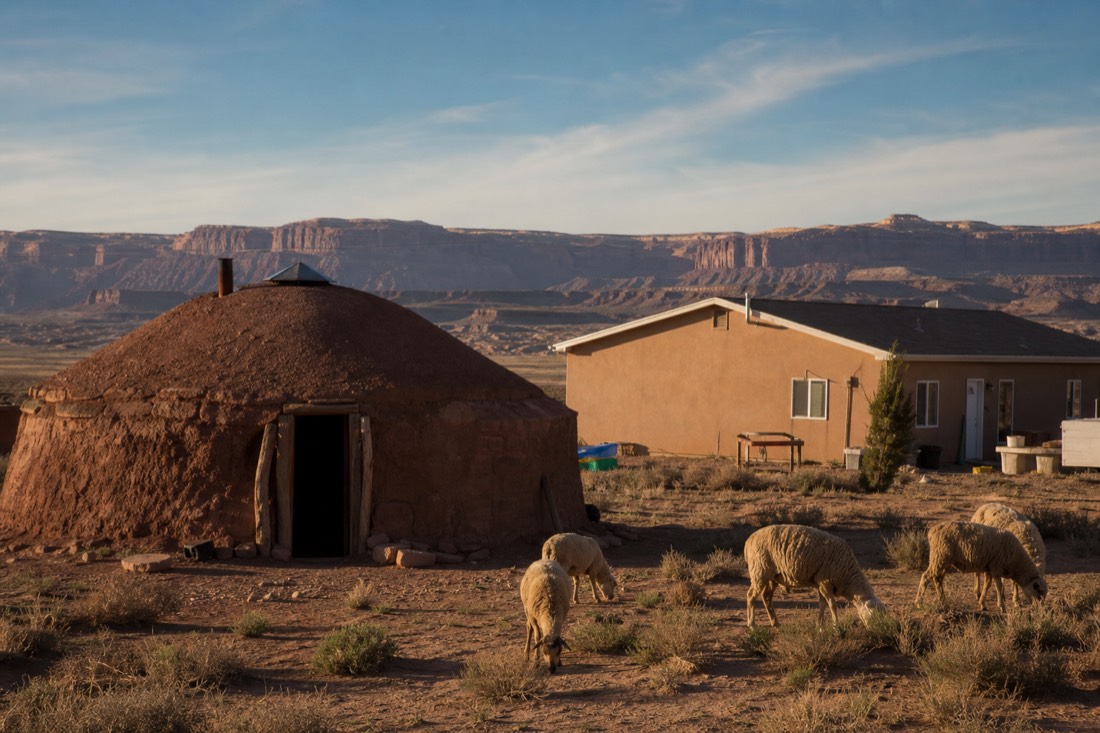
Drive the back roads here and you will see it: a fresh house with a hogan a few steps away, both in use. The hogan may hold ceremonies, or serve as the older generation's home, or simply stay ready for when it is needed. Because Monument Valley is a living community and not a national park, the Navajo Nation Parks and Recreation office asks visitors to treat these as private homes, which they are. You do not walk up to one uninvited any more than you would anywhere else.
Is the "Big Hogan" in Monument Valley a real hogan?
No, and this trips people up constantly. The Big Hogan is a huge natural rock chamber in the Monument Valley backcountry, named for its dome shape because the inside resembles a hogan. It is a formation, not a dwelling. You reach it on a Navajo-guided backcountry tour, not by staying overnight in it.
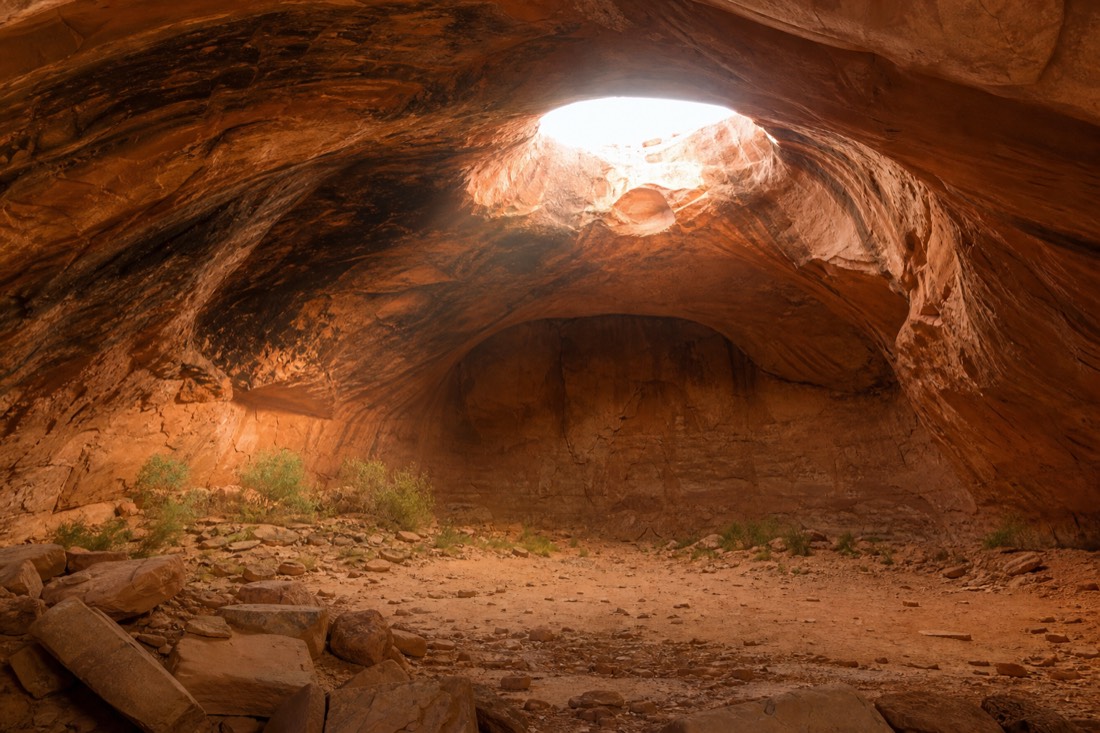
The confusion is understandable, because the name is the same. Inside the park, the Big Hogan is one of the stops on the backcountry route, a cathedral-sized hollow in the sandstone where a small opening at the top lets a shaft of light down through the dust. Guides sometimes sing there to show off the acoustics. It sits alongside Totem Pole, Moccasin Arch, and Sun's Eye on the deeper runs, all of which need a Navajo guide because the backcountry is closed to unguided visitors. You can see that whole loop on our backcountry jeep tours page. So: dwelling hogan, a home you can sleep in; Big Hogan, a rock you stand inside and look up at.
Where can you see or stay in a hogan near Monument Valley?
You can visit hogans on Navajo-guided backcountry and extended tours, and you can sleep in one on the Hogan Overnight experience, roughly an 18-hour stay on the land. Goulding's and the trading posts nearby also show hogan-style structures. To actually spend the night in one, book the overnight tour ahead of time.
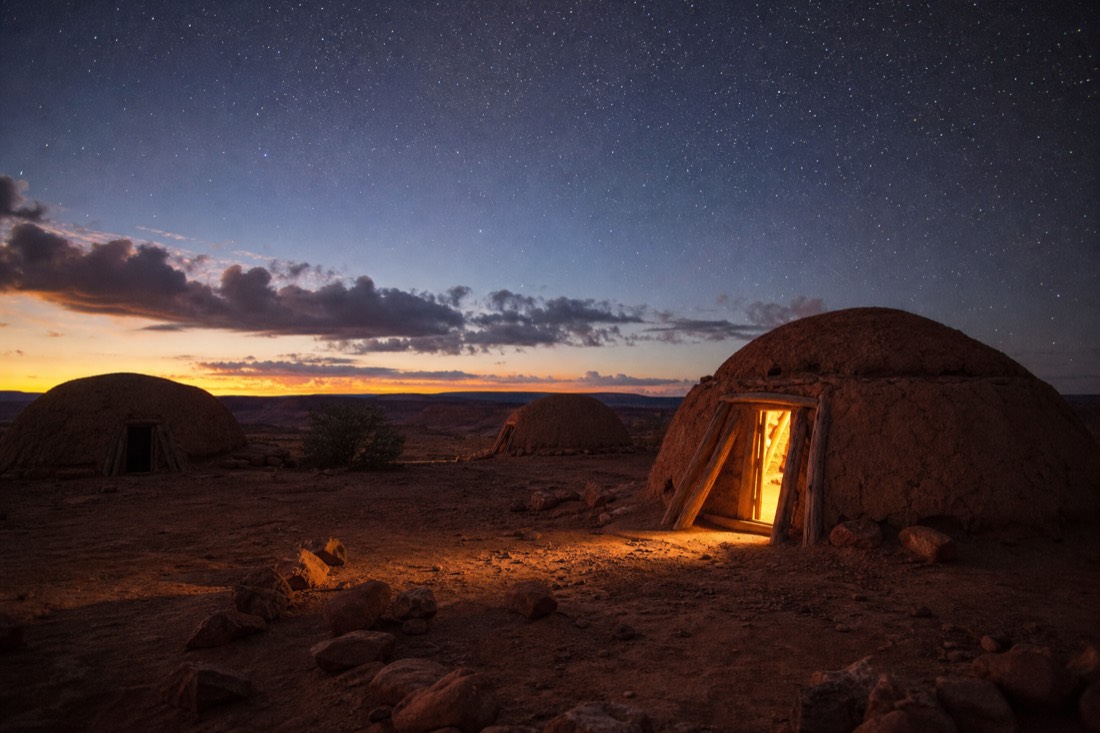
If you only want to see one, the guided tours do the job. The extended backcountry run adds a hogan visit to the drive, and the deeper trips already pass hogans out on the land. If you want the fuller experience, staying the night is a different thing entirely: the day-trippers leave, the light goes long, and the valley gets quiet in a way no day tour reaches. That is what the overnight offers, out where you can hear the wind and nothing else. For where those stays sit against your other lodging options, our guide on where to stay near Monument Valley lays out the choices.
| Option | What you get | How |
|---|---|---|
| Visit a hogan | See one on the route | Navajo-guided backcountry or extended tour |
| Stay overnight | Sleep in a traditional hogan, an overnight stay | Hogan Overnight experience |
| See the Big Hogan formation | The natural rock chamber | Jeep backcountry tour, about 2.5 hours |
| See hogan-style structures | Near the park | Goulding's and the trading posts |
A hogan rewards a little reading before you go, the same way the weaving does. If the craft side of Navajo life pulls at you, our post on Navajo rug weaving picks up that thread, and the wider blog covers the rest of what makes this valley more than scenery. Come as a guest, ask before you photograph anyone, and the hogan stops being a curiosity and becomes what it has always been: a home.
Make room in your itinerary
Extended tour with Navajo weaving
Have a travel date in mind? Check this option before arranging the rest of your trip. The extended route adds a hogan visit and a live Navajo rug-weaving demonstration.
Editorial starting point; use the choices below to check the fit.
Compare options and tailor your choice
Shared 3.5-hour tour, English guide, open 4x4. Park entry extra. Children accompanied; unsuitable for back/spinal or serious heart conditions and pregnancy beyond five months.
Meet in The View Hotel’s outdoor loading area 15 minutes early; return there. KOA pickup by arrangement for overnight guests only.
Combine a hogan night, dinner and breakfast with evening and sunrise touring. Overnight package; the listing’s duration fields conflict, so exact start/end must be confirmed. Minimum two; children accompanied. Park entry and tips extra. Sleeping mat/bag and lantern listed; no hotel room implied.
Ride to Big Hogan, Sun’s Eye and the Totem Pole with a Navajo guide. Shared 2.5-hour tour, English. Park entry and tips extra. Hogan visit and weaving excluded. Not recommended for pregnancy, back/spinal or serious heart conditions.
Select a date to see the Viator departure schedule.
Schedule only. Final availability, options and price are confirmed on Viator.Affiliate links: we may earn a commission at no extra cost to you. Product facts checked September 15, 2026.