The Totem Pole: Monument Valley's Iconic Spire
A Navajo guide on the Totem Pole, Monument Valley's slender rock spire: where to see it from the loop, how to reach its base on a backcountry tour, and its film and climbing fame.
 By Daniel Begay, Monument Valley tour guide & Navajo cultural specialist
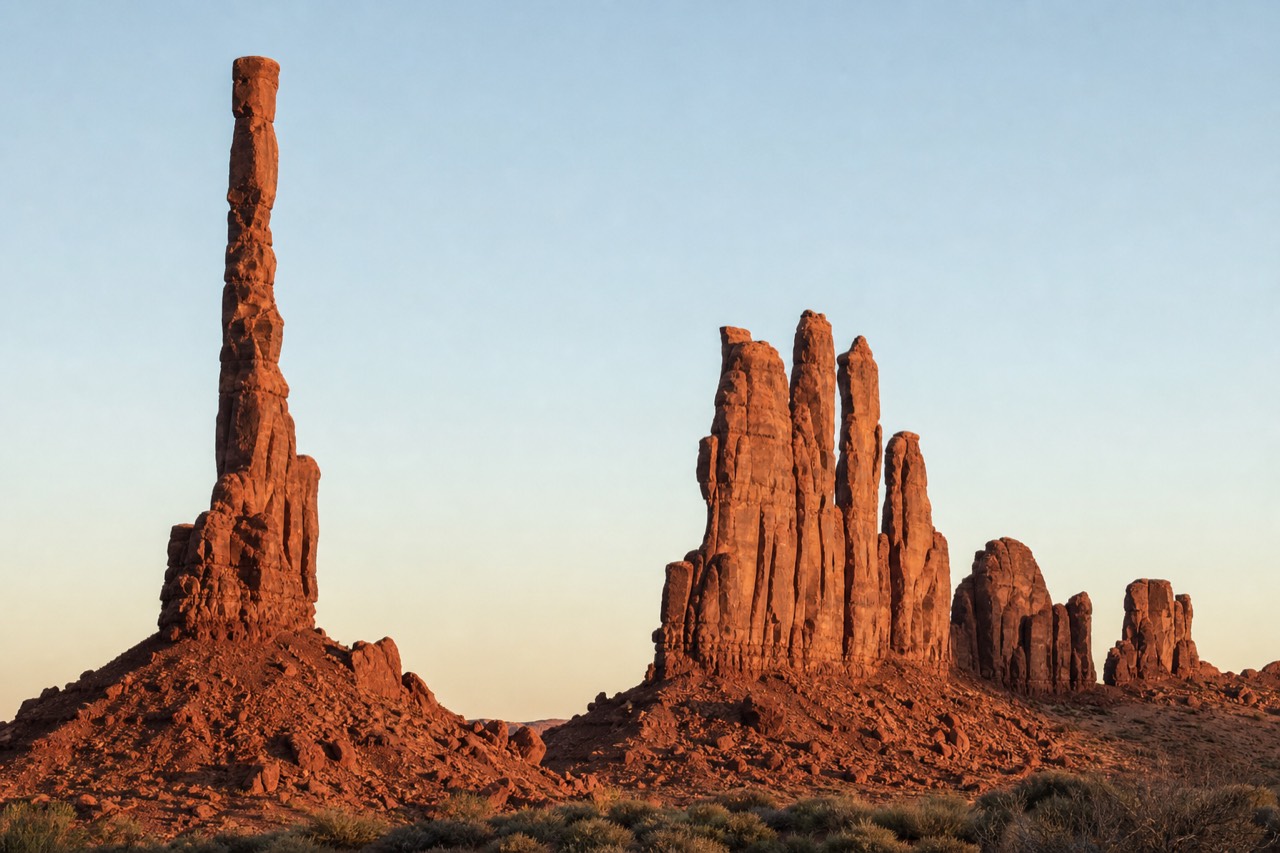
There is a moment on the far end of the loop when the horizon breaks into a single thin line of rock, taller than everything around it, sharp as a needle against the sky. First-timers always ask the same thing: how does that not fall over? That is the Totem Pole, and I have watched the light climb up its length hundreds of mornings. It is one of the most photographed spires in the Southwest, and one of the least understood, because most people only ever see it from a long way off.
Booking choice: Ride to Big Hogan, Sun’s Eye and the Totem Pole with a Navajo guide. Explore Backcountry tour with Navajo guide
At a glance: Shared 2.5-hour tour, English. Park entry and tips extra. Hogan visit and weaving excluded. Not recommended for pregnancy, back/spinal or serious heart conditions.
What is the Totem Pole in Monument Valley?
The Totem Pole is a tall, slender sandstone spire on the floor of Monument Valley, rising in a thin column beside a cluster of pinnacles called the Yei Bi Chei. It is a classic erosional remnant: a narrow neck of harder rock left standing after softer stone around it wore away over millions of years.
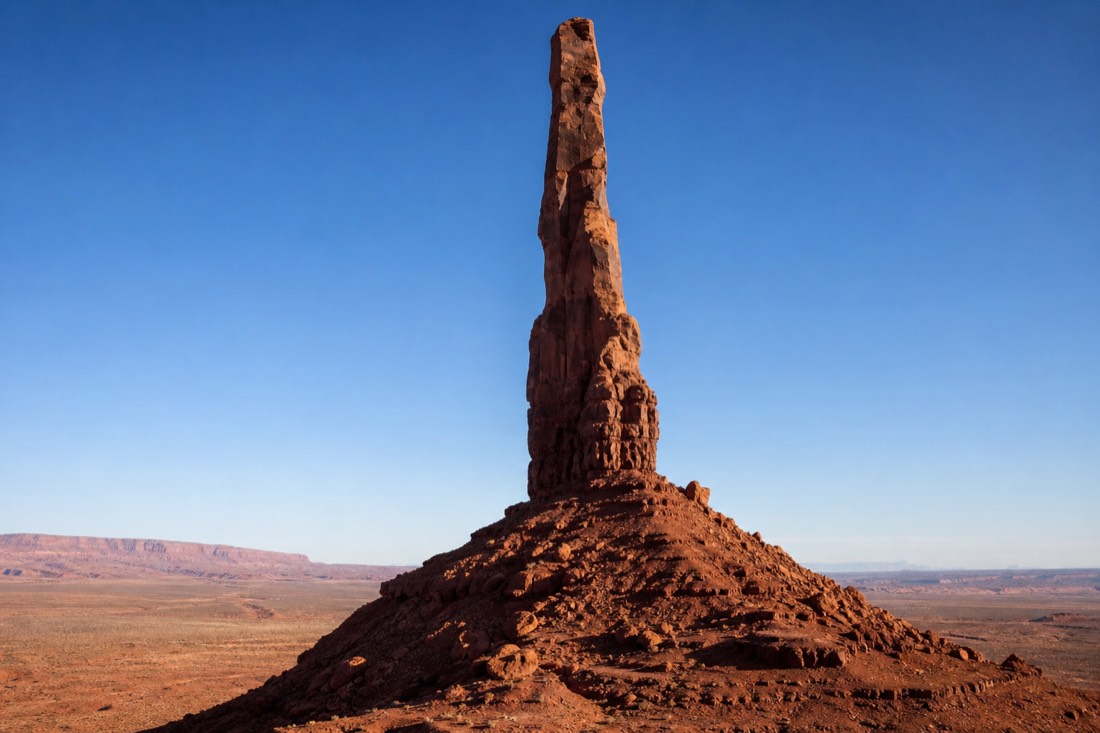
The spire stands next to the Yei Bi Chei, a line of stubby pinnacles the Navajo named for the masked dancers of a healing ceremony. Together they read like a procession frozen in stone, with the Totem Pole as the tallest figure. The whole valley is a lesson in erosion, a former lowland basin cut down by wind and water until only these hard cores remained, and you can read the geology on the encyclopedic Monument Valley page. What the geology books skip is the name work. Out here the shapes carry Navajo meaning first, and the tourist labels come later.
How do you see the Totem Pole in Monument Valley?
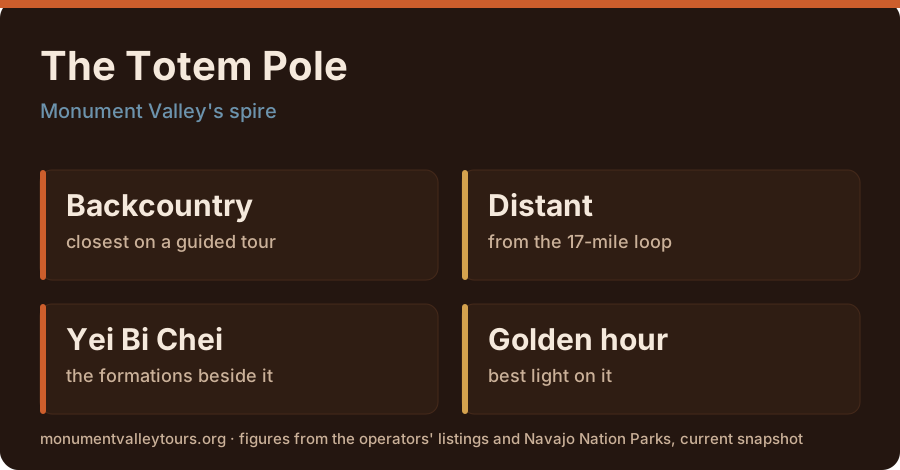
You can see the Totem Pole two ways. From the 17-mile Valley Drive there is a distant overlook near the far end of the loop, good for the classic wide shot. To reach its base and the Yei Bi Chei up close you need a Navajo guide, because that ground sits in the backcountry, off the public road, on tribal land you cannot legally enter alone.
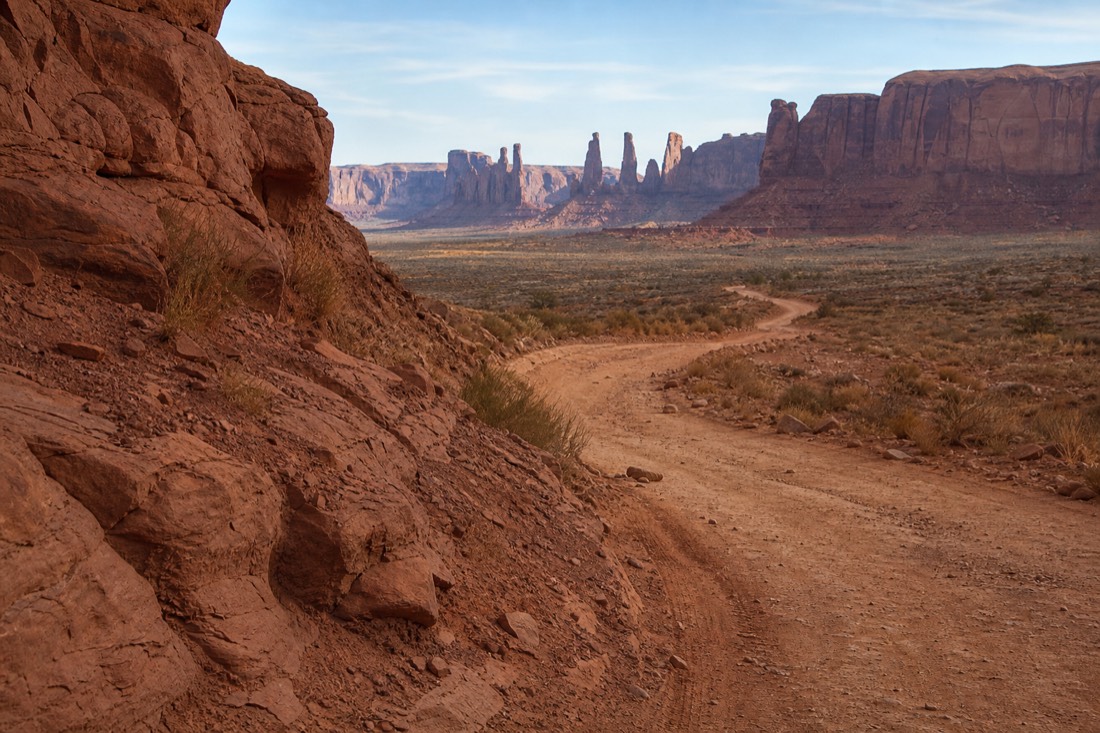
The overlook on the loop is real and worth the stop, but it keeps you at a distance, and the Totem Pole reads as a sliver from there. The backcountry is where the scale hits you. Standing on the sand flats below the spire, with the Yei Bi Chei lined up beside it, is a different experience entirely, and it is the payoff stop on the guide-only runs.
| Way to see it | Access | How close you get | Who can do it |
|---|---|---|---|
| Loop overlook | 17-mile Valley Drive, self-drive or tour | Distant wide view | Anyone with a park ticket |
| Backcountry jeep tour | Guide-only, off the public road | Base of the spire, up close | Navajo-guided visitors only |
| Yei Bi Chei sand flats | Guide-only backcountry | Alongside the pinnacle cluster | Navajo-guided visitors only |
The rule is not a sales line, it is tribal park law. Everything past the public loop is guide-only, and I have turned back plenty of well-meaning drivers who thought they could just push on toward the spire. For the wider picture of which sights sit on the road and which need a guide, I keep a rundown of the iconic viewpoints from the Mittens to John Ford Point.
When is the best time to photograph the Totem Pole?
The Totem Pole photographs best at sunrise, when low light rakes across the spire and the eastern sky glows behind it, and again in the last hour before sunset. Midday flattens it. Many photographers shoot it as a silhouette at first light, or catch its warm side-lit face just after the sun clears the horizon.
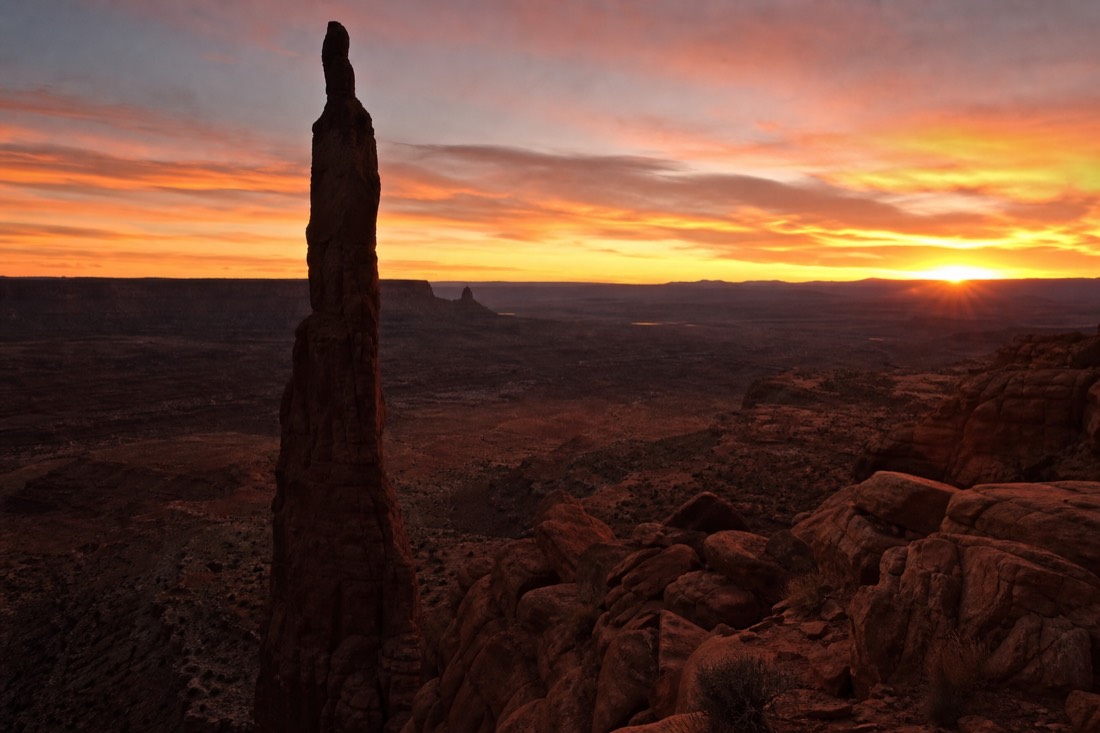
Because the spire is so narrow, light does dramatic things to it that a broad butte cannot match. At sunrise it can go pure silhouette, a black exclamation mark against fire. Twenty minutes later the same rock turns copper as the sun warms its western face. The nearby dunes give you clean foreground lines that lead the eye straight up the column. I go deeper on framing and the best spots across the valley in my guide to the best photography spots in Monument Valley, and drones are banned parkwide, so plan ground shots only.
| Time of day | Light on the spire | What you get |
|---|---|---|
| Pre-dawn to sunrise | Backlit, eastern glow | Silhouette against color |
| First hour after sunrise | Warm side light | Copper-toned, textured face |
| Midday | Flat overhead sun | Weak, avoid |
| Last hour before sunset | Long warm light | Golden column, deep shadows |
How does the Totem Pole compare to Monument Valley's other formations?
Unlike the wide, blocky Mitten Buttes or the flat-topped mesas, the Totem Pole is a spire: a needle-thin column, one of the most slender named formations in the valley. The Mittens and Merrick Butte are massive and stable in profile. The Totem Pole is the delicate one, an erosional remnant worn down to almost nothing.
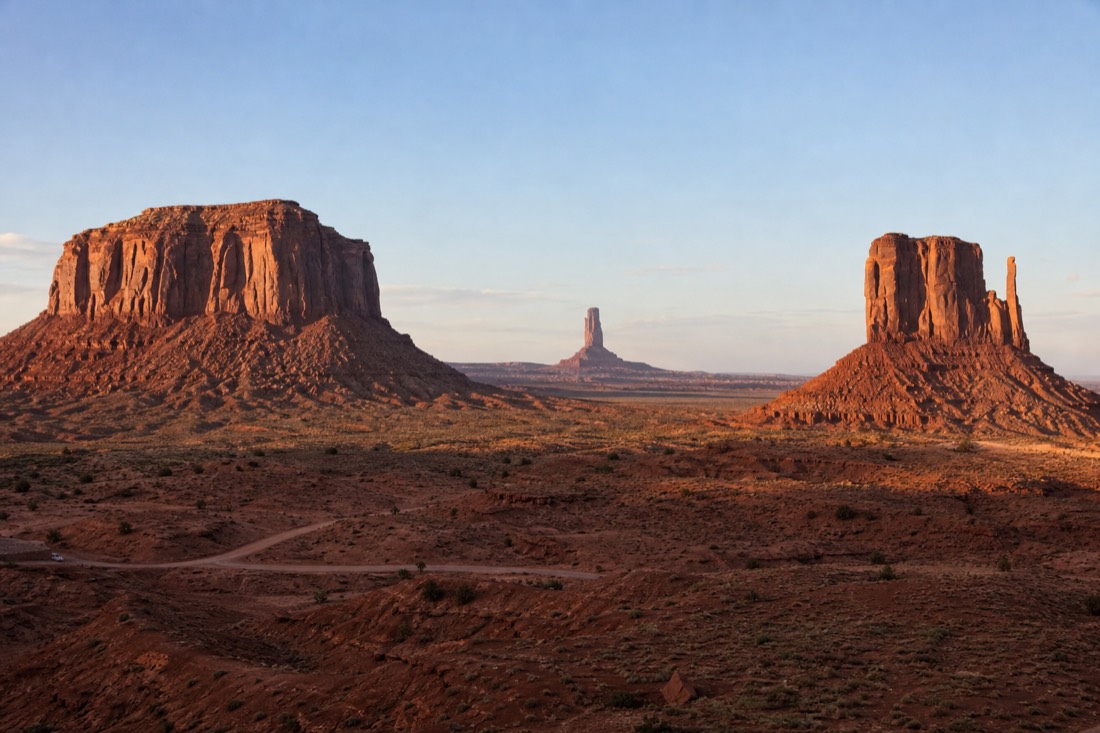
Visitors tend to lump all the rocks together until you show them the range of shapes. There are buttes, mesas, arches, and spires, and each is a different stage of the same slow erosion. The Totem Pole sits at the far end of that process, the thinnest survivor before a formation collapses for good. Set beside the icons everyone photographs from the rim, the difference is easy to see.
| Formation | Shape | Where you see it | Notable for |
|---|---|---|---|
| Totem Pole | Slender spire | Loop overlook and backcountry | Extreme thinness, film and climbing fame |
| West and East Mitten Buttes | Broad twin buttes | Visitor center rim and loop | The signature Monument Valley postcard |
| Merrick Butte | Solid butte | Loop | The third shape beside the Mittens |
| Yei Bi Chei | Pinnacle cluster | Backcountry beside the Totem Pole | Named for Navajo ceremonial dancers |
| Ear of the Wind | Sandstone arch | Backcountry, guide-only | Wind-carved opening in a rock wall |
Why is the Totem Pole famous?
The Totem Pole earned its fame two ways: as a backdrop in Western films shot in Monument Valley, and as the site of a landmark spire climb that put it on the map for rock climbers. Its unmistakable needle shape made it a favorite for filmmakers and photographers, and climbing it is now closed under Navajo Nation rules.
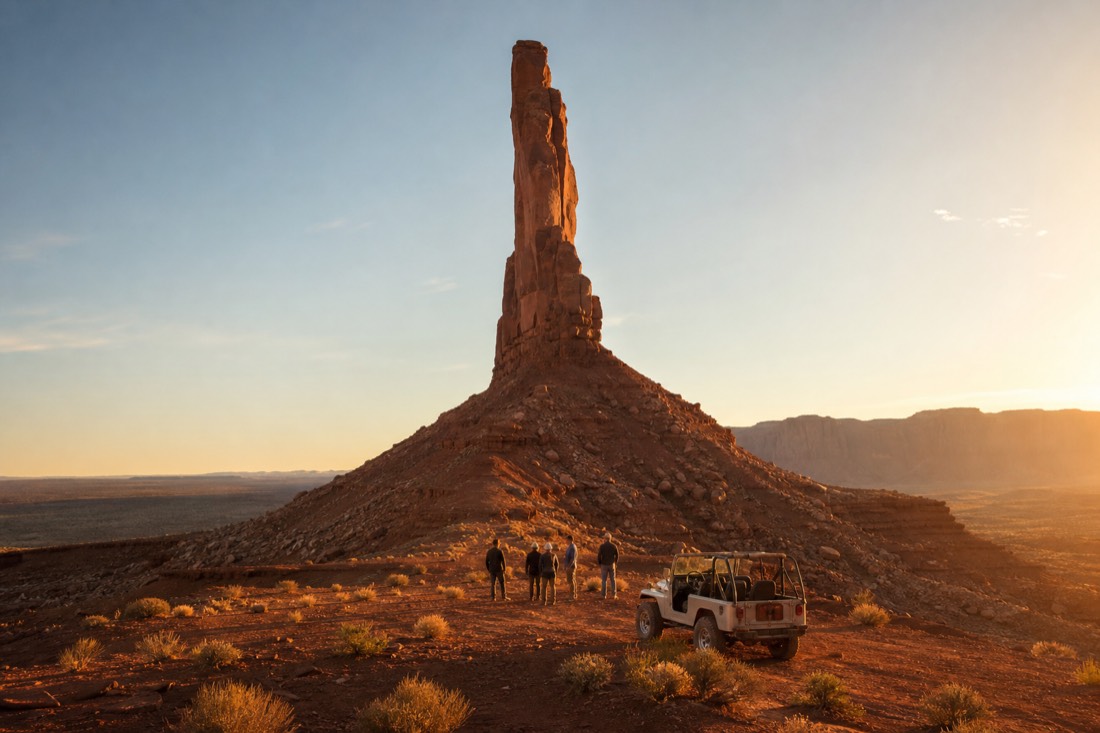
Monument Valley became the visual shorthand for the American West after John Ford filmed Stagecoach here in 1939, and the Totem Pole's silhouette rode that fame into countless frames and postcards. For climbers, the spire is a legend of a different sort, one of the classic desert towers, though ascending it is no longer permitted out of respect for the tribal park and the Navajo people who hold this land sacred. That mix of film history and forbidden allure is why the name carries weight far beyond Arizona.
The Totem Pole will always be the shot people chase from the overlook. Standing at its foot, with the Yei Bi Chei beside it and the sand still cool from the night, is the version I wish everyone got to see.
Make room in your itinerary
Backcountry tour with Navajo guide
Have a travel date in mind? Check this option before arranging the rest of your trip. Ride to Big Hogan, Sun’s Eye and the Totem Pole with a Navajo guide.
Editorial starting point; use the choices below to check the fit.
Compare options and tailor your choice
Shared 2.5-hour tour, English. Park entry and tips extra. Hogan visit and weaving excluded. Not recommended for pregnancy, back/spinal or serious heart conditions.
Meet outside The View Hotel in the tour loading area 15 minutes early; return there. KOA pickup only by arrangement for overnight guests.
Visit the Totem Pole, Sun’s Eye and John Ford Point in the day’s changing light. 3 hours, English guide, water and native music. Select sunrise OR sunset for your month on Viator. Park entry extra. Uneven surfaces; unsuitable for back conditions. Children need two paying adults.
GPS-triggered stories accompany your own drive, with offline audio downloaded in advance. Allow 2–3 hours. English/French audio; one purchase per car. No live guide, vehicle or park admission. Road access depends on conditions and your vehicle.
The extended route adds a hogan visit and a live Navajo rug-weaving demonstration. Shared 3.5-hour tour, English guide, open 4x4. Park entry extra. Children accompanied; unsuitable for back/spinal or serious heart conditions and pregnancy beyond five months.
Select a date to see the Viator departure schedule.
Schedule only. Final availability, options and price are confirmed on Viator.Affiliate links: we may earn a commission at no extra cost to you. Product facts checked September 15, 2026.