How Many Days Do You Need at Monument Valley?
A working guide's honest take on whether a few hours, a full night, or two days makes sense for your Monument Valley trip.
 Written with Daniel Begay, Monument Valley tour guide & Navajo cultural specialist
Short answer
Half a day covers the highlights and the 17-mile loop, but one full night lets you catch both sunset and sunrise light, which is when the buttes are at their best; two days adds a backcountry tour and nearby stops.
The question I hear most at the park gate has nothing to do with price. It is a worried look at the clock. Groups roll in from Page around midday, they are booked into the Grand Canyon tomorrow, and they want to know if two hours is enough to say they saw the place. I have watched the same people, an hour later, decide to move their whole plan around so they can stay for sunset. That reaction is the honest answer to how long you need, and it depends entirely on what you came for.
Booking choice: A Navajo guide connects the Mittens, restricted arches and local stories. Explore Navajo Spirit scenic tour
At a glance: Shared tour, English guide, about 3 hours. Park entry and tips extra. Minimum two to operate; solo travelers must arrange pairing with the operator.
Is one day enough for Monument Valley?
One full day covers Monument Valley well. You can drive or ride the 17-mile Valley Drive, stop at the famous viewpoints, add a short guided backcountry tour, and still reach a meal and a viewpoint by evening. What a single daytime visit misses is the low light, which is the reason most photographers stay the night.
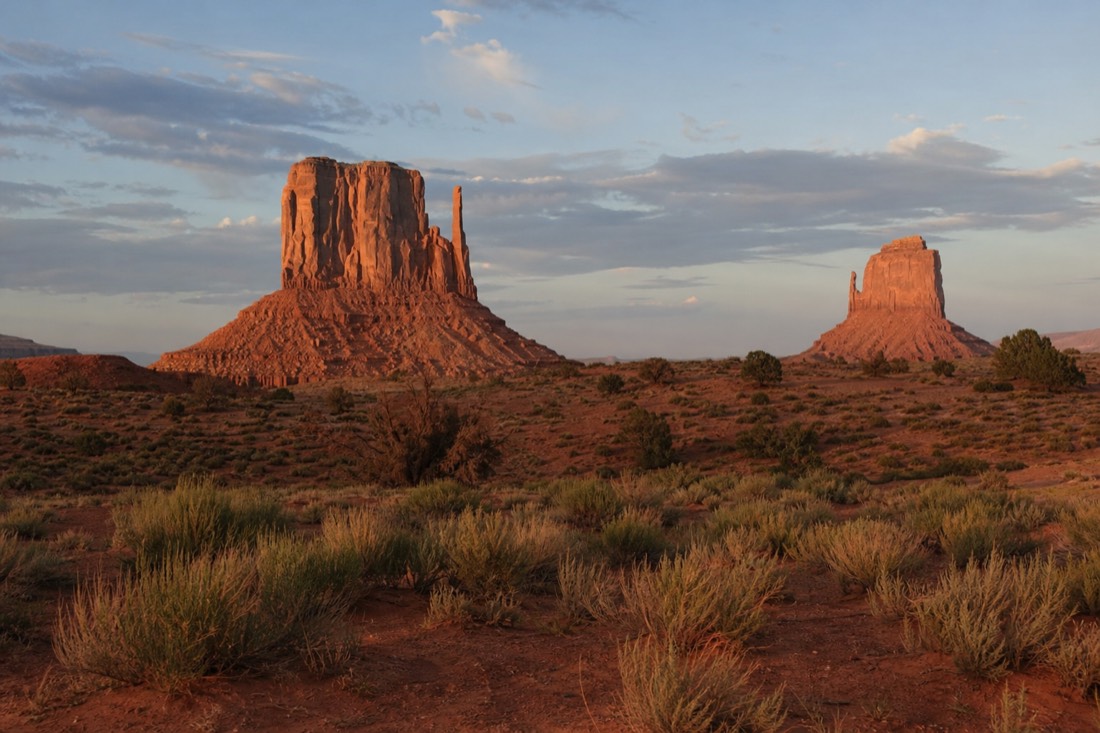
The valley is smaller than people expect. Monument Valley Navajo Tribal Park sits on Navajo Nation land, and the whole self-drive circuit is one unpaved 17-mile loop that most cars finish in two to three hours with stops. Add a guided backcountry tour of roughly two and a half to three hours and you have filled a comfortable day without rushing. A day trip works, and thousands of people do exactly that on the way between Page, Flagstaff and Moab. The catch is timing: arrive at 11am and leave at 3pm and you see the buttes under flat midday sun, which is the least flattering light they get. If you can only spare one day, aim your visit at the late afternoon rather than the middle of it.
What can you see in half a day at Monument Valley?
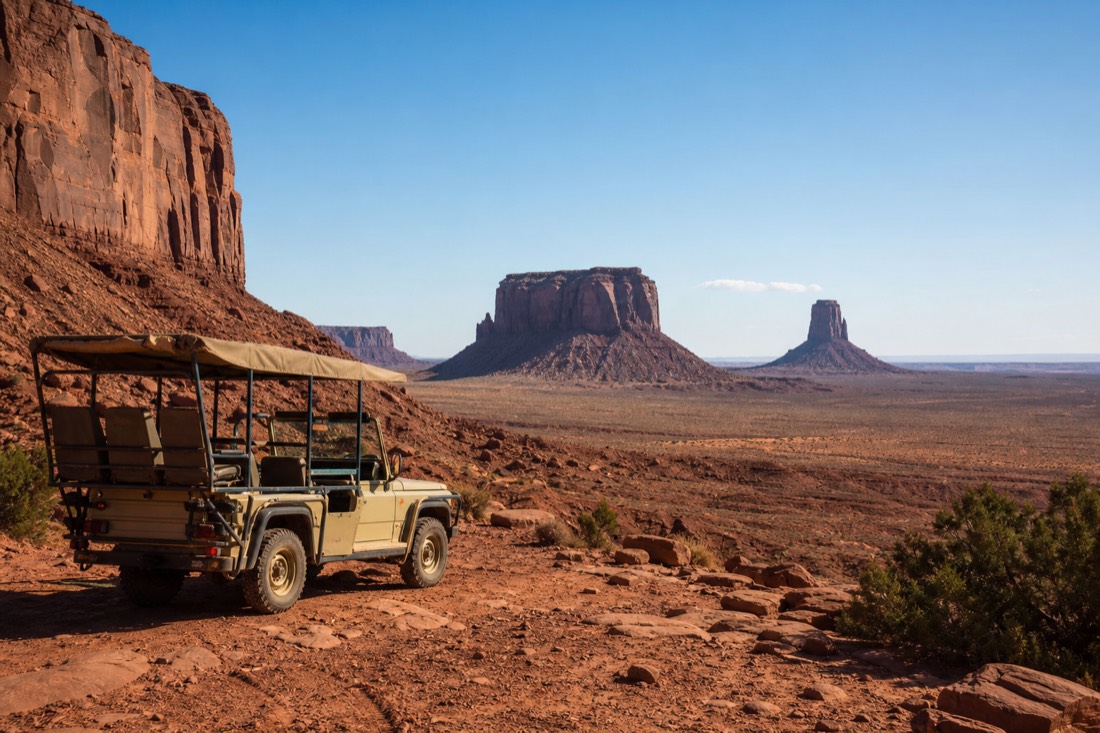
Half a day, roughly three to four hours, is enough for the signature sights: the Mittens and Merrick Butte from The View, the full 17-mile Valley Drive with its named stops, and John Ford Point. You will not reach the backcountry arches and hogans, which sit off the loop and require a Navajo guide, but you will genuinely see Monument Valley.
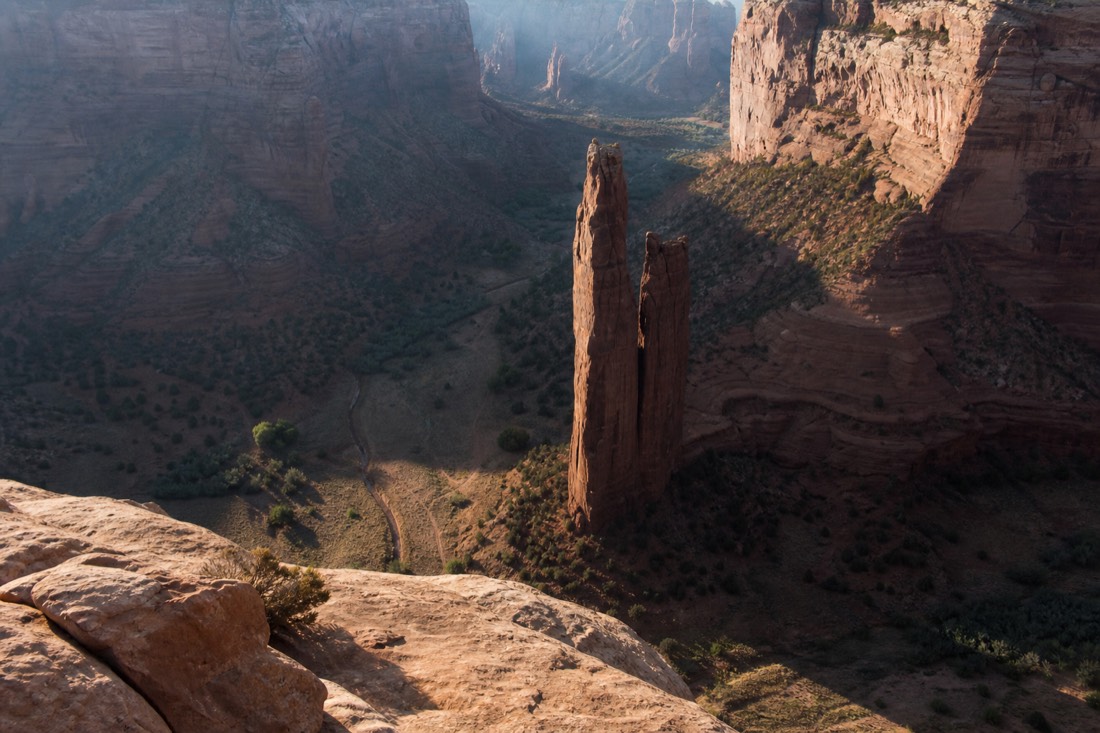
The loop road passes almost every image you have seen of this place. West and East Mitten Butte greet you from the visitor center, and the drive threads past Elephant Butte, the Three Sisters, and John Ford Point, named for the director who filmed here. What a short stop cannot give you is anything beyond that graded road. Ear of the Wind arch, Mystery Valley, the sand-floored hogans and the quieter formations all lie in the backcountry, closed to private vehicles. For a first, fast look, the loop alone still earns the drive.
| Plan | Time on site | What you fit in | Best for |
|---|---|---|---|
| Half day | 3-4 hours | 17-mile loop, main viewpoints, John Ford Point | Road-trippers passing through |
| One day + night | Afternoon to next morning | Loop, a guided backcountry tour, sunset and sunrise | Most first-time visitors |
| Two days | Full days either side of a night | All of the above plus Mystery Valley, hogan visit, nearby Page or the San Juan | Photographers, unhurried trips |
Why stay overnight in Monument Valley?
Staying one night is the single biggest upgrade to a Monument Valley trip. Sunset throws warm side-light across the buttes and sunrise lights them from the opposite angle, and both happen when day-trippers have already left. An overnight also lets you book a sunrise or sunset tour, which run about three hours each.
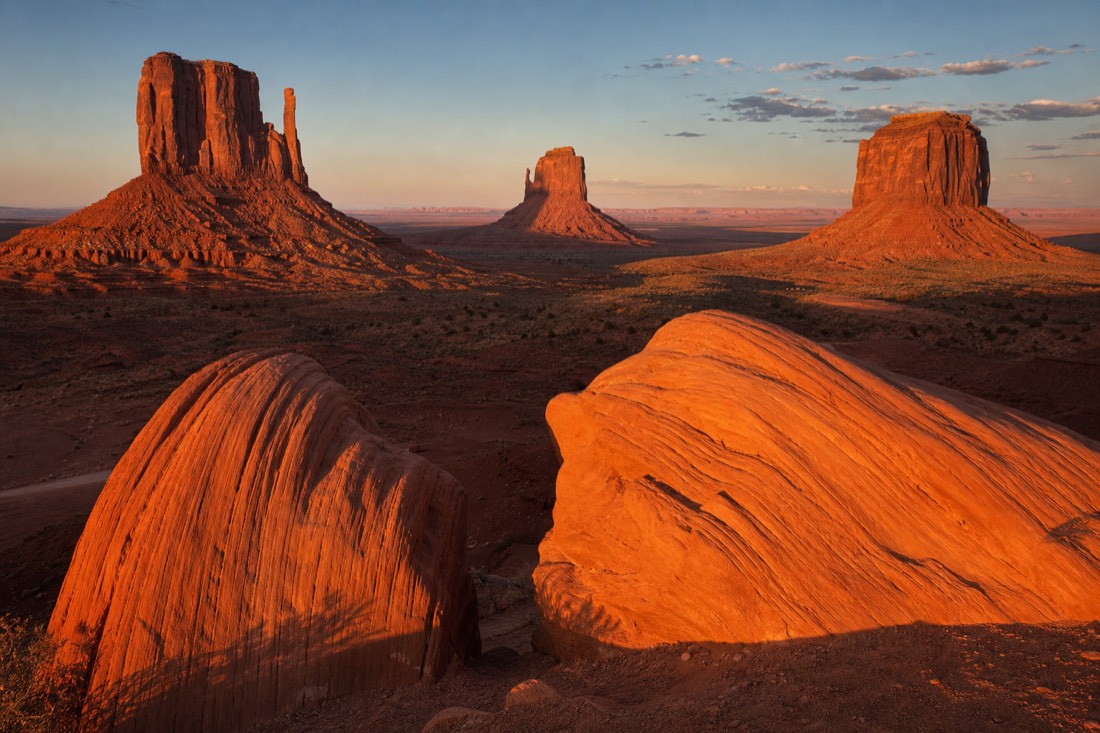
The rock here is red sandstone, and red sandstone comes alive at a low sun angle. During the day the formations read as dark silhouettes; near sunset and sunrise they glow, and the long shadows give the valley depth that a photo at noon never shows. There is a practical reason too. The only hotel inside the park is The View Hotel, whose rooms face the Mittens directly, and just outside the boundary sits historic Goulding's Lodge, where Harry Goulding first brought Hollywood in 1938. Book either and you can walk out to that light without a drive. Wake early and a guided sunrise run, like the ones on the sunrise and sunset tours page, puts you at the best angles before the gate crowd arrives. If you read only one line of this guide, make it this: stay the night.
What does a two-day Monument Valley visit add?
A second day turns a highlight reel into a real visit. It buys time for Mystery Valley, a longer backcountry tour with a hogan stop, an unrushed second pass at the loop in better light, and a side trip toward Page or the San Juan River. Two days suits photographers and anyone who dislikes a schedule.
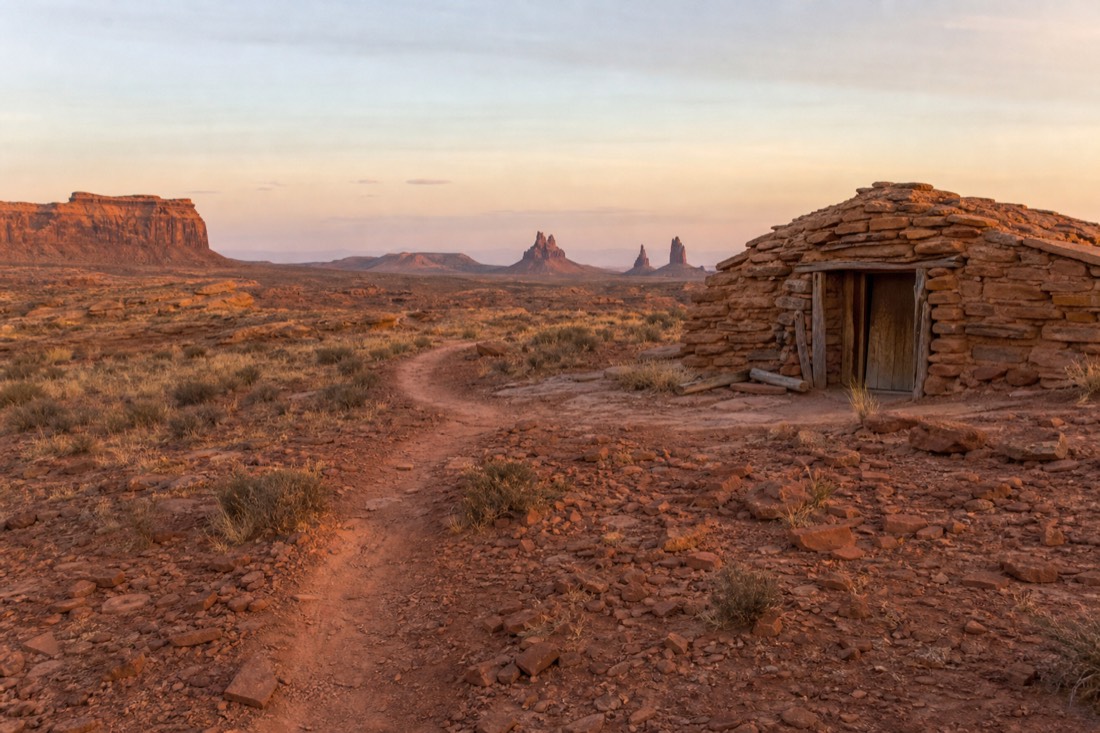
One night handles sunset and sunrise. A full second day handles everything the loop leaves out. Mystery Valley, south of the main park, holds Ancestral Puebloan ruins and small arches that most visitors never see, and it is only reachable with a guide. An extended backcountry tour of about three and a half hours adds a hogan visit where a Navajo host explains how families lived on this land. With the pressure off, you can also drive the 20-odd minutes to Forrest Gump Point on US-163 north of the park for that highway shot, or start the two to three hour run toward Page and Antelope Canyon. If you are weighing this, our guide on combining Monument Valley with Antelope Canyon and the Grand Canyon lays out the loop, and the best time to visit piece explains how the seasons change what a second day is worth.
| Length | Adds over the shorter plan |
|---|---|
| Half day to one day | A guided backcountry tour, John Ford Point time, a proper meal at The View |
| One day to one night | Sunset light, sunrise light, a sunset or sunrise guided tour |
| One night to two days | Mystery Valley, a hogan visit, a relaxed second loop, a Page or San Juan side trip |
What is a good one-night Monument Valley itinerary?
Arrive by mid-afternoon, drive the 17-mile loop before the light peaks, watch sunset from your room or a viewpoint, sleep inside or beside the park, then take a sunrise tour or an early loop the next morning before moving on. That single night captures both golden hours with no wasted driving.
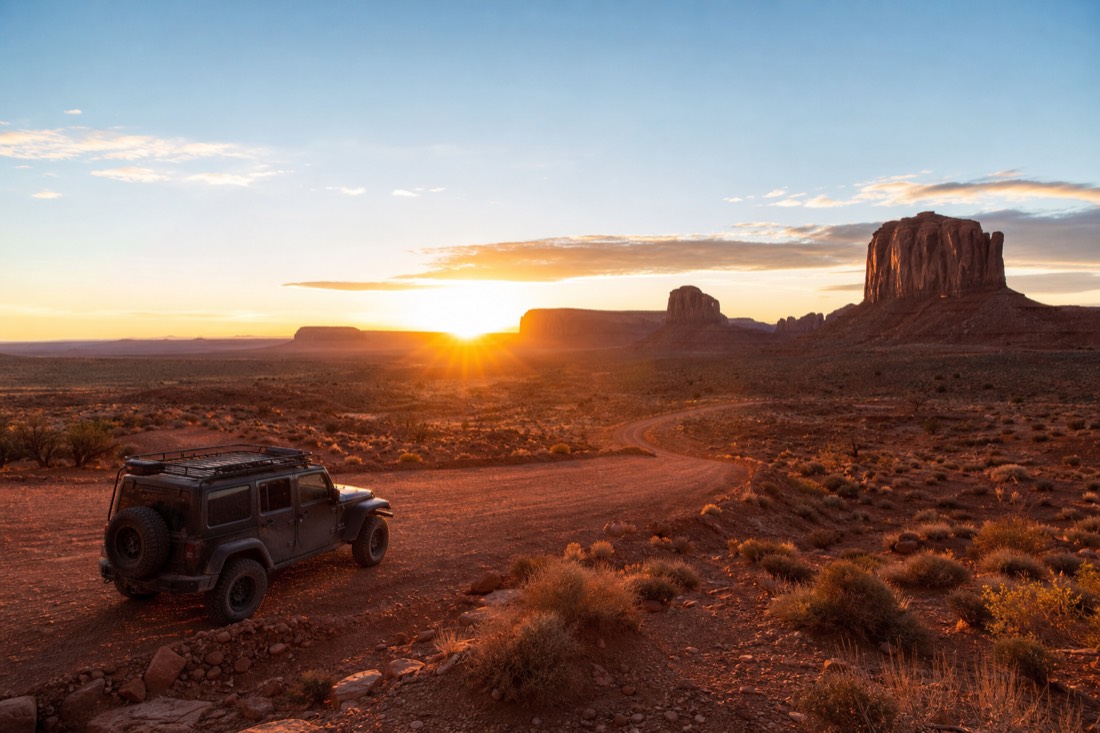
Here is the plan I give most one-night visitors. It assumes you have paid the entrance fee, roughly ten dollars per person per day, at the gate, and that you have checked current hours, since summer and winter closing times differ. Keep an eye on the clock in another way too: the Navajo Nation observes daylight saving time while most of Arizona does not, so in summer the valley runs an hour ahead of Phoenix and Page.
| Time | What you are doing |
|---|---|
| 3:00 pm | Arrive, pay the entrance fee, check in at The View or Goulding's |
| 3:30 pm | Drive or ride the 17-mile Valley Drive, stopping at the Mittens and John Ford Point |
| 6:30 pm | Settle in for sunset facing the buttes; camera on a low angle |
| 7:30 pm | Dinner at The View or Goulding's |
| 5:30 am | Coffee, then a guided sunrise tour or an early loop before the gate crowd |
| 8:30 am | Breakfast, then drive on toward Page, Kayenta or Moab |
What does a well-run single day look like, hour by hour?
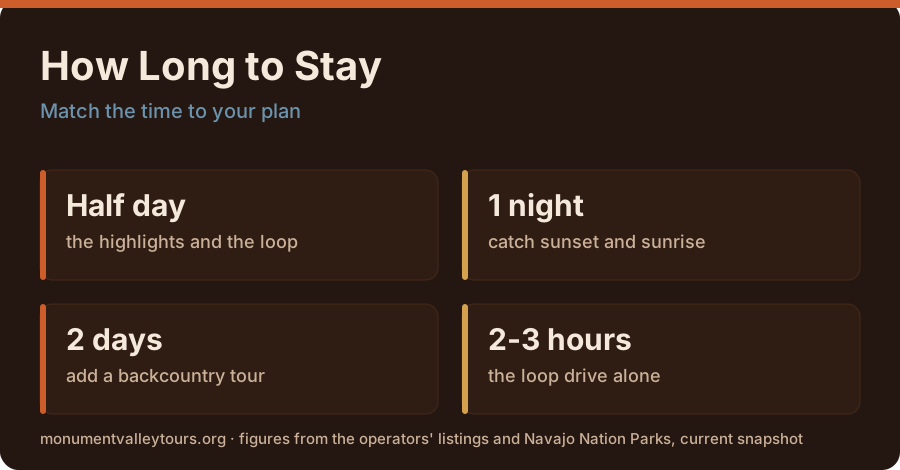
A strong one-day plan runs on the Navajo Nation clock: set your phone right, arrive by mid-morning, drive the 17-mile loop before midday, take a two-and-a-half to three-hour guided backcountry tour, break for a late lunch at The View, then aim your last hour at the softening afternoon light before the gate closes. Timing is the whole trick.
The clock is the thing that trips people up here, so let me start there. Monument Valley sits on the Navajo Nation, and the Navajo Nation observes daylight saving time while most of Arizona does not. In summer that puts the valley an hour ahead of Phoenix and Page, so a group that leaves Page thinking it is 9am can roll up to a gate that already reads 10am. Set your phone to update, or you will lose an hour you planned to spend on the loop. The official Navajo Nation Parks site is the place to confirm current hours before you drive.
Those hours matter because last entry falls earlier than closing. In summer, roughly April to September, the gate runs about 8am to 7pm with a last entry near 4:30pm. In winter it is about 8am to 5pm with last entry near 2:30pm. Plan your arrival against the last-entry time, not the closing time.
With the clock sorted, a well-run day is unhurried. Arrive mid-morning, pay the entrance fee at the gate, roughly ten dollars per person, then drive the 17-mile Valley Drive while the crowds are still thin. Give it two to three hours with stops at the Mittens, Elephant Butte and John Ford Point. Around midday, when the overhead sun flattens the rock, that is the time for a guided backcountry tour of two and a half to three hours, since a local operator handles the driving and the flat light matters far less inside the stories a guide tells. Break for a late lunch at The View, then use your last hour on a second slow pass as the afternoon light warms. The Monument Valley scenic drive guide covers what that loop asks of your car.
| Local time (Navajo Nation, MDT in summer) | What you are doing |
|---|---|
| 9:00 am | Arrive, pay the entrance fee at the gate, note the last-entry time |
| 9:30 am | Drive the 17-mile Valley Drive, stopping at the Mittens and John Ford Point |
| 12:00 pm | Guided backcountry tour of about two and a half to three hours |
| 3:00 pm | Late lunch at The View, out of the midday glare |
| 4:00 pm | A second slow pass as the afternoon light warms |
| Before last entry | Drive on toward Kayenta, Page or Moab |
What does a two-day visit add?
Two days lets you spread the same ground across better light without hurry: a first afternoon loop and sunset, a night beside the buttes, a sunrise tour the next morning, then a separate Mystery Valley tour or an extended cultural tour with a hogan visit. Sunset, sunrise and backcountry tours each run about three hours. It doubles the good light and halves the rush.
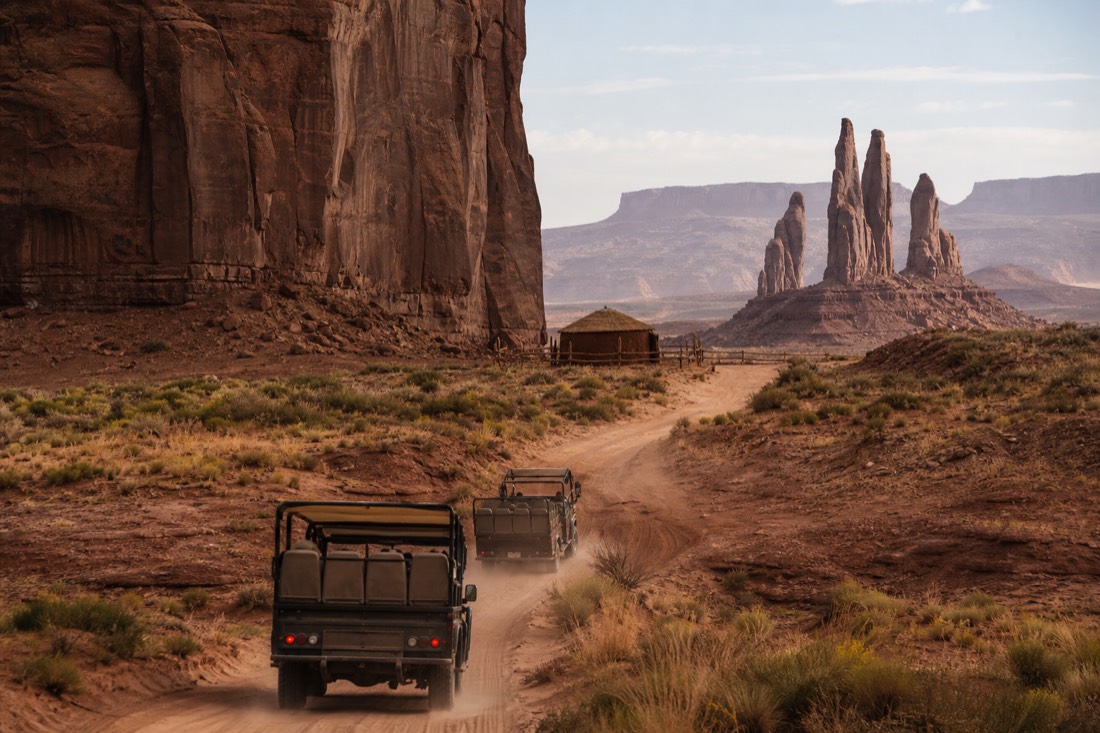
One night captures both golden hours. A second full day is what lets you actually slow down, so here is how I sequence a two-day visit where nothing feels rushed and you are never fighting the light.
Day one is an afternoon arrival. Pay at the gate, drive the 17-mile loop in the softening light, then settle in for sunset facing the buttes. The only hotel inside the park is The View, whose rooms look straight at the Mittens, and Goulding's Lodge sits just outside the boundary, so you can reach that light without a drive. After dinner the sky opens up, and this is some of the darkest stargazing country in the Southwest.
Day two is where the extra time earns its keep. Start with a guided sunrise tour of about three hours, out at the best angles before the day-gate crowd arrives. Then take a longer, extended backcountry run of about three and a half hours that adds a hogan visit and weaving demonstration; Mystery Valley requires a separate itinerary, where a Navajo host explains how families lived on this land. Mystery Valley holds Ancestral Puebloan ruins and small arches that day-trippers never see, and it is only reachable with a guide. In the afternoon, with the pressure off, drive the 20-odd minutes to Forrest Gump Point on US-163 north of the park for that highway shot before you push on toward Page or Moab.
Two days does not double the sights so much as double the good light and halve the hurry. Photographers and anyone who dislikes a schedule get the most from it. If you are stringing a bigger route together, the best time to visit guide explains how the seasons shift what a second day is worth.
| Day and time | What you are doing |
|---|---|
| Day 1, afternoon | Arrive, pay the fee, drive the 17-mile loop in softening light |
| Day 1, evening | Sunset facing the buttes, then dinner at The View or Goulding's |
| Day 1, night | Sleep inside the park or just outside, then stargaze |
| Day 2, sunrise | Guided sunrise tour, about three hours, before the gate crowd |
| Day 2, late morning | Extended cultural tour with a hogan visit, about 3.5 hours; book Mystery Valley separately |
| Day 2, afternoon | Forrest Gump Point on US-163, then drive on to Page or Moab |
Who actually needs more than one day here?
Photographers need more than a day, because the buttes only glow at sunrise and sunset. So do families who want an unhurried pace, anyone set on Mystery Valley or a hogan visit, and travelers building a wider Southwest loop. A road-tripper just wanting the classic view can honestly do it well in a single afternoon. Match the stay to the goal.
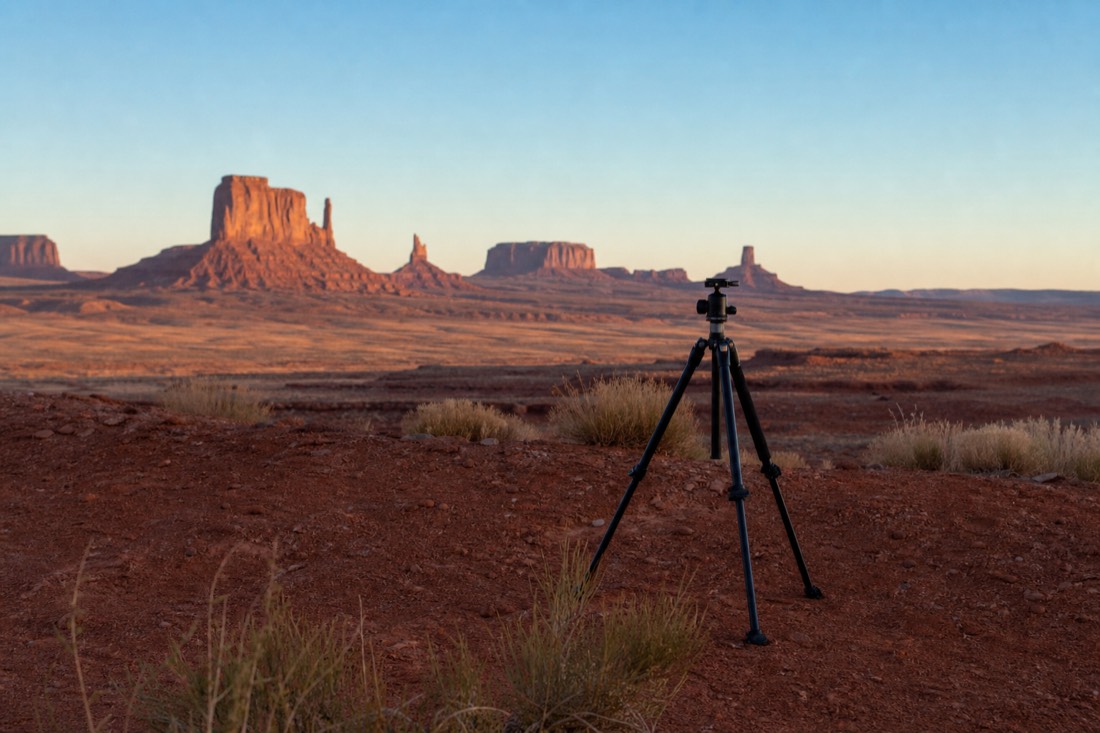
After enough seasons at the gate, I can usually guess who will wish they had booked a second night. The clearest case is photographers. The buttes read as flat, dark shapes at midday and only glow at sunrise and sunset, so anyone serious about images needs to be here for both, with time to reshoot if the sky does not cooperate. One night is the floor for them, two days better.
Families travel slower than they plan to, and that is fine. Kids need breaks, meals run long, and a rushed single loop can turn the trip sour. A night at The View or Goulding's turns the visit into an experience instead of a checkbox, and it puts sunrise within walking distance of the room. Anyone set on the backcountry belongs in the more-than-one-day group too. Mystery Valley, a hogan visit and the quieter arches all sit off the loop and need a guided run, and fitting one properly around the light is easier with a night in hand.
Then there are the road-trippers on a wider Southwest loop, stringing together Page for Antelope Canyon and the Grand Canyon, Moab and the Utah parks. For them a single planned night here beats a lunch stop, because the drive times are long and the light is the whole point. From Las Vegas it is about 400 miles, from Flagstaff roughly 175 miles and three hours, Page sits two to three hours west, and Moab about 150 miles north.
Who can honestly do it in less? A traveler who just wants to stand under the classic view, drive the loop and move on. Half a day of daylight covers that, and the loop alone still earns the detour. Match the length of your stay to what you came for, and you will not leave wishing you had planned it differently. The how to get to Monument Valley guide breaks down each gateway drive.
| Traveler | Days worth planning | Why |
|---|---|---|
| Photographers | One night, two days better | Wants both golden hours and time to reshoot |
| Families with kids | One night or more | An unhurried pace beats a rushed loop |
| Backcountry seekers | Two days | Mystery Valley and a hogan visit need a longer guided run |
| Southwest road-trippers | One planned night | Fits a multi-park loop and still catches both golden hours |
| Quick pass-through | Half a day | The loop alone still earns the detour |
How many days should a Southwest road trip give Monument Valley?
On a wider Southwest loop, give Monument Valley one night rather than a drive-through stop. Slot it between Page, about two to three hours away, and Moab, roughly 150 miles north. A single overnight fits the pace of a multi-park trip while still delivering both golden hours.
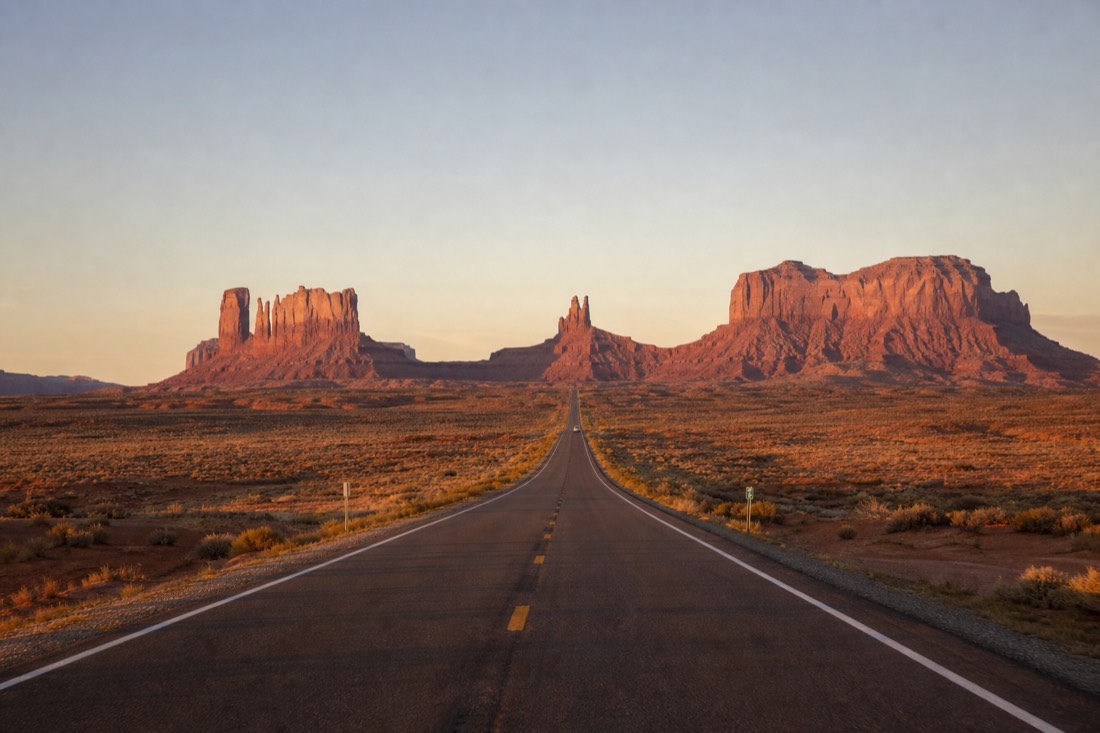
Most people who reach Monument Valley are on a bigger circuit, and the valley rewards being a planned overnight instead of a lunch stop. From Las Vegas it is about 400 miles and seven and a half hours, so few do it as a day trip; from Flagstaff it is roughly 175 miles and three hours, and Page sits two to three hours to the west. That geography is why a Southwest loop usually strings together Page for Antelope Canyon and Horseshoe Bend, the Grand Canyon South Rim, and Monument Valley, before pushing north to Moab and the Utah parks. If you want to build that route, start with our guides hub and the how to get to Monument Valley page, which cover drive times from each gateway. One clear night here is worth more than two rushed half-days somewhere else.
Make room in your itinerary
Navajo Spirit scenic tour
Have a travel date in mind? Check this option before arranging the rest of your trip. A Navajo guide connects the Mittens, restricted arches and local stories.
Editorial starting point; use the choices below to check the fit.
Compare options and tailor your choice
Shared tour, English guide, about 3 hours. Park entry and tips extra. Minimum two to operate; solo travelers must arrange pairing with the operator.
Meet at the round, green-roof Navajo Welcome Center off US-163; return there. No hotel pickup.
Ride to Big Hogan, Sun’s Eye and the Totem Pole with a Navajo guide. Shared 2.5-hour tour, English. Park entry and tips extra. Hogan visit and weaving excluded. Not recommended for pregnancy, back/spinal or serious heart conditions.
Look beyond the daytime landscape with Navajo star stories and a guided night outing. 2.5 hours, English guide and water. Park entry extra. Stargazing depends on weather. Telescope not promised on this Viator option. Not recommended for pregnancy, spinal or serious heart conditions.
Explore a separate part of the tribal park with local Navajo guides. Allow 3–4 hours, shared English tour. Park admission extra; no facilities while touring. Moderate fitness, unsuitable for spinal injuries. Minimum two; solos must contact operator first.
Select a date to see the Viator departure schedule.
Schedule only. Final availability, options and price are confirmed on Viator.Affiliate links: we may earn a commission at no extra cost to you. Product facts checked September 15, 2026.