How to Visit Monument Valley: A Complete First-Timer's Guide
The single thing that trips up first-timers is thinking this is a national park. It is not. Here is how the visit actually works, start to finish, from a guide who runs it daily.
 Written with Daniel Begay, Monument Valley tour guide & Navajo cultural specialist
Short answer
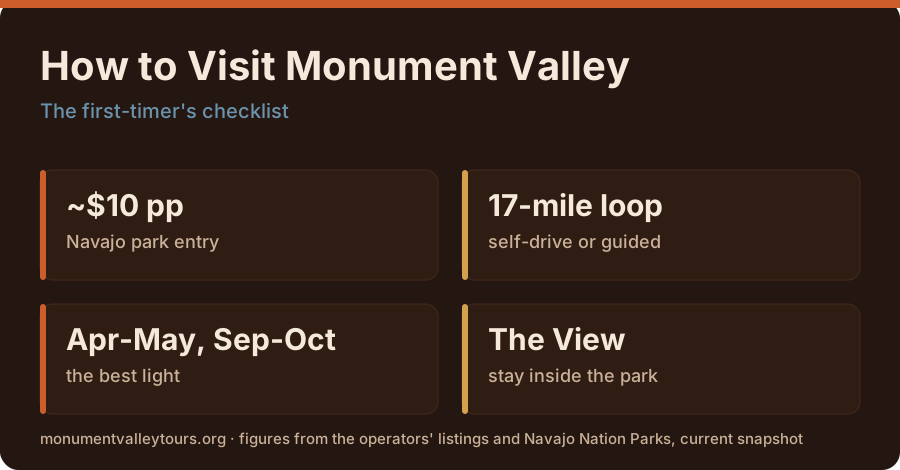
Monument Valley is Navajo Nation land, not an NPS park. Drive in for about $10 per person, then self-drive the 17-mile loop or take a Navajo-guided tour for the backcountry. Go in spring or fall for the best light, and stay at The View or in Kayenta or Mexican Hat.
Most people roll up to the entrance expecting a park ranger and an America the Beautiful pass, and I watch the small double-take when neither exists. Monument Valley works differently from every national park in the region, and once you understand why, the whole visit falls into place. I have run this drive for international visitors since 2022, and the first-timers who have the best day are the ones who knew what they were walking into.
Booking choice: A Navajo guide connects the Mittens, restricted arches and local stories. Explore Navajo Spirit scenic tour
At a glance: Shared tour, English guide, about 3 hours. Park entry and tips extra. Minimum two to operate; solo travelers must arrange pairing with the operator.
How do you visit Monument Valley?
To visit Monument Valley, drive to the entrance on the Utah-Arizona line, pay the tribal park fee of about $10 per person at the gate, then either self-drive the 17-mile dirt Valley Drive loop or join a Navajo-guided tour to reach the backcountry. Come in the shoulder seasons for soft light and thinner crowds, and base yourself at The View or a nearby town. That is the whole trip in one breath.
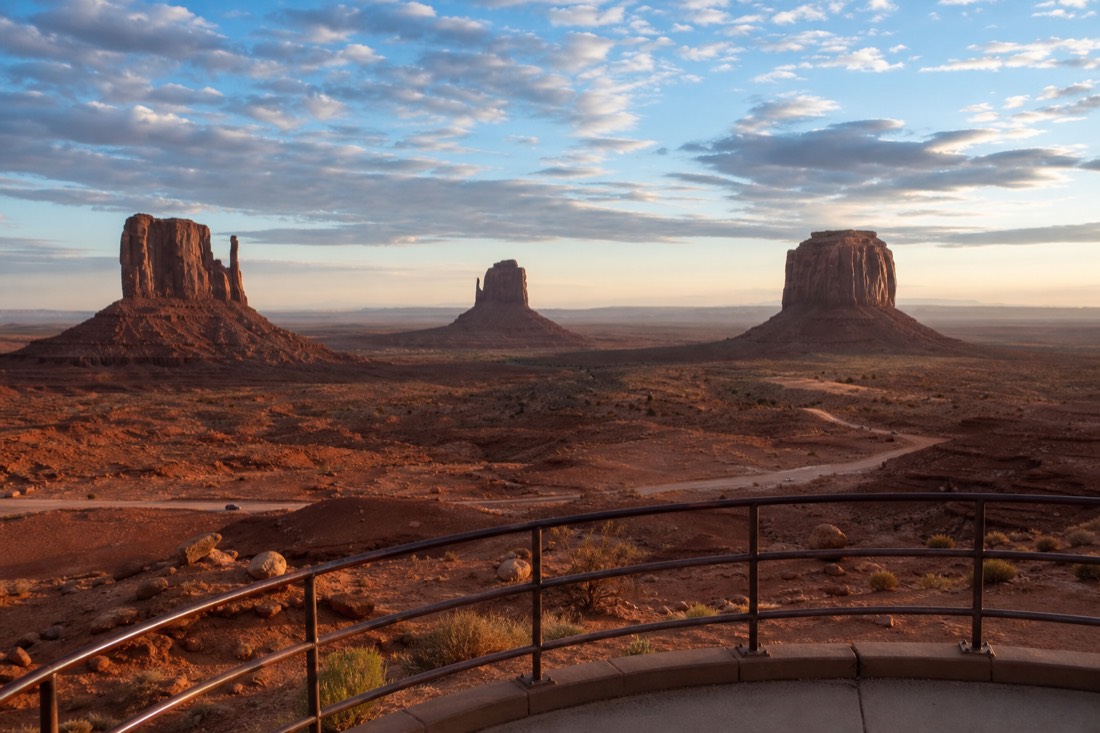
Break it into steps and nothing about the day is complicated. The order below is how I would run a first visit, and it holds whether you have half a day or two. The one non-negotiable is arriving with enough light left, because the last entry cuts off well before closing and the valley at golden hour is the entire point.
| Step | What you do | Tip |
|---|---|---|
| 1. Arrive | Drive to the park entrance near The View | Beat the last-entry cutoff, mid-afternoon in winter |
| 2. Pay | Pay the tribal fee at the gate, about $10 per person | Cash or card; it is separate from any tour price |
| 3. Orient | Stop at the visitor center overlook | The Mittens view is right there, free with entry |
| 4. Explore | Self-drive the 17-mile loop, or take a guided tour | Backcountry needs a Navajo guide |
| 5. Time the light | Aim your drive for sunrise or sunset | Check Navajo daylight time in summer |
Is Monument Valley a national park?
No. Monument Valley is a Navajo tribal park on Navajo Nation land, not a US National Park, so an America the Beautiful pass does not work here. You pay a separate tribal entrance fee of roughly $10 per person per day, about $15 for a vehicle on the Scenic Drive, collected at the gate. The land, the rules and the guides are all Navajo. That distinction drives everything else.
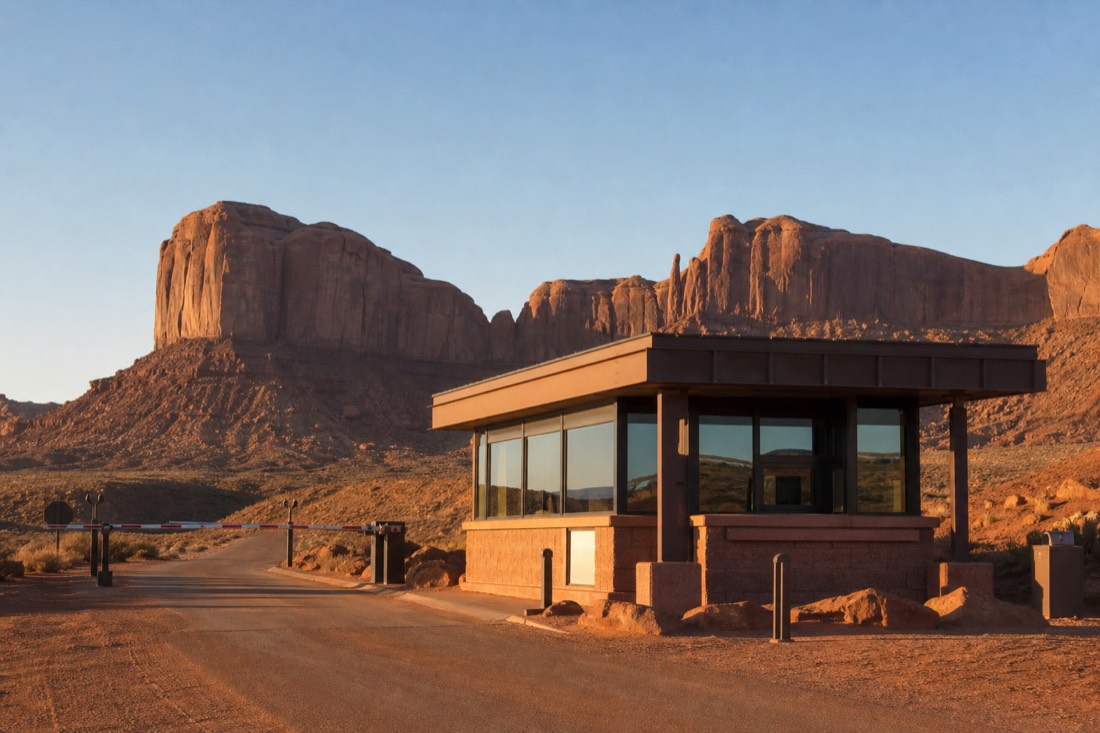
Hours run seasonally, so time your arrival to them. In summer, roughly April through September, the park runs about 8am to 7pm with last entry near 4:30pm. In winter, October through March, it is closer to 8am to 5pm with last entry around 2:30pm, and it closes for Thanksgiving, Christmas and New Year. The official Navajo Nation Parks and Recreation site at navajonationparks.org is the place to confirm current fees and hours before you drive, and the general background sits on Wikipedia's Monument Valley page. One more local wrinkle: the Navajo Nation observes daylight saving time even though most of Arizona does not, so in summer the valley runs an hour ahead of Phoenix and Page.
| Item | Detail |
|---|---|
| Land status | Navajo tribal park, not an NPS unit |
| Entrance fee | ~$10 per person per day (~$15 per vehicle, Scenic Drive) |
| National park pass | Not accepted |
| Summer hours | ~8am to 7pm, last entry ~4:30pm |
| Winter hours | ~8am to 5pm, last entry ~2:30pm |
| Closed | Thanksgiving, Christmas, New Year |
Should you self-drive Monument Valley or take a guided tour?
Do both if you can. You can self-drive the 17-mile Valley Drive loop in any vehicle with decent clearance, which covers the classic overlooks in two to three hours. To reach the backcountry, Mystery Valley, Ear of the Wind, the arches and the hogans, you legally need a Navajo guide, because those areas are closed to the public. The loop shows you the postcard; a guide shows you the rest. Choose by how deep you want to go.
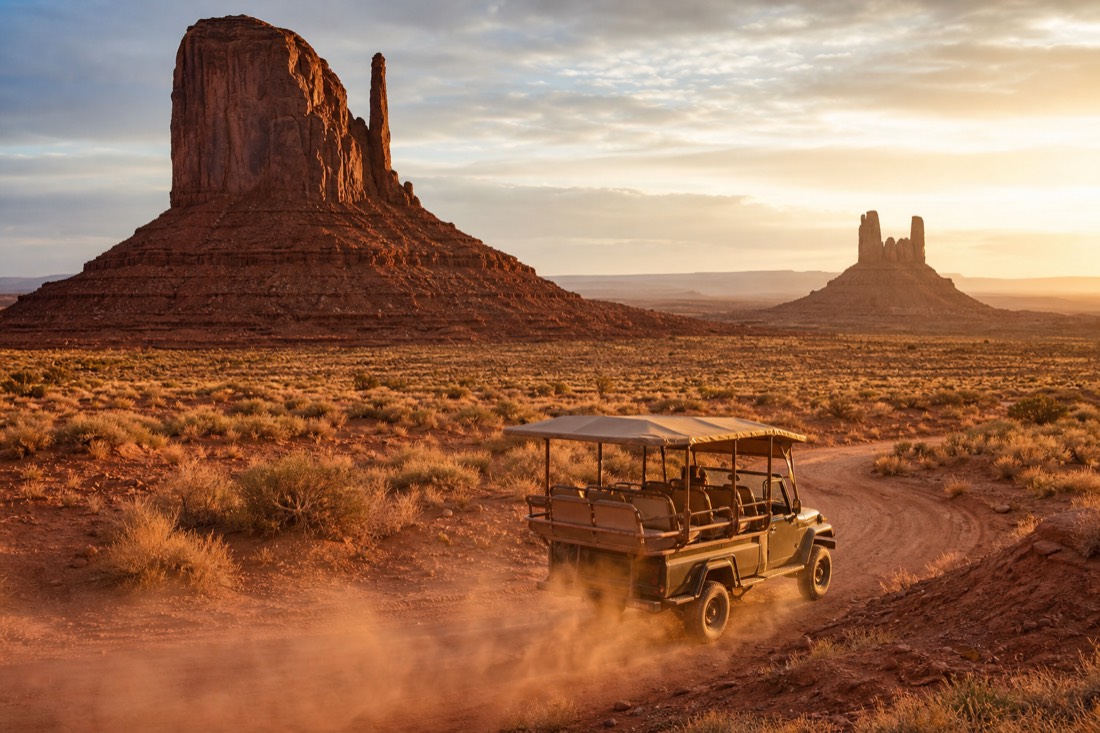
The loop road is dirt, washboard and deep sand in spots, and low cars struggle; motorcycles and RVs are not allowed on it. That is fine for the main viewpoints, John Ford Point among them. But the places that make people fall for this valley, the wind-carved arches and the quiet spots where a guide can share Navajo stories, sit off that road entirely. If you want that, book the guided run rather than trying to self-drive it, which you cannot. The do you need a guide guide breaks the choice down further.
| Factor | Self-drive loop | Guided tour |
|---|---|---|
| Access | 17-mile loop and main overlooks | Loop plus backcountry, arches, hogans |
| Vehicle | Your own, decent clearance | Operator's open-air jeep |
| Guide | None | Navajo guide with local stories |
| Time | ~2 to 3 hours | ~2.5 to 3.5 hours typically |
| Best for | Independent travelers on a budget | First-timers wanting depth and the backcountry |
When is the best time to visit Monument Valley?
Aim for spring or fall. April through May and September through October bring softer light, milder temperatures and thinner crowds than the summer peak. Summer is hot and busy, with monsoon storms that can churn the dirt loop to mud. Winter is cold and quiet, with short hours and the rare, dramatic gift of snow on red rock. Sunrise and sunset are the hours that matter in any season.
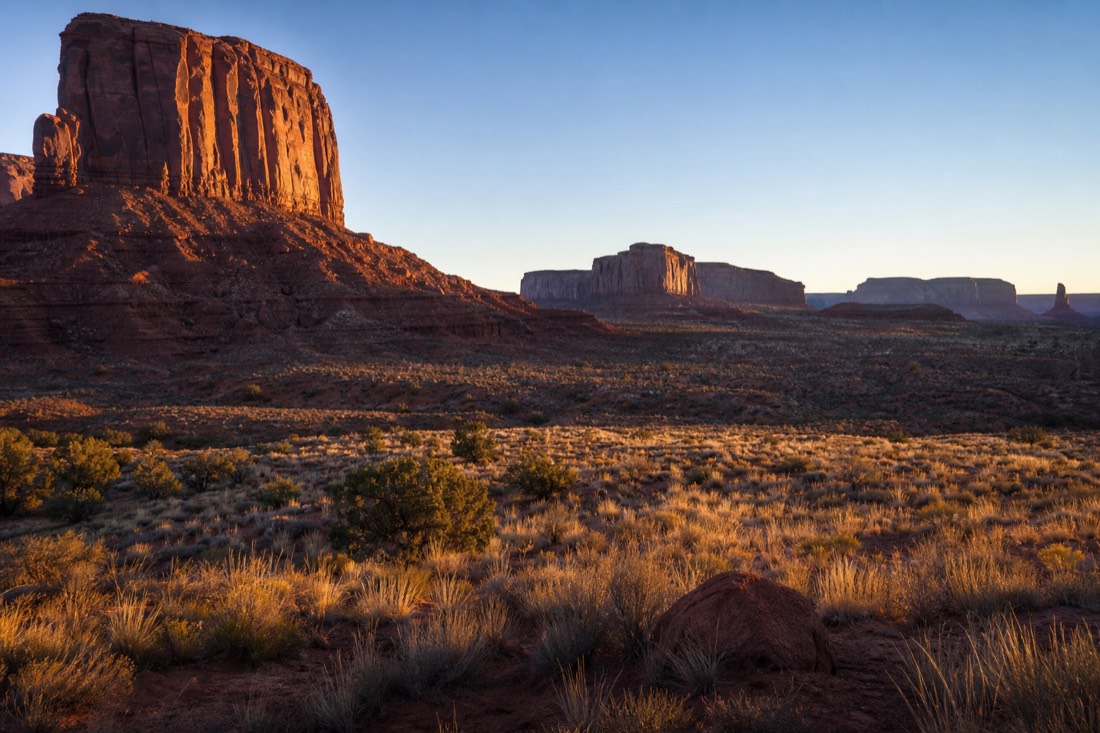
The light does the heavy lifting here, so plan around it rather than the calendar alone. A clear shoulder-season morning, cool air and long shadows, beats a hazy summer noon every time. For a month-by-month read on temperature, crowds and that short winter light window, the best time to visit Monument Valley guide goes deeper than I can here, and it pairs neatly with whichever sunrise or sunset departure you choose.
Where should you stay to visit Monument Valley?
Stay at The View Hotel if you want to wake up facing the Mittens and can book months ahead, since it is the only hotel inside the park. Goulding's Lodge sits two miles outside with history and a restaurant. For budget rooms, look to Kayenta, Arizona, about 22 miles south, or Mexican Hat, Utah, about the same distance north. Where you sleep decides how easy sunrise is.
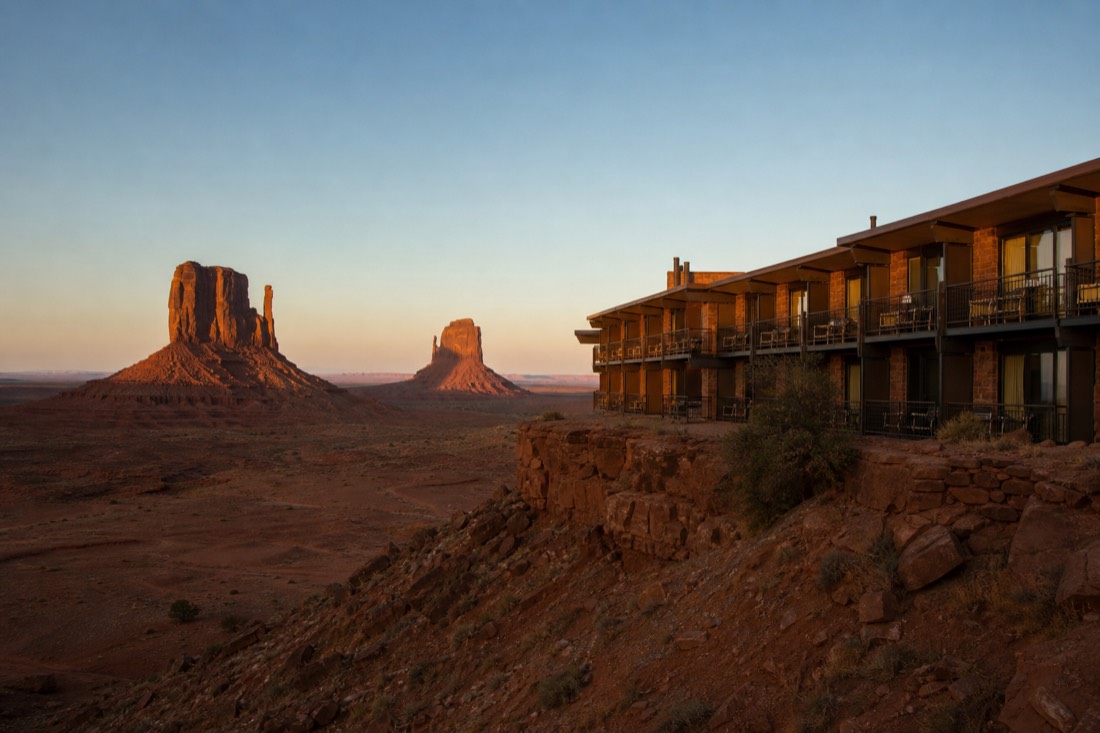
Proximity is the whole game at dawn and dusk. A room at The View means the golden hour that day-visitors miss is simply yours, and you can confirm rooms and rates on the hotel's own site at theviewhotel.com. If the in-park rooms are gone or over budget, the towns half an hour out do the job for less. The where to stay near Monument Valley guide compares every base by view, price and drive time, so you can match your lodging to the tours you want.
What does a first visit actually look like, hour by hour?
A good first day runs on the light, not the clock. Arrive mid-morning, pay at the gate, and orient at the overlook. Drive or ride the loop before midday, break out of the harsh noon glare, then set up for sunset near John Ford Point. In summer, flip the whole thing and start at sunrise instead.
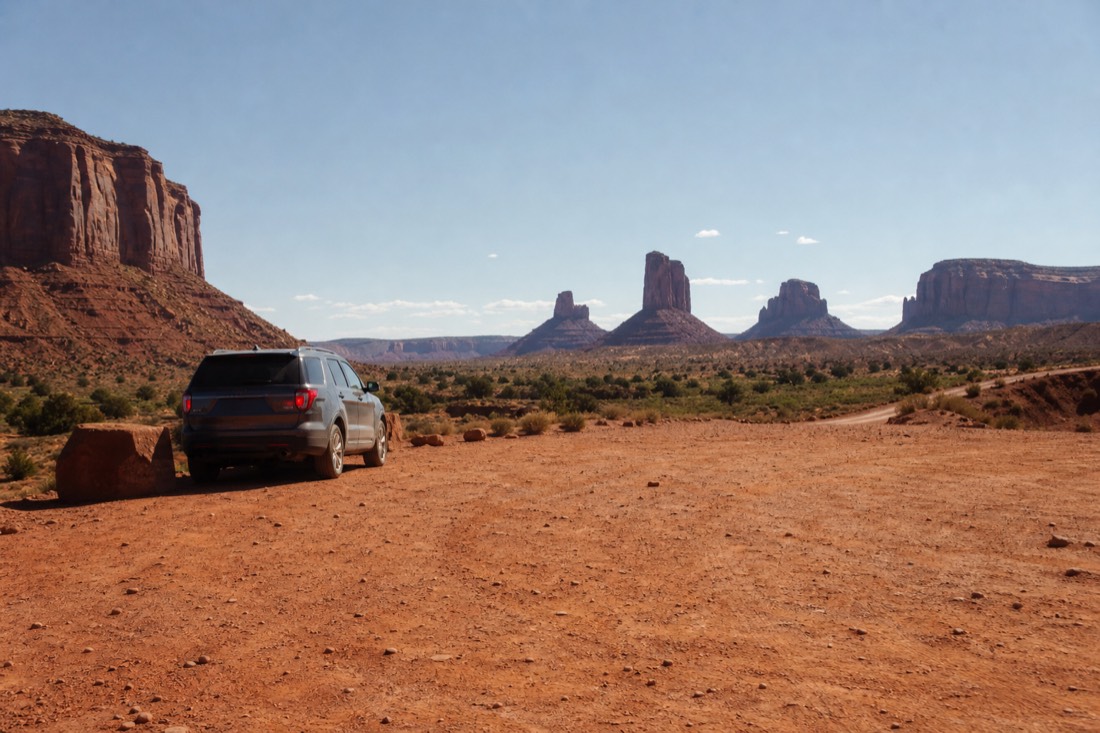
People ask me to map the day for them, so here is the shape I hand first-timers. Fuel up in Kayenta or Mexican Hat before you drive in, because the nearest reliable gas is a good half hour from the gate and the loop eats more than you expect. Reach the entrance mid-morning, pay the roughly $10 per person, and take ten minutes at the visitor center overlook. The Mittens sit right there, free with entry, and the view orients you before you commit to anything.
From there the loop is yours. The 17 miles of dirt take two to three hours at a browsing pace, and mid-morning gives you cooler air and a road that has not yet filled with afternoon traffic. By half past noon the sun sits straight overhead, the shadows vanish, and the red rock goes flat and hazy. That is your cue to stop. Lunch at The View, rest in the shade, or take a short backcountry leg with a guide if you booked one, and let the worst light pass.
The day pivots again around five. Position near John Ford Point and let golden hour do the work it came to do, then watch the last-entry and closing times so you are not caught fighting the gate on the way out. Summer runs until about 7pm with last entry near 4:30pm, winter closes near 5pm with last entry around 2:30pm, so a winter visit compresses everything and rewards an early start. The table below is the version I would actually follow on a clear spring day.
| Time | Where you are | Why it works |
|---|---|---|
| 8:30am | Fuel up in Kayenta or Mexican Hat | Last reliable gas is well outside the gate |
| 9:30am | Pay at the gate, orient at the overlook | Beat the mid-morning tour rush |
| 10:00am | Start the 17-mile loop or meet your guide | Cooler light, emptier road |
| 12:30pm | Lunch at The View, out of the midday glare | Overhead sun flattens the rock for photos |
| 2:00pm | Rest, or a short backcountry leg with a guide | Save energy for the good hours |
| 5:00pm | Position near John Ford Point | Golden hour lands on the buttes |
| Sunset | Last light, then exit before closing | Mind the last-entry and gate times |
What mistakes do first-timers make at Monument Valley?
The big ones repeat: showing up with a national-park pass, arriving too late to beat the last-entry cutoff, forcing a low sedan down the sandy loop, forgetting the summer time-zone shift, and expecting to reach the backcountry without a Navajo guide. Every one is avoidable if you know it is coming.
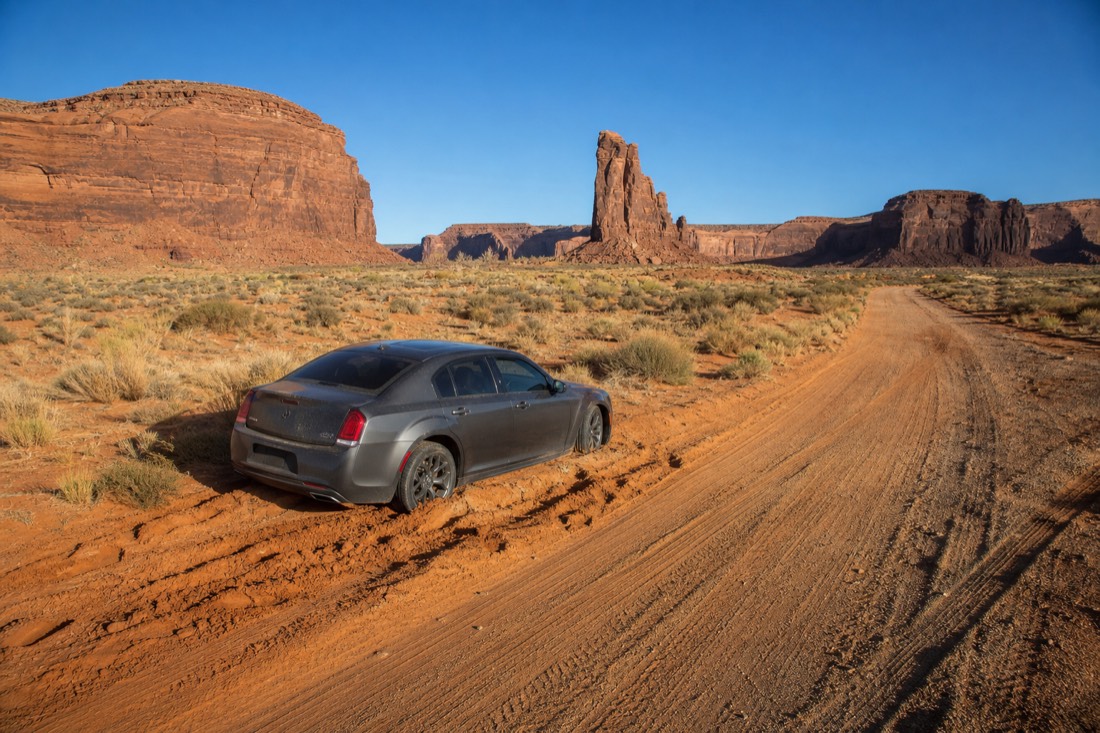
After a few years of watching cars pull up to that gate, the same handful of missteps come around again and again. The pass mistake is first. People wave a national-park annual pass and are surprised it buys nothing here, because this is Navajo tribal land, not an NPS unit. The second is timing. Folks treat the posted closing time as the useful deadline and miss that last entry lands hours earlier, near 4:30pm in summer and around 2:30pm in winter, so a late-afternoon arrival can mean no entry at all.
The vehicle mistake stings the most. The Valley Drive is washboard dirt with stretches of deep sand, and every season I see a low rental sedan bottomed out where a bit of clearance would have carried it through. Motorcycles and RVs are not allowed on the loop at all. Then there is the clock. The Navajo Nation keeps daylight saving while most of Arizona does not, so in summer the valley runs an hour ahead of Phoenix and Page, and a lost hour becomes a lost sunrise pickup.
The last one is about access, not error. Visitors assume they can drive themselves out to Mystery Valley, the arches, Ear of the Wind, and the hogans, and they cannot. That country is closed without a Navajo guide. None of these are hard to sidestep once you know them, which is the whole reason I lay them out. Get the fee, the timing, the vehicle, the clock, and the guide question right, and the day runs smooth. The do and don't list below is the short version I wish every first-timer read before the drive.
| Do | Don't |
|---|---|
| Pay the ~$10 tribal fee at the gate | Expect an America the Beautiful pass to work |
| Arrive before the last-entry cutoff | Roll up an hour before closing |
| Bring clearance or ride an open-air jeep | Take a low sedan into the deep sand |
| Set your clock to Navajo daylight time in summer | Assume Arizona time near the valley |
| Book a Navajo guide for the backcountry | Try to drive yourself to Mystery Valley |
| Ask before photographing residents | Fly a drone or bring alcohol |
Who should skip the guided tour and just self-drive?
Skip the guide if you have your own capable vehicle, you are short on time or budget, and the classic overlooks are enough for you. The self-drive loop delivers the postcard shots on your own schedule. Book a guide only when you want the backcountry, the stories, or someone else handling a tricky road.
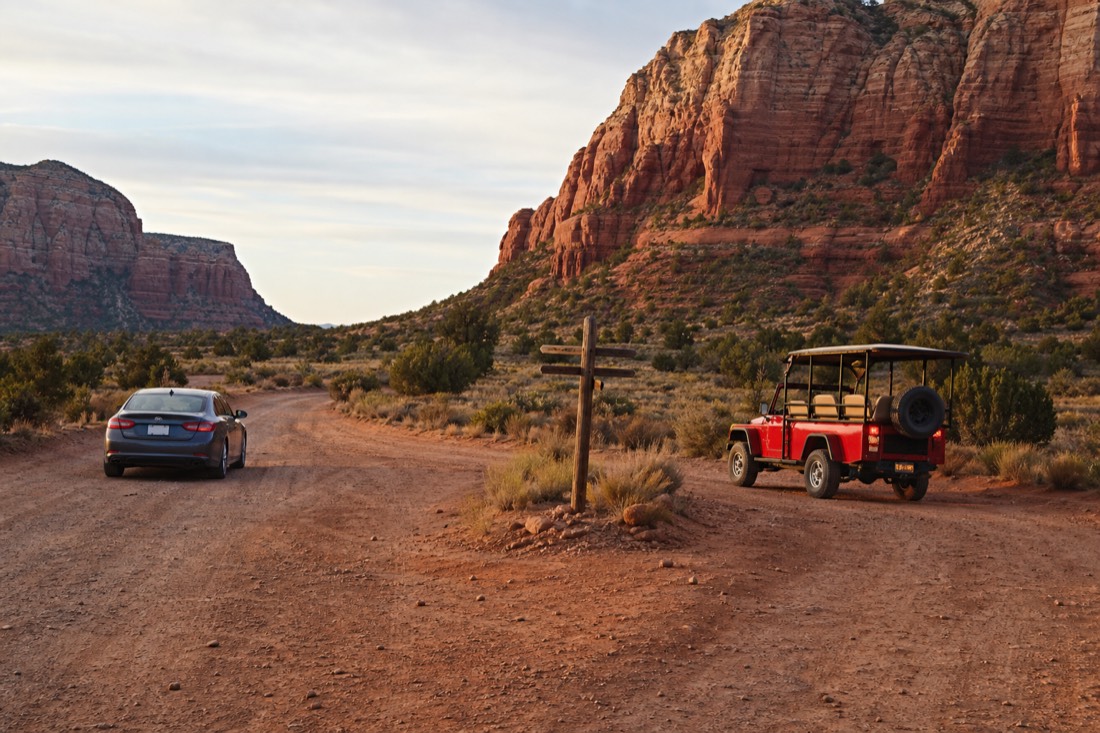
Not everyone needs a guide, and I will say so plainly even though I am one. If you have your own capable vehicle, a bit of clearance under it, and you mainly want the shots everyone recognizes, the self-drive loop works. You control the pace, you stop where you like, and the whole thing costs the vehicle fee rather than a tour price. Independent travelers on a budget, photographers who want to sit at one overlook for an hour, and anyone short on time can get a genuinely great half day this way.
The guide earns the money in three cases. The first is depth. Mystery Valley, the arches, Ear of the Wind, and the hogans are all off the public loop and closed without a Navajo guide, so if that country is what you came for, there is no self-drive option. The second is the road. In monsoon season the dirt turns to mud, and in winter it can ice, and a driver who runs it daily knows which low spots drain slowly and which to skip. The third is the stories, the part a map cannot give you.
So the honest split is simple. Capable car, tight budget, classic overlooks, drive it yourself. Backcountry, tricky conditions, or the cultural side, book the guide. Plenty of first-timers do both across one visit, self-driving the loop one evening and riding out with a guide the next morning. The decision table below sorts it by who you are and what you want, and if you land on the guided side you can weigh the Navajo-guided jeep options against your dates. Match your pick to the calendar before the good departures fill.
| Traveler | Best choice | Why |
|---|---|---|
| Budget independent driver with a capable car | Self-drive loop | Main overlooks at your own pace, ~$15 vehicle fee |
| First-timer wanting depth | Guided tour | Backcountry, arches, and hogans need a Navajo guide |
| Low sedan, no clearance | Guided tour | Deep sand and washboard punish low cars |
| Summer monsoon or winter visit | Guided tour | Drivers read the mud, ice, and drainage |
| Photographer chasing the classics only | Self-drive loop | Full control of timing at the overlooks |
What should first-timers know before going to Monument Valley?
Come prepared for a remote, sacred place. Drones are prohibited, alcohol and drugs are banned, and you should ask before photographing any Navajo resident. Stay on marked roads, carry water and fuel, and remember the summer time-zone shift. Most of all, know that the backcountry is closed without a Navajo guide, so book one if you want to see it. Respect for the land is the baseline.
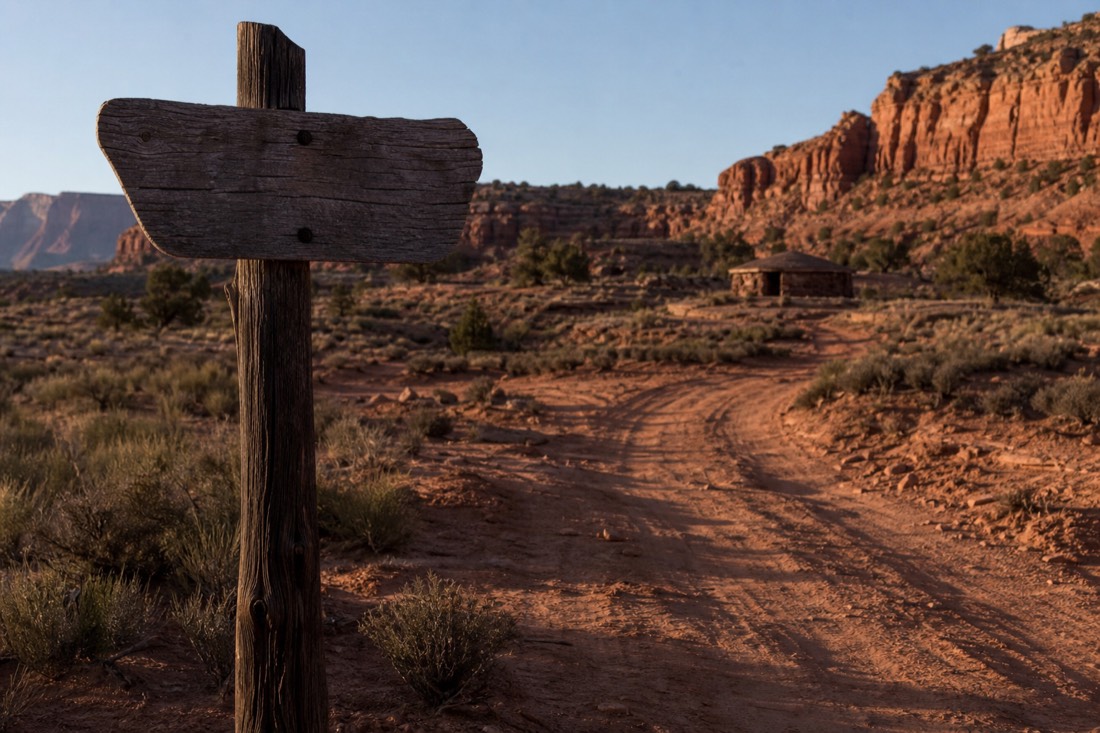
This is a living community, not a theme park, and the small courtesies matter. Ask first, take your trash out, and keep off the unmarked ground. Practical stuff counts too: fill your tank in Kayenta or Mexican Hat, bring more water than you think you need, and double-check tour pickups against Navajo daylight time in summer. The full pre-trip checklist lives in the what to know before visiting guide, and the rest of the planning answers sit on the guides hub. Get these right and a first visit here becomes the kind of day people talk about for years.
Make room in your itinerary
Navajo Spirit scenic tour
Have a travel date in mind? Check this option before arranging the rest of your trip. A Navajo guide connects the Mittens, restricted arches and local stories.
Editorial starting point; use the choices below to check the fit.
Compare options and tailor your choice
Shared tour, English guide, about 3 hours. Park entry and tips extra. Minimum two to operate; solo travelers must arrange pairing with the operator.
Meet at the round, green-roof Navajo Welcome Center off US-163; return there. No hotel pickup.
The extended route adds a hogan visit and a live Navajo rug-weaving demonstration. Shared 3.5-hour tour, English guide, open 4x4. Park entry extra. Children accompanied; unsuitable for back/spinal or serious heart conditions and pregnancy beyond five months.
GPS-triggered stories accompany your own drive, with offline audio downloaded in advance. Allow 2–3 hours. English/French audio; one purchase per car. No live guide, vehicle or park admission. Road access depends on conditions and your vehicle.
Visit the Totem Pole, Sun’s Eye and John Ford Point in the day’s changing light. 3 hours, English guide, water and native music. Select sunrise OR sunset for your month on Viator. Park entry extra. Uneven surfaces; unsuitable for back conditions. Children need two paying adults.
Select a date to see the Viator departure schedule.
Schedule only. Final availability, options and price are confirmed on Viator.Affiliate links: we may earn a commission at no extra cost to you. Product facts checked September 15, 2026.